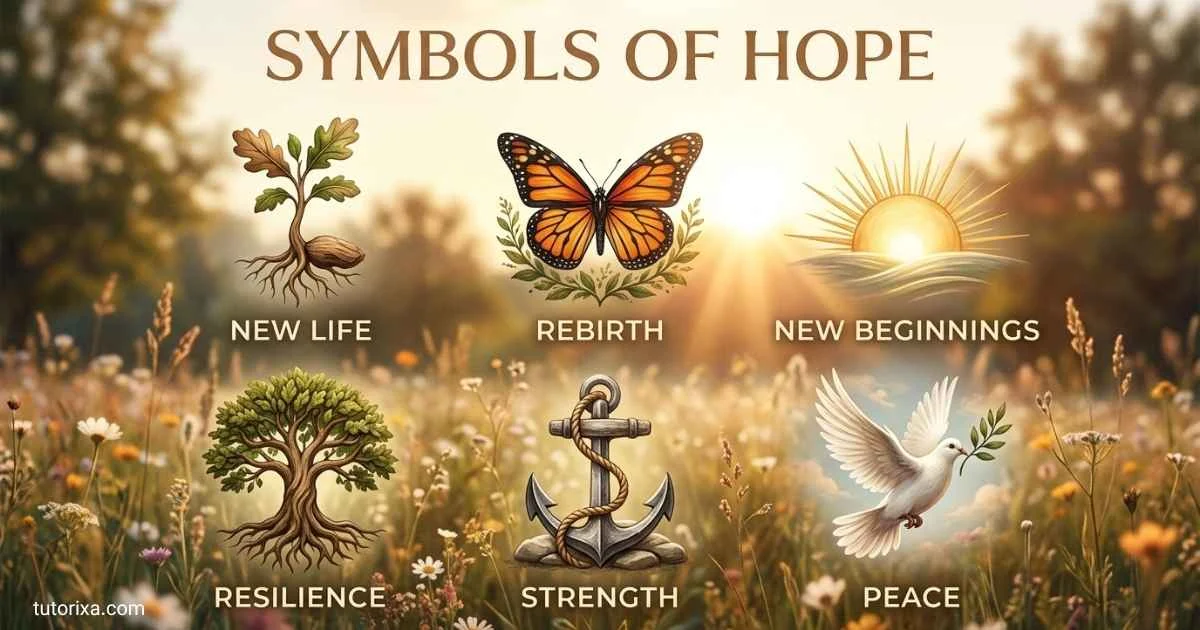
Sometimes, all you need is a small reminder that better days are possible. A simple symbol, whether it’s a rising sun, a blooming flower, or a flying bird, can represent strength, renewal, and the courage to keep moving forward. I believe these meaningful signs can help you discover hope in unexpected places.
You may recognize some symbols of hope without knowing the powerful stories behind them. Different cultures, religions, and traditions have used meaningful images to express faith, resilience, peace, and new beginnings for centuries.
In this guide, I’ll help you explore the most inspiring symbols of hope, their meanings, and their origins. Whether you’re looking for personal inspiration, a meaningful gift, an artistic idea, or a symbol that represents a fresh start, you’ll discover options that speak to your heart.
What Are Symbols of Hope
Symbols of hope are images, objects, signs, or natural elements that represent optimism, renewal, comfort, and the possibility of a better future. They give people a way to express feelings that can sometimes be difficult to describe in words.
A symbol may remind someone to stay strong during a challenging period, celebrate recovery, or believe in a fresh start. For example, a sunrise can represent a new beginning, while a green plant growing through a crack in concrete can suggest determination and survival.
Symbols of hope can come from many sources:
- Nature: Sunrises, rainbows, flowers, trees, and butterflies.
- Religion: The cross, dove, olive branch, and other faith-based symbols.
- Ancient cultures: The Egyptian ankh, phoenix, and other historical images associated with life or renewal.
- Art and literature: Light, open doors, gardens, and journeys that represent positive change.
- Everyday objects: Stars, hearts, candles, and anchors.
There is no single symbol that means hope to everyone. The meaning often depends on the context in which it appears and the personal connection someone has with it.
What Are Some Symbols of Hope
Many symbols can express hope, even when they come from different cultures or traditions. Some are widely recognized, while others have special meanings for particular communities or individuals.
Here are some popular examples:
| Symbol | Common Meaning | Why It Represents Hope |
| 🕊️ Dove | Peace and reconciliation | Suggests the possibility of a peaceful future |
| ⚓ Anchor | Stability and security | Represents something dependable during difficult times |
| ☀ Sun | Light and renewal | Reminds us that darkness can give way to light |
| 🌈 Rainbow | Promise and brighter days | Often symbolizes hope after a storm |
| 🌸 Lotus flower | Growth and renewal | Represents beauty and growth despite difficult conditions |
| ⭐ Star | Guidance and aspiration | Can represent direction toward a goal |
| 🦋 Butterfly | Transformation | Suggests that change can lead to a new stage of life |
| 🕯️ Candle | Light and remembrance | Represents a small source of light during darkness |
| 🌱 Seedling | New beginnings | Shows how something small can grow over time |
| 🪷 Blooming flower | Renewal and growth | Represents the possibility of flourishing again |
These meanings are common interpretations rather than universal rules. A dove, for instance, may represent peace in one setting and carry a religious meaning in another.
If you want a symbol for a message, gift, journal, or personal design, choose one that reflects the kind of hope you want to express.
Common Symbols of Hope
Some symbols appear frequently in greeting cards, artwork, memorials, jewelry, and inspirational messages. Their familiar shapes make them easy to recognize, even when they are used without an explanation.
The following symbols offer different ways to express hope.
| Symbol | Name | Meaning Associated With Hope |
| ♥ | Heart | Love, care, and emotional support |
| ★ | Star | Guidance, dreams, and possibility |
| ☀ | Sun | Light, energy, and fresh starts |
| 🕊️ | Dove | Peace and reconciliation |
| ⚓ | Anchor | Stability and perseverance |
| ∞ | Infinity | Endless possibility or continuing connection |
| 🌈 | Rainbow | Hope following hardship |
| 🌱 | Seedling | Growth and new beginnings |
| 🦋 | Butterfly | Change and transformation |
| 🕯️ | Candle | Light during difficult moments |
Some of these are Unicode text characters, while others are emoji. Their appearance may vary across devices and apps. For example, the heart character ♥ is a text symbol, whereas the colored heart emoji ❤️ is usually rendered as a colorful graphic.
You can copy and paste these symbols into messages, social media captions, notes, or designs. If you are creating a formal or meaningful design, consider adding a short explanation so readers understand the message you intend.
Universal Symbols of Hope
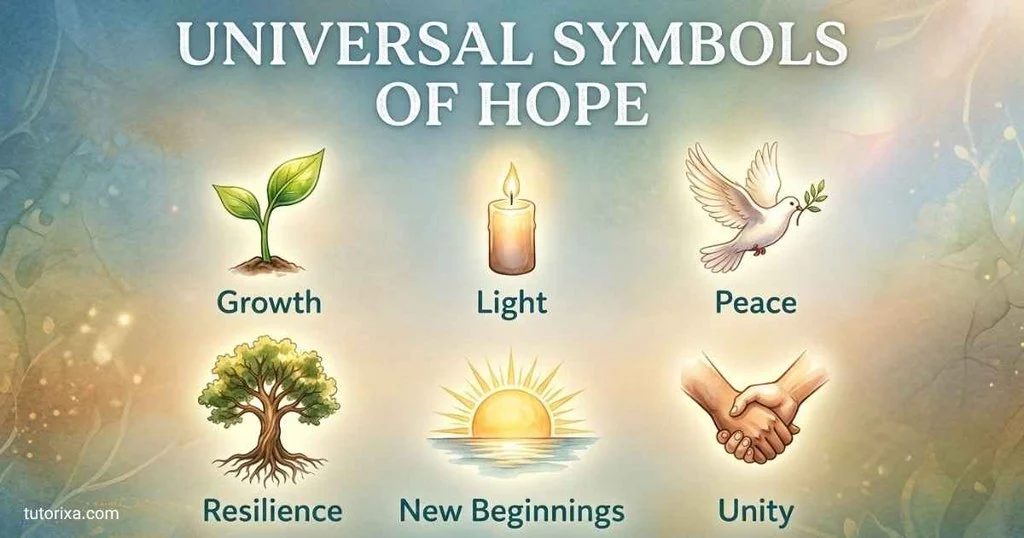
Some images of hope are familiar in many parts of the world. The sun, stars, flowers, and rainbows are common examples because people can connect them with experiences such as light after darkness, growth after winter, or calm after a storm.
However, a symbol should not automatically be described as universal. Its meaning may differ between cultures, religions, generations, and individuals.
The Sun
The sun provides light and warmth, making it a natural image of life, renewal, and possibility. A sunrise is particularly useful for expressing the idea of beginning again after a difficult period.
The Rainbow
A rainbow often represents hope, beauty, and the possibility of better days. It appears after rain under the right conditions, which makes it a familiar metaphor for finding something positive after hardship.
Its meaning also depends on context. In some modern settings, a rainbow can represent LGBTQ+ pride, inclusion, or diversity rather than hope alone.
The Star
Stars have long helped people navigate and imagine distant possibilities. In modern designs, a star can represent a dream, a goal, guidance, or the belief that something good remains possible.
The Flower
Flowers can symbolize growth, renewal, beauty, or remembrance. A flower beginning to bloom may express hope for personal development, recovery, or a new stage of life.
These images can communicate hope without words, but their precise meanings are shaped by the setting in which they are used.
Ancient Symbols of Hope
Ancient societies used symbols to express beliefs about life, death, protection, renewal, and the future. Some historical symbols are associated with hope today, although their original meanings were often broader than the modern idea of optimism.
The Ankh
The ankh, ☥, is an ancient Egyptian symbol associated with life. It appears in Egyptian art and religious imagery, where deities are often shown holding or presenting it.
Because it is connected with life, the ankh can represent vitality, continued existence, and hope. In modern jewelry and artwork, it is sometimes used as a symbol of life or spiritual meaning.
The Phoenix
The phoenix is a legendary bird associated with renewal and rebirth. In different versions of the story, it is connected with fire, death, and a new life emerging from the old.
Today, the phoenix is often used to express recovery after loss, transformation after hardship, or the determination to begin again.
The Olive Branch
The olive branch has a long association with peace in ancient Mediterranean traditions. In Greek culture, it was connected with Athena and could represent peace or victory in particular contexts.
Its association with peace makes it a useful symbol of hope for reconciliation and a more peaceful future.
The Sun
Sun imagery appeared in many ancient cultures and could be associated with deities, power, time, fertility, or life. Its relationship with light and warmth has also made it a lasting image of renewal.
When using an ancient symbol, it is worth distinguishing historical evidence from modern interpretations. A symbol may have a documented religious or cultural role without having one fixed meaning across all ancient societies.
Symbols of Hope and Strength
Hope and strength often support each other. Hope encourages people to imagine a better future, while strength helps them continue working toward it. Symbols that express both ideas can be meaningful reminders during personal challenges.
| Symbol | Associated Meaning | Best Used To Express |
| 🦁 Lion | Courage and bravery | Facing fear or taking action |
| 🌳 Oak tree | Endurance and stability | Staying grounded during difficult times |
| 🔥 Phoenix | Rebirth and renewal | Recovering after a major setback |
| ⛰ Mountain | Challenge and achievement | Continuing toward a difficult goal |
| ⚓ Anchor | Stability and security | Holding on during uncertainty |
| 🌱 Growing plant | Persistence and growth | Making progress one step at a time |
The Lion
The lion is widely associated with courage, power, and bravery. It can represent the strength to face difficult circumstances without giving up hope.
The Oak Tree
An oak tree’s sturdy trunk and long life make it a natural image of endurance. It can symbolize remaining grounded through change and continuing to grow despite challenging conditions.
The Phoenix
The phoenix combines strength with the idea of beginning again. It is especially suitable for representing a fresh start after a major life change, personal struggle, or period of loss.
The Mountain
A mountain can represent an obstacle, a long journey, or a goal worth pursuing. It reminds us that progress may be difficult but can still be possible through patience and effort.
The most suitable symbol depends on the message you want to convey. Choose a lion for courage, an oak tree for stability, or a phoenix for transformation and renewal.
Symbols of Hope and Healing
Symbols of healing can provide comfort during grief, illness, emotional distress, or major life changes. They do not replace practical help or professional care, but they can offer a personal reminder of support, recovery, and the possibility of moving forward.
The Lotus Flower
The lotus is an important symbol in several Asian religious and cultural traditions. It is associated with purity, spiritual development, and awakening in different contexts.
Because the lotus grows from muddy environments and rises above the water to bloom, people also use it as a modern metaphor for growth through adversity.
The Butterfly
A butterfly’s transformation from caterpillar to adult makes it a common image of change. It can represent personal growth, a new stage of life, or the hope of becoming more comfortable after a difficult period.
The Dove
A dove can represent peace, gentleness, and reconciliation. For someone healing after conflict or a painful experience, it may serve as a reminder to seek calm, understanding, and support.
The Candle
A candle provides a small amount of light in darkness. It can symbolize comfort, remembrance, faith, or the decision to keep hope alive when circumstances are uncertain.
The Heart
A heart is a familiar symbol of love and emotional connection. It can express compassion, self-care, friendship, and the support that helps people through difficult experiences.
If you are choosing a healing symbol for a gift or personal reminder, think about the kind of support you want it to express. A flower may represent growth, a heart may communicate love, and a candle may honor someone or something you wish to remember.
Symbols of Hope and Resilience
Resilience means adapting, recovering, or continuing after difficulty. A symbol of resilience does not suggest that life is always easy. Instead, it represents the ability to respond to challenges and find a way forward.
Several symbols can communicate this idea.
- Phoenix: A fresh start after loss or hardship.
- Bamboo: Flexibility, endurance, and the ability to bend without breaking. Its meaning varies across cultural traditions.
- Oak tree: Steadiness and long-term endurance.
- Mountain: Persistence while facing obstacles.
- Kintsugi: The Japanese art of repairing broken pottery with lacquer that may be mixed with powdered metal, often gold. In modern interpretations, it can symbolize acknowledging damage and valuing what has been repaired.
- Wildflower: Growth in places where conditions may be difficult.
- Butterfly: Transformation and movement into a new stage of life.
Resilience symbols are often used in journals, tattoos, artwork, jewelry, and personal mottos. A person who has experienced a major change may choose a phoenix, while someone who values patience and adaptability may prefer bamboo.
Remember that resilience does not mean ignoring pain or handling every problem alone. Asking for help can be part of recovering and moving forward.
Symbols of Hope in Nature
Nature offers many images that people connect with hope. Seasonal changes, growing plants, returning sunlight, and the movement of water can all suggest that circumstances are capable of changing.
Here are some natural symbols and their common interpretations.
Sunrise
A sunrise represents the beginning of a new day. It can be a reminder that a difficult night or period will not last forever.
Rainbow
A rainbow often symbolizes beauty after a storm and the possibility of better times. It is also a vivid image for messages about optimism and renewal.
Seedling
A small green shoot represents the start of growth. It can remind someone that meaningful change often begins with one small action.
Cherry Blossom
Cherry blossoms are associated with spring and renewal in Japanese cultural contexts. Their brief flowering period can also bring attention to the temporary nature of life and the value of the present moment.
Evergreen Tree
Evergreen trees retain their foliage through much of the year, making them useful symbols of endurance, continuity, and life during winter.
Butterfly
Butterflies are commonly associated with transformation and change because of their life cycle. They can express hope for personal growth or a new chapter.
Flowing Water
Water can represent life, movement, cleansing, or renewal in different cultural and spiritual settings. A flowing stream may serve as a personal metaphor for continuing forward instead of remaining stuck in the past.
Nature-based symbols work well in illustrations, logos, greeting cards, and personal spaces. Their meanings are often easy to understand because they connect abstract feelings with things people can see and experience.
Symbols of Hope in the Bible
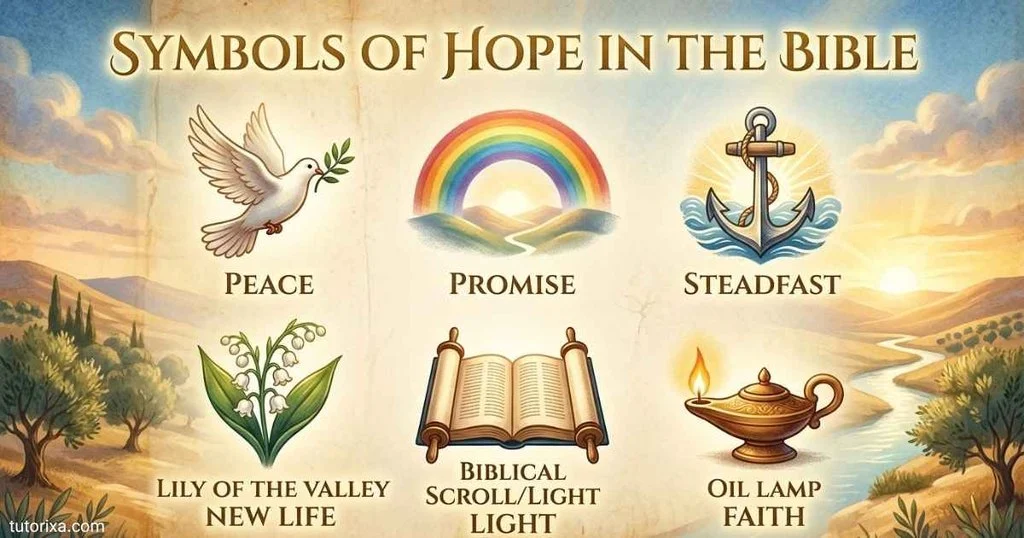
In the Bible, hope is connected with trust in God, faithfulness, salvation, perseverance, and the promise of restoration. Several images and objects are associated with these ideas, although not every modern interpretation is a direct biblical teaching.
The Rainbow
In Genesis 9:12–17, the rainbow is given as a sign of God’s covenant with Noah and the earth after the flood. For Christians and readers of the Bible, it can represent God’s promise and faithfulness.
The Anchor
Hebrews 6:19 describes hope as an anchor for the soul. This image suggests steadiness and security in the promises of God, even when life feels uncertain.
The Light
Light is a recurring biblical image associated with God’s presence, truth, guidance, and life. In John 8:12, Jesus describes himself as the light of the world.
For many Christians, light can therefore represent spiritual direction and confidence during difficult times.
The Olive Branch
The story of Noah includes a dove returning with a freshly picked olive leaf in Genesis 8:11. This signals that the floodwaters have receded and the earth is becoming habitable again.
The passage does not explicitly define the leaf as a universal symbol of hope, but its role in the story helps explain why people associate it with peace and the possibility of a new beginning.
The Cross
The cross is the central symbol of Christianity. It represents Jesus Christ’s crucifixion and, in Christian belief, is closely connected with redemption, forgiveness, and the hope of resurrection.
The meaning of these symbols comes from their biblical and theological contexts. Their use in modern art or decoration may express related ideas, but interpretations can differ among Christian traditions.
Christian Symbols of Hope
Christian symbols of hope often focus on faith, resurrection, God’s promises, spiritual renewal, and eternal life. They may appear in churches, religious artwork, jewelry, greeting cards, or personal devotional materials.
Common examples include:
- ✝ Cross: Represents Christ’s crucifixion and, for Christians, the hope associated with redemption and resurrection.
- 🕊️ Dove: In Christian imagery, the dove can represent the Holy Spirit, drawing on passages such as Matthew 3:16.
- ☧ Chi-Rho: An early Christian monogram formed from the Greek letters chi and rho, the first two letters of the Greek word for Christ. It is associated with Christian identity and belief.
- 🌈 Rainbow: Can recall God’s covenant with Noah and the biblical theme of divine faithfulness.
- Anchor: Connects with the image of hope in Hebrews 6:19.
- ✝️ Cross with a rising sun: A modern decorative combination that can express the hope of resurrection and a new beginning. This combination is not a single standardized biblical symbol.
- Alpha and Omega (Α and Ω): The first and last letters of the Greek alphabet, used in Christian scripture and tradition to express God’s beginning and end.
Christian communities do not use every symbol in the same way. Some churches emphasize particular images, while others prefer simpler forms of worship and decoration.
If you choose a Christian symbol, consider the specific belief or passage you want it to represent. This helps keep the design meaningful rather than treating every religious image as interchangeable.
Catholic Symbols of Hope
Catholic symbols of hope draw from Scripture, the sacraments, the lives of saints, and the Church’s traditions. They can remind Catholics of God’s presence, Christ’s resurrection, prayer, and the promise of eternal life.
The Crucifix
A crucifix depicts Jesus on the cross. It is especially important in Catholic devotion because it focuses attention on Christ’s suffering and sacrifice, while Catholic belief also places that sacrifice within the wider story of resurrection and redemption.
The Sacred Heart
The Sacred Heart of Jesus represents Christ’s love and mercy. Catholic devotion to the Sacred Heart emphasizes divine love, compassion, and the invitation to trust in God’s mercy.
The Miraculous Medal
The Miraculous Medal is associated with devotion to the Virgin Mary and the apparitions reported by Saint Catherine Labouré in 1830. For many Catholics, it serves as a reminder of prayer and Mary’s intercession.
It is a devotional object rather than a guarantee that a person will avoid hardship or receive a particular outcome.
The Easter Lily
The Easter lily is widely used in Christian and Catholic Easter decorations. Its white flowers can symbolize purity and new life, while its seasonal use connects it with the celebration of Christ’s resurrection.
The Paschal Candle
The Paschal Candle is used in the Catholic Easter liturgy and other important celebrations. It represents the risen Christ as the light of the world.
The Rosary
The rosary is a traditional Catholic prayer devotion centered on meditation on events in the lives of Jesus and Mary. For many Catholics, it offers comfort, focus, and a way to express trust during difficult times.
These symbols can be meaningful in personal prayer, religious gifts, or church settings. Their significance comes from Catholic teaching and practice, so it is useful to understand their context before using them in a design.
Greek Symbols of Hope
Greek symbols of hope can come from ancient mythology, religious traditions, philosophy, and everyday cultural imagery. Some are directly connected with ancient Greek stories, while others became associated with hope through later artistic interpretations.
The Olive Branch
The olive tree was closely associated with Athena, the Greek goddess of wisdom, and the olive branch became a recognizable sign of peace. Today, it can express the hope for reconciliation and peaceful relations.
The Phoenix
The phoenix appears in ancient accounts and later traditions as a remarkable bird associated with renewal and long life. Its precise story changes across sources, but its modern symbolism often centers on rebirth after destruction.
Pandora’s Jar
In the Greek myth of Pandora, a container is opened and troubles escape into the world. Hope remains inside in a commonly known version of the story.
The meaning of this ending has been debated. Some interpretations see hope as a comfort left for humanity, while others question whether its remaining inside the container suggests a more complicated message. It is best not to present one interpretation as the only accepted meaning.
The Laurel Wreath
The laurel wreath was associated with victory and honor in ancient Greek culture. It is not exclusively a symbol of hope, but it can represent the possibility of achievement after sustained effort.
The Sun
Sun imagery had religious and cultural meanings in ancient Greece. Helios was associated with the sun, while Apollo became connected with several roles, including light in later traditions. Modern sun designs may use these associations to express life, clarity, or renewal.
When choosing a Greek symbol, distinguish the original myth or historical use from the meaning attached to it in modern jewelry, tattoos, and inspirational artwork.
Chinese Symbols of Hope
Chinese symbols associated with hope often connect with good fortune, longevity, renewal, peace, and prosperity. Their meanings can depend on language, traditional art, religious beliefs, and the setting in which they appear.
The Chinese Character 希望
The Chinese word 希望 (xīwàng) means “hope” or “to hope.” It is a direct written expression rather than a separate pictorial symbol.
Copy and paste: 希望
If you want to use it in a tattoo or permanent design, verify the characters, font, and intended meaning with a knowledgeable Chinese speaker.
The Character 福
The character 福 (fú) is associated with good fortune, blessings, and happiness. It is commonly seen in Chinese New Year decorations and other celebratory settings.
Copy and paste: 福
It does not literally mean “hope,” but the idea of blessings and a favorable future can connect it with hopeful wishes.
The Peach
In Chinese mythology and traditional art, peaches are associated with longevity and immortality. They can therefore suggest a wish for a long, healthy life and a positive future.
The Lotus
The lotus appears in Chinese Buddhist art and other cultural settings. It can represent purity, spiritual development, and the ability to rise above difficult circumstances.
The Bamboo
Bamboo is often associated with integrity, flexibility, and endurance in Chinese art and cultural symbolism. Its ability to bend in the wind without easily breaking makes it a useful image of resilience.
The Red Knot
Decorative Chinese knots are used in celebrations and traditional crafts. Depending on the knot and setting, they may express good wishes, connection, prosperity, or enduring relationships.
No single Chinese symbol represents hope in every context. If you are selecting one for a tattoo, gift, or cultural design, research its specific meaning instead of relying only on a general online description.
Symbols of Hope in Art
Artists use symbols to express ideas that may be difficult to communicate through words alone. A small visual detail can suggest a character’s feelings, the direction of a story, or the possibility of change.
Hope in art does not always appear as a familiar symbol. It may be represented through color, light, composition, objects, or a change in the scene.
Light in Darkness
A beam of sunlight entering a dark room can suggest relief, discovery, or a possible way forward. A candle in a shadowy scene may express hope that survives even when circumstances remain difficult.
Open Doors and Windows
An open door can represent opportunity, freedom, or the beginning of a new chapter. An open window may suggest fresh air, a different perspective, or the possibility of change.
These meanings depend on the artwork. An open door may also represent danger or uncertainty if the scene supports that interpretation.
Flowers and Gardens
A flower growing in a damaged setting can suggest recovery or renewal. A garden may represent care, patience, and the gradual results of continued effort.
Birds in Flight
Birds flying toward the sky can communicate freedom, aspiration, or release. A dove may add a more specific association with peace.
Color and Contrast
Artists may use bright colors against dark backgrounds to suggest a shift from despair toward hope. Green can evoke growth, while gold or yellow may suggest warmth or light. These associations are common artistic choices, not fixed rules that apply to every artwork.
When analyzing a painting, photograph, or illustration, look at the surrounding details before assigning a meaning to one object. The same symbol can communicate hope, loss, fear, or change depending on the complete scene.
Symbols of Hope in Fiction
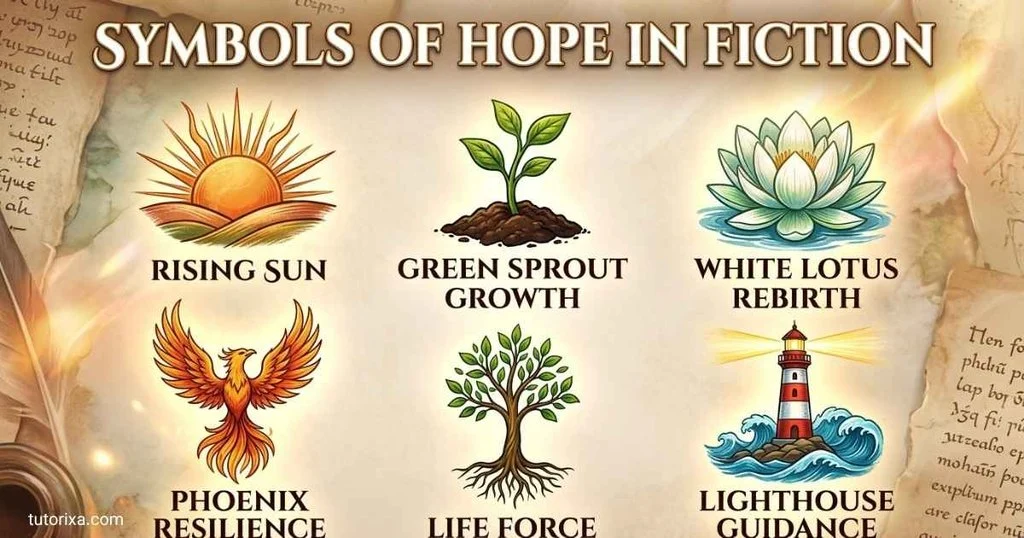
Fiction uses symbols to develop characters, communicate themes, and hint at future events. A symbol of hope may appear early in a story and gain a deeper meaning as the characters face challenges.
Writers often use familiar objects in new ways, so a symbol’s meaning should be understood through the story rather than assumed in advance.
The Light at the End of a Tunnel
This familiar image suggests that a difficult journey may eventually lead to relief. In fiction, it can represent the character’s belief that a problem has a solution.
The Phoenix
A phoenix can symbolize a character’s recovery after failure, loss, or destruction. It may also represent a community rebuilding after a major crisis.
The Seed
A seed can stand for a small possibility that grows into something much larger. A character planting a seed may be expressing faith in the future even when immediate results are uncertain.
The Journey
A journey can represent personal growth and the search for a better life. Obstacles along the way may test a character’s hope, while reaching a destination can mark a change in confidence or understanding.
The Guiding Star
A star may represent a goal, a person who offers direction, or an ideal the character wants to follow. In a fantasy or adventure story, it may also serve as a literal guide.
The Broken Object That Is Repaired
A repaired object can symbolize the possibility of healing after damage. The object may remain visibly changed, suggesting that recovery does not always mean returning to the exact condition that existed before.
When interpreting fictional symbols, ask three questions: Where does the symbol appear? How does its meaning change? What does it reveal about the character or the story’s central message? These questions help you understand the author’s use of hope without forcing a single meaning onto every detail.
Symbols of Hope Tattoos
A hope tattoo can serve as a personal reminder of recovery, faith, courage, love, or the decision to keep moving forward. Some people prefer a small, simple symbol, while others choose a detailed design connected with a meaningful experience.
Before selecting a tattoo, consider what the symbol means to you, whether it has cultural or religious significance, and how its design may look over time.
Popular Hope Tattoo Symbols
| Tattoo Symbol | Common Interpretation | Design Ideas |
| 🌱 Seedling | Growth and a fresh start | Tiny sprout on the wrist or ankle |
| 🦋 Butterfly | Transformation and change | Fine-line butterfly on the shoulder |
| ☀ Sunrise | A new beginning | Minimal sun rising over a line |
| 🌈 Rainbow | Hope after a difficult period | Small curved rainbow |
| ⚓ Anchor | Stability and perseverance | Simple anchor outline |
| ∞ Infinity | Continuing love or possibility | Infinity loop with a short word |
| 🕊️ Dove | Peace and reconciliation | Small flying dove |
| 🌸 Lotus | Renewal and spiritual growth | Fine-line lotus flower |
| 🔥 Phoenix | Rebirth and resilience | Detailed bird with flowing feathers |
| ★ Star | Guidance and aspiration | One small star or a group of stars |
These are design suggestions rather than fixed meanings. A butterfly, for example, may represent freedom, remembrance, or transformation depending on the person wearing it.
Small and Minimalist Hope Tattoos
A minimalist tattoo can communicate a personal message without taking up much space. Possible choices include:
- A tiny star to represent guidance.
- A single sprout for new growth.
- A small sunrise for a fresh start.
- An outline heart for love and support.
- A short line of text, such as “Keep going.”
- A small anchor for stability.
- A simple infinity sign for an ongoing connection.
Fine details may blur over time, especially in very small designs. Discuss the size, placement, and line thickness with an experienced tattoo artist before deciding.
Hope Tattoos With Words
Some people combine a symbol with a word or short phrase. Ideas include:
- Hope + sunrise: A reminder that a new day is possible.
- Hope + butterfly: A message of personal transformation.
- Hope + lotus: Growth through difficult conditions.
- Hope + anchor: Staying steady during uncertainty.
- Hope + star: Keeping a goal or guiding belief in sight.
- Hope + semicolon: For some people, the semicolon represents continuing a story when it could have ended. This association is especially connected with mental health and suicide-prevention awareness, though meanings vary.
If a tattoo includes text in another language or a religious symbol, verify the wording and context before getting it permanently inked. A meaningful tattoo should reflect your own values rather than a trend alone.
Frequently Asked Questions
What Is The Most Common Symbol Of Hope?
There is no single symbol that everyone recognizes as the most common. The rainbow, dove, sunrise, star, and anchor are all familiar choices. The best option depends on whether you want to express renewal, peace, guidance, or stability.
What Flower Represents Hope?
Several flowers can represent hope, including the lotus, cherry blossom, and flowers that bloom in spring. The lotus is often associated with spiritual growth and rising above difficult conditions, while spring flowers commonly suggest renewal. Meanings vary by culture and personal experience.
What Is A Symbol Of Hope And Strength?
The phoenix is a popular symbol of hope and strength because it represents renewal after destruction. The oak tree, mountain, and lion are also common choices for endurance, determination, and courage.
What Does A Rainbow Symbolize Besides Hope?
A rainbow can represent peace, beauty, diversity, inclusion, and new beginnings. In the biblical story of Noah, it is a sign of God’s covenant. In modern settings, its meaning may be connected with identity, community, or a specific personal experience.
Can I Use A Symbol Of Hope For A Tattoo?
Yes. Popular choices include a sunrise, butterfly, phoenix, lotus, anchor, star, or small plant. Choose a symbol with a meaning that matters to you, check any cultural or religious associations, and consult a skilled tattoo artist about placement and design.
Conclusion
Symbols of hope give people a visual way to express optimism, renewal, courage, and the possibility of a better future. From a simple star to an ancient ankh, each symbol can carry a different message shaped by culture, history, faith, and personal experience.
Nature, religion, art, and fiction offer many meaningful choices. A sunrise may remind you to begin again, a phoenix may reflect recovery, and an anchor may represent the stability you need during uncertain times. These symbols can be used in messages, artwork, jewelry, personal keepsakes, and tattoos.
The best symbol of hope is one that connects with your own story. Think about what you want it to represent, learn about its background, and choose a design that feels honest and meaningful to you. Even a small symbol can serve as a lasting reminder that growth and change remain possible.

 Grace Whitmore
 Daniel Brooks
 Nathan Holloway