
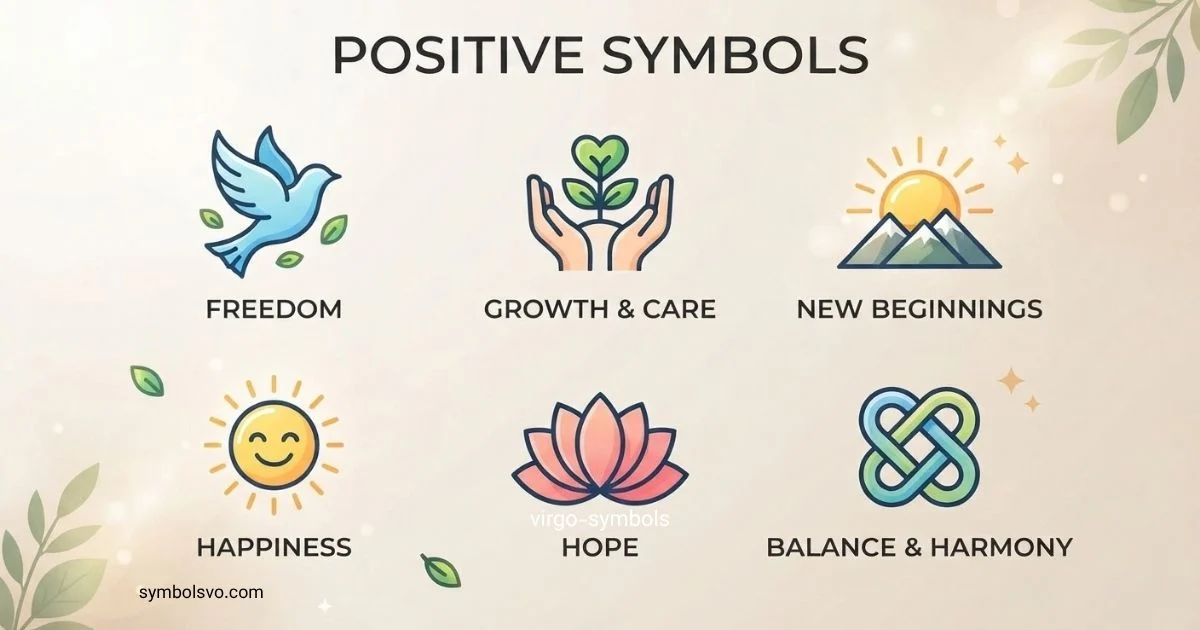
Positive symbols can say something powerful without using a single word. When I see a symbol connected with hope, peace, strength, or happiness, I’m reminded that simple images can carry deep meaning.
You may already recognize some positive symbols, but their stories and meanings can be surprisingly rich. From ancient traditions to modern culture, you’ll discover that many familiar signs represent ideas people have valued for generations.
In this guide, I’ll help you explore positive symbols, what they represent, where they come from, and how you can understand their meanings. Whether you’re curious about symbolism or looking for a meaningful sign, you’re in the right place.
Quick Answer
Positive symbols are visual emblems, objects, or patterns that evoke feelings of hope, joy, peace, and prosperity. They serve as universal psychological triggers that shift human perception toward optimism, providing a sense of protection and spiritual alignment across diverse cultures, religions, and personal belief systems throughout history.
Quick Facts About Positive Symbols
| Aspect | Information |
| Origin | Prehistoric nature worship, celestial observations, and early human storytelling. |
| Historical Significance | Used for protection, luck, healing, and honoring divine forces in ancient civilizations. |
| Main Meaning | Hope, resilience, prosperity, renewal, and universal well-being. |
| Spiritual Meaning | Bridges between the physical world and higher planes of consciousness. |
| Cultural Importance | Found in flags, architecture, religious texts, and folk art worldwide. |
| Modern Usage | Graphic design, jewelry, wellness practices, and mental health reminders. |
What Are Positive Symbols?
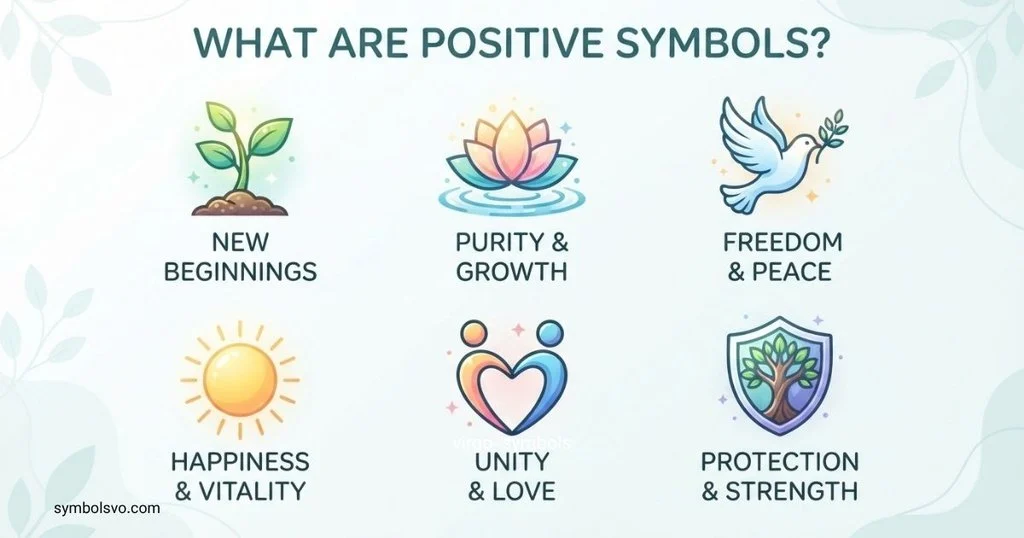
Positive symbols represent the shorthand of human optimism. A symbol is an object, mark, or image that carries a meaning beyond its literal form. When we label a symbol as positive, we are identifying a visual shorthand that consistently produces a sense of well-being or good fortune within a specific community.
These symbols did not appear out of thin air. They evolved from our ancestors’ keen observation of the natural world. A sun rising after a long winter was a natural positive symbol of survival. A budding flower signaled the return of life. Over millennia, these biological observations were formalized into art, mythology, and religion. Today, they remain vital tools that help us navigate our inner and outer worlds with a sense of purpose and calm.
Deep Symbolic Meaning of Positive Symbols
Spiritual Level
On a spiritual level, positive symbols serve as keys to inner transformation. They are often used as focal points in meditation to help the soul align with higher frequencies of love or peace. By holding or visualizing these shapes, individuals feel a deeper connection to the divine or the universal consciousness, reminding them that they are part of a larger, benevolent design.
Psychological Level
Psychologically, positive symbols act as cognitive anchors. When you see a symbol like a heart or a dove, your brain immediately recalls the emotional state associated with those shapes. This is rooted in archetypal psychology, where certain forms are hardwired into the collective unconscious to evoke specific responses like safety, love, or inspiration, effectively lifting our mood during times of stress.
Cultural Level
Culturally, these symbols build community. When a group shares a positive symbol, they share a silent language of encouragement. It fosters a collective memory of triumph and goodness. From a wedding ring signaling commitment to a flag representing peace, these symbols define the values of the society that cherishes them.
Types and Variations of Positive Symbols
1. The Lotus Flower
- Visual Description: A multi-petaled aquatic flower often shown in bloom.
- Meaning: Purity, enlightenment, and self-regeneration.
- Symbolism: Rising from the mud to bloom beautifully represents the human capacity for growth.
- Cultural Connection: Central to Buddhism and Hinduism.
- Where It Appears: Ancient temple carvings, yoga studios, and spiritual art.
2. The Dove
- Visual Description: A white bird, often depicted in flight or holding an olive branch.
- Meaning: Peace, harmony, and new beginnings.
- Symbolism: Represents the cessation of conflict and the promise of a peaceful future.
- Cultural Connection: Deeply tied to Judeo-Christian traditions and secular peace movements.
- Where It Appears: Religious paintings, peace activism posters, and wedding imagery.
3. The Four-Leaf Clover
- Visual Description: A rare variation of the common three-leaf shamrock.
- Meaning: Good luck, hope, and fortune.
- Symbolism: The rarity of the fourth leaf makes it a potent icon for success against the odds.
- Cultural Connection: Irish folklore and Celtic tradition.
- Where It Appears: Charms, greeting cards, and lottery iconography.
Positive Symbols Across Different Cultures
Ancient Egypt
The Ankh was the quintessential symbol of life. Egyptians viewed it as the key to existence, often shown in the hands of deities, promising eternal life and vitality.
Ancient Greece
The Cornucopia, or horn of plenty, represented abundance and nourishment. It was a staple in myths, symbolizing that the earth would provide for those who respected the natural order.
Roman Culture
Romans favored the Laurel Wreath. It was a symbol of victory, status, and excellence, worn by triumphant generals and poets alike to signify their success and honor.
Eastern Traditions
In China, the Double Happiness character is a powerful symbol of joy and marital harmony. It is ubiquitous in weddings, acting as a visual charm to ensure long-lasting domestic bliss.
Indigenous Traditions
Many Indigenous cultures utilize the Medicine Wheel. It represents the four directions, the cycles of life, and the need for balance between the physical, mental, emotional, and spiritual selves.
Similar Symbols and Their Meanings
It is helpful to compare these icons to understand their nuances.
| Symbol | Primary Emotion | Context |
| Heart | Love | Personal relationships |
| Dove | Peace | Global harmony |
| Sun | Vitality | Renewal and energy |
| Anchor | Stability | Hope and endurance |
While people sometimes confuse symbols like the star and the sun, the sun is generally linked to life-giving energy, whereas the star often represents guidance and lofty aspirations.
Positive Symbols in Mythology and Folklore
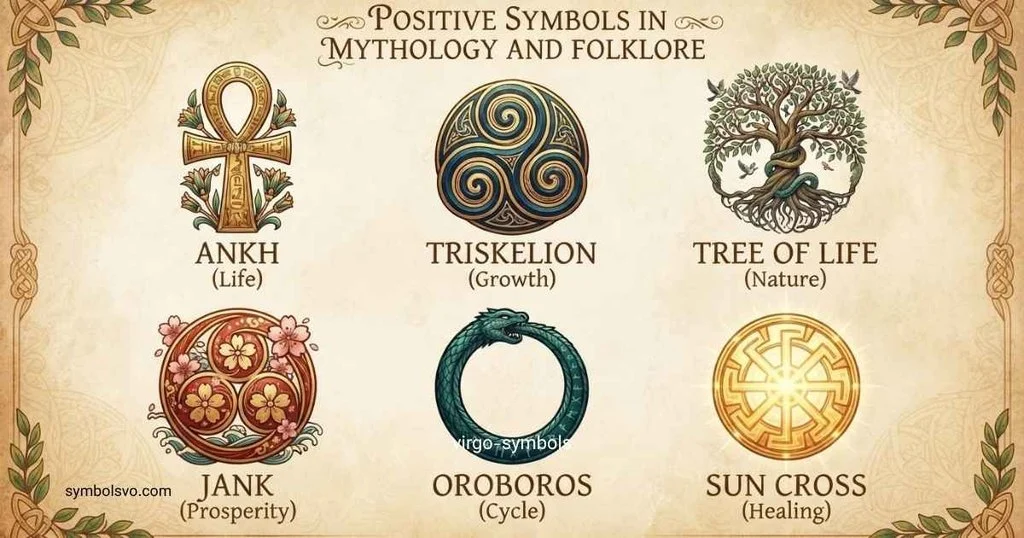
Mythology is the nursery for our modern symbols. Consider the Phoenix. This mythical bird, which bursts into flames and rises from its own ashes, is perhaps the ultimate positive symbol of resilience. It tells us that no matter how difficult a situation becomes, there is always the potential for a fresh start. Similarly, the Celtic Tree of Life reminds us that we are grounded in the earth but reach toward the heavens, a beautiful mythic balance of stability and growth.
Positive Symbols in Art, Literature, Movies and Pop Culture
In literature, symbols act as signposts. A rainbow appearing after a storm is a classic literary device indicating the end of strife. In modern movies, directors use light and color to create positive symbols, such as a character moving from a dark room into a sun-drenched garden to signify internal change. Today, tattoos often feature these symbols, turning the body into a canvas of personal affirmation and positive intent.
Spiritual and Dream Meaning of Positive Symbols
If you see a positive symbol in your dream, it is often considered a sign from your subconscious or a spiritual guide. It might be a message of encouragement, suggesting that you are on the right path. For instance, dreaming of a flowing river often symbolizes a positive transition or the cleansing of emotional baggage. These dreams are viewed as cautionary in a positive way, urging you to maintain your focus and keep moving forward with confidence.
Positive and Negative Meanings of Positive Symbols
Some symbols have a “shadow side” depending on the context.
| Symbol | Positive Meaning | Potential Negative Meaning |
| Sun | Life, energy, growth. | Excess, drought, burnout. |
| Fire | Transformation, passion. | Destruction, loss, volatility. |
| Water | Purity, healing. | Overwhelm, emotional turbulence. |
The key is balance. Most symbols are inherently neutral, but our interaction with them determines if the energy remains positive or shifts into something chaotic.
Why Humans Are Attracted to Positive Symbols
We are drawn to these shapes because our brains are hardwired for pattern recognition and emotional regulation. In a complex, often unpredictable world, symbols provide a sense of control and clarity. They function like emotional shorthand, helping us process information rapidly. When we look at a positive symbol, we are effectively giving ourselves a small, instant dose of reassurance and focus.
Modern Uses of Positive Symbols
Today, these icons have found a permanent home in:
- Branding: Using shapes like circles and suns to build trust.
- Wellness: Wearing crystals or jewelry shaped as sacred geometry.
- Digital Design: Emojis are the modern manifestation of these ancient symbols.
- Home Decor: Using specific patterns to invite peace into a living space.
Interesting Facts About Positive Symbols
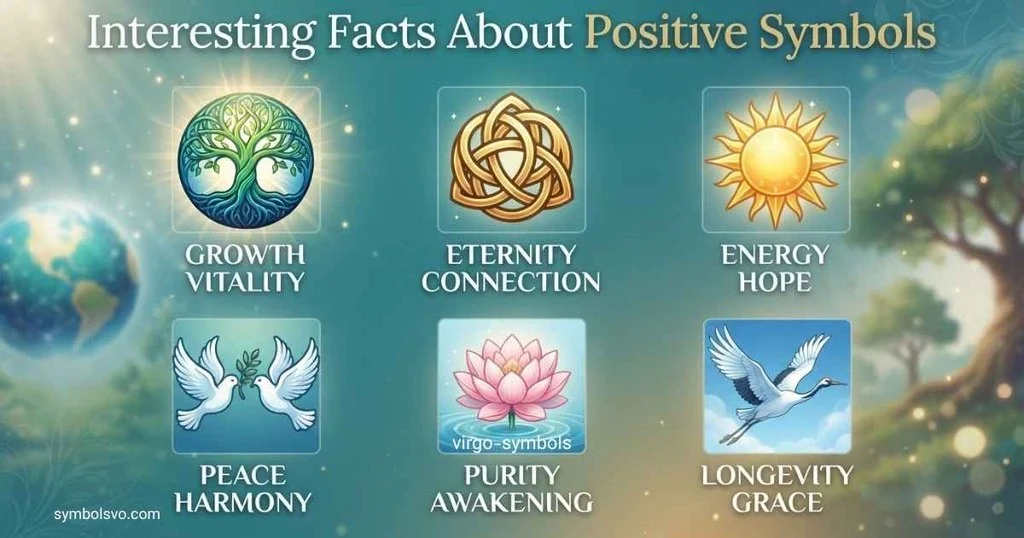
- The heart shape we use today was originally a representation of the silphium plant, used in ancient times as a medicine.
- The rainbow has been a symbol of hope across nearly every culture, from the Bible to Norse mythology.
- Some studies suggest that simply looking at positive imagery can lower cortisol levels.
- The peace sign was originally designed in 1958 for a nuclear disarmament protest.
- Ancient coins often featured symbols of cornucopias to project national prosperity.
Frequently Asked Questions
Are positive symbols effective for mental health?
Yes, they act as visual cues that can help ground you, provide comfort, and shift your focus toward optimistic thoughts, supporting overall well-being.
Do these symbols work regardless of belief?
Symbols are psychological tools. They work by triggering associations in your mind, which can provide benefits regardless of your personal or religious beliefs.
What is the most universal positive symbol?
The circle is widely considered the most universal, representing unity, wholeness, and the eternal cycle of life across almost every civilization.
Can I create my own positive symbol?
Absolutely. A symbol gains power through the meaning you attach to it. If you choose an image that personally inspires you, it becomes a powerful, custom-made positive icon.
Conclusion
Positive symbols are the enduring legacy of the human search for light and meaning. They remind us that even in the deepest shadow, there is a language of hope waiting to be recognized. By keeping these symbols close, you tap into a history of resilience that connects you to everyone who came before. May you always find your own symbols of joy to guide your path forward.

 Mason Ellington
 Daniel Brooks