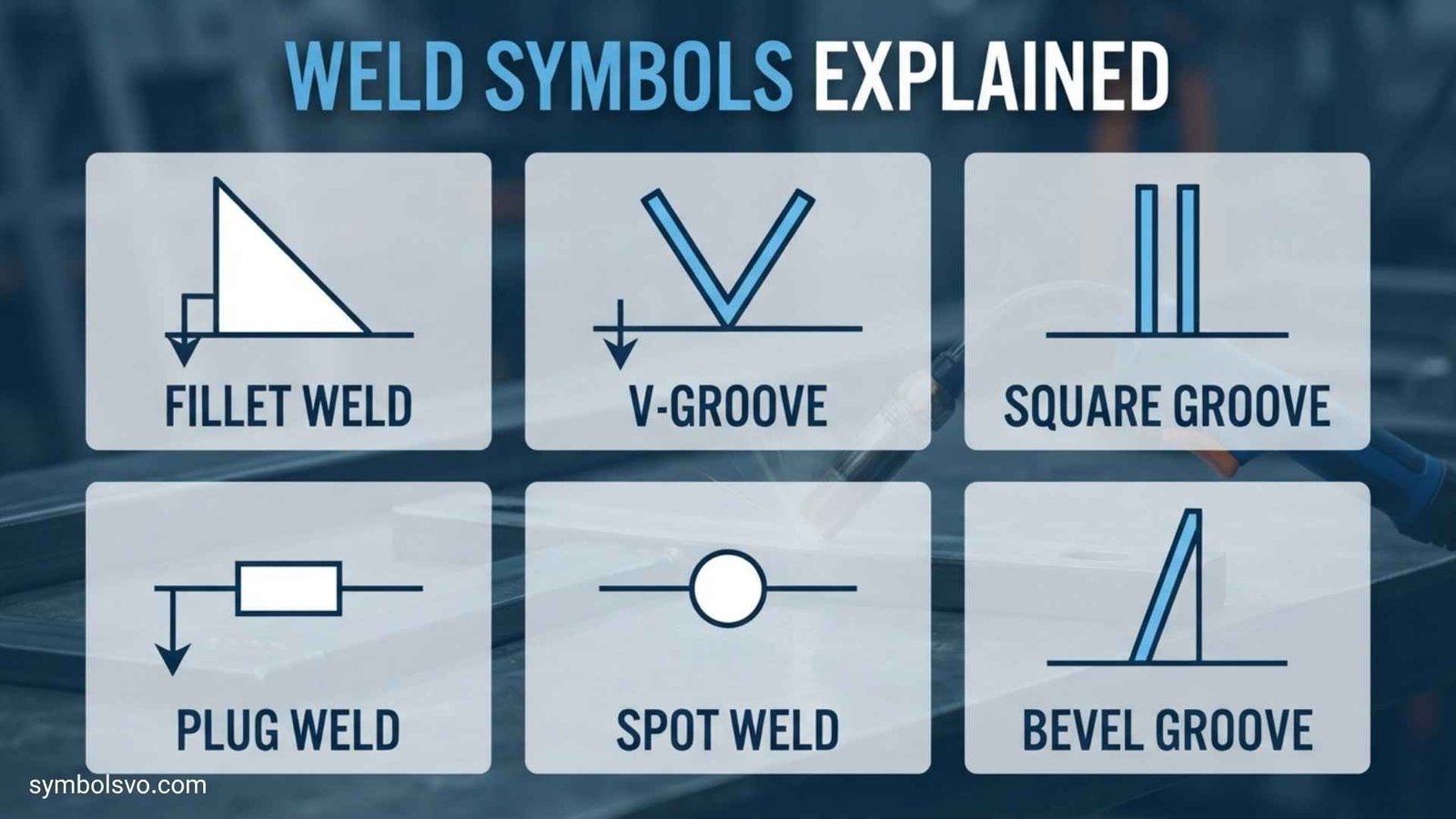
Weld Symbols Explained can make technical drawings much easier to understand, even if you are just starting out. I know welding blueprints can look confusing at first, but learning the meaning behind each symbol can give you much more confidence.
You do not need to memorize everything at once. I’ll walk you through the most important weld symbols in a simple way, so you can understand what the drawing is telling you and how each symbol relates to the actual weld.
By the end, you’ll have a clearer understanding of common weld symbols, their meanings, and how to read them correctly. Once you understand the basics, those complicated-looking welding drawings become much easier to follow.
Quick Answer
Weld symbols explained: Weld symbols are standardized graphical characters used on engineering blueprints to communicate precise instructions on how to join metal pieces together. They specify the type of weld, its size, location, finish, and geometry, ensuring safety and structural integrity across manufacturing and construction industries.
Quick Facts About Weld Symbols Explained
| Aspect | Information |
| Origin | Formally standardized by the American Welding Society (AWS) and ISO in the early 20th century. |
| Historical Significance | Evolved from ancient blacksmithing marks to precision industrial blueprints during the Industrial Revolution. |
| Main Meaning | Structural blueprints indicating the precise geometric requirements for fusing materials. |
| Spiritual Meaning | The ultimate metaphor for permanent connection, transformation through fire, and the unification of separate entities. |
| Cultural Importance | Represents the collaborative language of global trade, heavy industry, architecture, and craftsmanship. |
| Modern Usage | Utilized daily in aerospace engineering, automotive manufacturing, construction, civil infrastructure, and metal art. |
What Are Weld Symbols?
To get weld symbols explained accurately, we must look at them as a universal shorthand for metalworkers. At its core, a welding symbol is a geometric graphic placed on a technical drawing to tell a welder exactly where, how, and how large a weld needs to be.
Historically, before these symbols were standardized, engineers had to write long, detailed notes on blueprints to explain how to join parts. As manufacturing exploded during the Industrial Revolution and World War I, factories needed a faster, error free way to communicate. The American Welding Society (AWS) and the International Organization for Standardization (ISO) developed these symbols to create a borderless language. Today, a welder in Tokyo can read the exact same symbol as a fabricator in Chicago, ensuring that structures are built safely and identically across the globe.
Deep Symbolic Meaning of Weld Symbols Explained
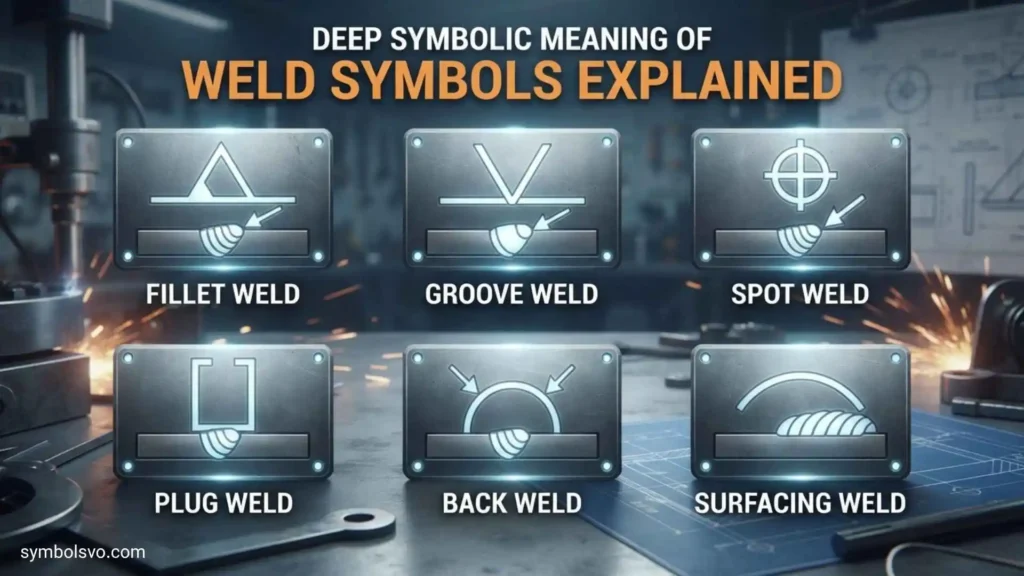
While these markings serve a highly technical purpose on the factory floor, they hold a deeper meaning when we look at them through a broader human lens.
Spiritual Level
On a spiritual level, welding symbols represent the sacred art of transformation through fire. Just like ancient alchemy, welding takes separate, cold elements and uses intense heat to melt them into a single, unbreakable bond. The symbols act as a physical manifestation of intention. They show that strength does not come from isolating components, but from the deliberate, structured union of different parts to create a stronger whole.
Psychological Level
Psychologically, weld symbols speak to our deep human desire for structural integrity and emotional safety. Carl Jung wrote extensively about archetypes and symbols reflecting our inner psyche. In a psychological context, a weld symbol represents the integration of the self. The different parts of the welding symbol, such as the arrow pointing to the joint and the tail holding special processes, mirror how our conscious mind directs energy to heal emotional fractures, leaving us stronger at the broken places.
Cultural Level
Culturally, these symbols reflect the shared trust of our modern civilization. When you walk into a stadium or cross a suspension bridge, you are trusting your life to hidden welds. The symbols represent a cultural contract of safety, precision, and collective hard work. They remind us that our society is built on shared standards and the quiet expertise of craftspeople who came before us.
Types and Variations of Weld Symbols
Understanding the system requires looking at the most common variations found on industrial blueprints. Here is how they break down.
Fillet Weld Symbol
- Visual Description: A right triangle placed on the reference line.
- Meaning: Indicates a weld made in a corner where two pieces of metal meet at a perpendicular angle.
- Symbolism: Represents foundational support and the merging of two distinct paths at a right angle.
- Where It Appears: Structural steel frames, shelving units, machinery bases, and modern metal sculpture.
Groove Weld Symbol (V-Groove)
- Visual Description: A “V” shape sitting on or below the reference line.
- Meaning: Requires the edges of the metal plates to be chamfered into a V shape before welding to ensure deep penetration.
- Symbolism: Vulnerability and preparation, showing that we must open up a space to create a deeper connection.
- Where It Appears: Heavy pressure vessels, pipeline construction, ship hulls, and industrial bridge girders.
Plug or Slot Weld Symbol
- Visual Description: A simple rectangle placed on the reference line.
- Meaning: Indicates a weld made through a hole or slot in one overlapping piece of metal to join it to the piece beneath.
- Symbolism: Internal strength and hidden support systems that work behind the scenes.
- Where It Appears: Automotive body panels, sheet metal fabrication, and aerospace assemblies.
Weld Symbols Across Different Cultures
The concept of joining metals and documenting the process spans across centuries of human civilization.
Ancient Egypt
In ancient Egypt, gold and copper smiths did not have printed blueprints, but they used sacred hieroglyphs to record formulas for soldering and casting. They viewed the bonding of metals as a divine gift from the god Ptah, the patron of craftsmen, treating metal joins as symbols of eternal life.
Ancient Greece
The Greeks advanced the metallurgy of bronze and iron significantly. Homer mentions the art of forging in his epics, and metalworkers used specific workshop stamps to mark armor and weapons. To the Greeks, a well fused joint symbolised the shield of Achilles, combining artistic beauty with unstoppable physical strength.
Roman Culture
Roman blacksmiths and engineers built vast water systems and military machines. They used distinct maker marks on lead pipes and iron ironwork. For the Romans, joining metal was an act of civic duty and empire building, symbolizing the unbreakable nature of the Roman state.
Eastern Traditions
In ancient Japan, the forging of a samurai sword was a holy ritual. Swordsmiths used distinct symbols chiseled into the tang of the blade, called the Nakago. These markings were not just signatures, they were spiritual symbols representing balance, purity, and the soul of the warrior.
Indigenous Traditions
Many Indigenous cultures across the Americas worked with native copper and silver. They passed down their metalworking knowledge through oral storytelling and symbolic art patterns rather than technical diagrams. For them, joining elements from the earth symbolized living in harmony with nature and honoring the spirit of the metal.
Similar Symbols and Their Meanings
Weld symbols are often compared to other technical and symbolic languages. Let us see how they relate to other systems.
| Technical System | Similarities to Weld Symbols | Differences from Weld Symbols |
| Architectural Symbols | Both guide physical construction projects. | Architectural symbols focus on space layout rather than material fusion. |
| Electrical Schematics | Both use lines and paths to direct energy flow. | Electrical symbols track electricity, while weld symbols track physical heat and metal. |
| Alchemical Glyphs | Both use geometric shapes like triangles and lines. | Alchemy sought spiritual transformation, while weld symbols focus on physical engineering. |
A common misconception is confusing a welding symbol with a weld symbol. The weld symbol is simply the small graphic indicating the type of weld, like a triangle for a fillet. The welding symbol refers to the entire blueprint assembly, which includes the reference line, arrow, dimensions, and tail.
Weld Symbols in Mythology and Folklore
Long before modern factories, the act of fusing metal was shrouded in magic and myth. In Greek mythology, Hephaestus was the blacksmith god who forged the thunderbolts of Zeus and the armor of the gods. He worked in a volcano, using secret signs to direct his mythical cyclops assistants.
In Norse folklore, the dwarven smiths Brokkr and Eitri forged Thor’s hammer, Mjolnir. They used runes and incantations to ensure the metal would never shatter. Modern weld symbols are the direct descendants of these mythical runes. They are the modern magic spells we use to control fire and steel, ensuring our buildings stand tall against the forces of nature.
Weld Symbols in Art, Literature, and Pop Culture
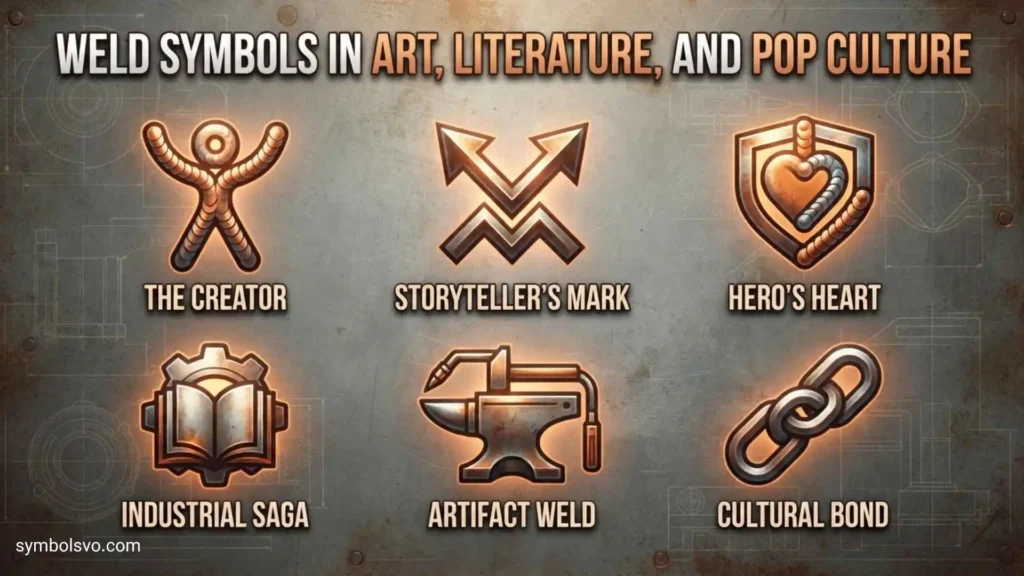
In recent years, the raw, industrial aesthetic of welding symbols has moved from the workshop into mainstream culture.
- Paintings and Industrial Art: Modern abstract artists incorporate blueprint lines and welding symbols into their paintings to comment on the mechanical nature of human life.
- Movies and Television: In sci-fi movies, you will often see glowing blueprints covered in welding notation to show the building of futuristic starships or giant robots.
- Tattoos: Many professional fabricators, ironworkers, and artists get the fillet or groove weld symbol tattooed on their skin. For them, it represents their craft, their blue collar pride, and their ability to hold things together under pressure.
- Fashion and Design: High-end industrial interior design uses actual blueprints featuring welding symbols as wallpaper, celebrating the raw beauty of structural planning.
Spiritual and Dream Meaning of Weld Symbols
Dreaming of technical drawings or weld symbols can be a fascinating experience. In the realm of dream interpretation, seeing a weld symbol suggests that you are looking for a permanent solution to a problem in your waking life. It means you need to bring two separate areas of your life together, perhaps your career and your family.
If you see a clearly defined weld symbol in a dream, it is a positive sign that you have the tools and the plan necessary to build a strong foundation. However, if the symbol is broken or confusing, it serves as a cautionary message. It warns you that you might be rushing into a relationship or a business deal without doing the proper preparatory work, leading to a weak bond that could fail under stress.
Positive and Negative Meanings of Weld Symbols
Like any powerful symbol, the concept of welding has two sides that balance light and shadow.
| Positive Meaning | Negative Meaning |
| Creation, building, and permanent structural strength. | Rigidity, inflexibility, and being locked into place. |
| Bringing diverse pieces together into a unified team. | Extreme heat, pressure, and potential burning danger. |
| Clear communication and following a safe plan. | Cold, mechanical distance over human emotion. |
Why Humans Are Attracted to Weld Symbols
Our attraction to these symbols comes from our natural love for patterns and order. Human psychology is wired to find comfort in structure. When we look at a welding symbol, our brains recognize a complete system that turns chaos into order.
There is also a deep collective memory at play. For thousands of years, humans have gathered around the fire of the forge. We are naturally drawn to the symbols that show we can master the elements. They give us a sense of personal meaning, proving that with the right blueprint, we can join forces and build a world that lasts.
Modern Uses of Weld Symbols
Today, these symbols are more active than ever. Beyond standard blueprints, they are used in:
- Custom Jewelry: Silversmiths use miniature versions of these notations to plan high end wearable art.
- Branding and Logos: Fabrication shops use the iconic arrow and reference line in their business logos to instantly show their expertise.
- Social Media: Welding influencers use symbols in their thumbnails and merch to instantly connect with the global maker community.
- Contemporary Spirituality: Some people use the geometric shapes of the symbols in meditation to focus on building inner strength and resilience.
Interesting Facts About Weld Symbols
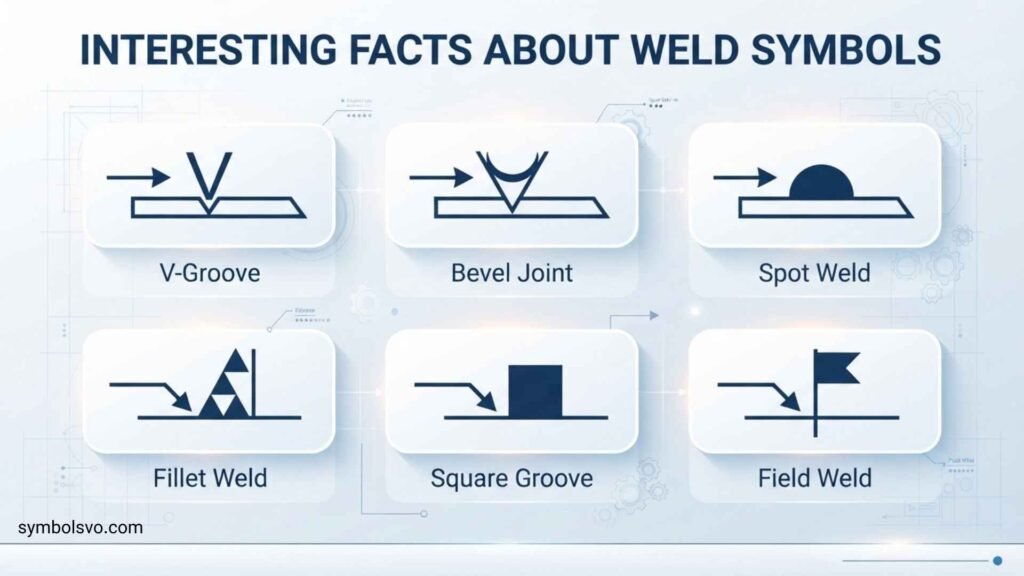
- The Arrow Rule: The arrow of the symbol always points directly to the joint where the weld needs to happen, leaving zero room for guessing.
- The Tail is Optional: The tail at the end of the reference line is only used if the engineer needs to specify a special welding process or a specific electrode.
- Side Matters: If a symbol is placed below the reference line, the weld goes on the arrow side of the joint. If it is placed above the line, it goes on the opposite side.
- Space Age Design: The exact same welding symbols used on a simple farm gate are used to build Mars rovers and deep space rockets.
Frequently Asked Questions
What is the basic anatomy of a welding symbol?
A complete welding symbol consists of a horizontal reference line, an arrow pointing to the joint, a weld symbol showing the type of weld, dimensions, and an optional tail for special instructions.
Why do we need weld symbols explained on blueprints?
They eliminate confusion between engineers and welders. By using standard symbols, everyone knows the exact size and type of weld required, which prevents structural failures and saves manufacturing time.
What is the difference between an arrow side and an other side weld?
An arrow side weld is indicated by a symbol placed below the reference line, meaning the weld happens exactly where the arrow points. An other side weld is placed above the line, meaning the weld happens on the opposite side of the joint.
Can weld symbols be used for all types of metals?
Yes. The symbols are universal and apply to steel, aluminum, stainless steel, and titanium, regardless of the specific welding process used.
Conclusion
Weld symbols explained thoroughly reveal that these industrial markings are much more than simple lines on a page. They are a powerful, cross cultural language of connection, safety, and human ingenuity. By mastering this unique shorthand, we honor the ancient traditions of the forge while building the future of our modern world. Ultimately, they remind us that when we connect separate pieces with care and precision, we create a bond that can withstand almost any pressure.

 Grace Whitmore
 Daniel Brooks