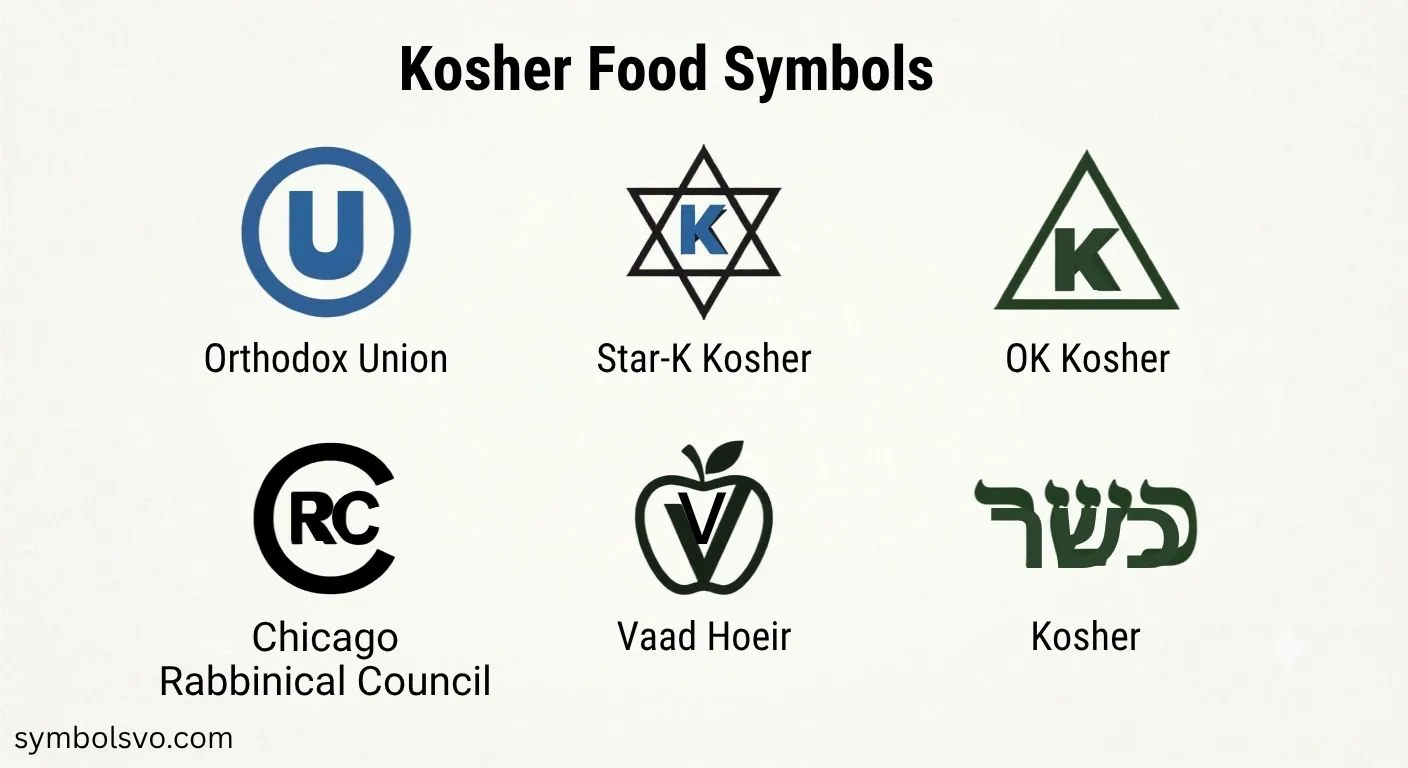
Have you ever looked at a food package and wondered what those small kosher symbols actually mean? Kosher Food Symbols help you understand which products meet specific dietary standards and make smarter choices when shopping.
Learning these symbols can save you time and remove confusion from food labels. I will guide you through the most common certifications, their meanings, and how you can recognize trusted kosher products easily.
Whether you are new to kosher foods or simply want to understand labels better, this guide gives you the clear answers you need. You can feel more confident every time you choose a product.
Quick Answer
Kosher food symbols, known as hechsherim, are certified trademarks printed on food packaging to prove the item complies with Jewish dietary laws (Kashrut). Monitored by rabbinic agencies, these symbols guarantee food purity, meticulous ingredient tracking, and processing safety for Jewish consumers, vegans, and people with severe food allergies worldwide.
Quick Facts About Kosher Food Symbols
| Aspect | Information |
| Origin | Ancient biblical commandments (Leviticus and Deuteronomy) evolved into organized 20th-century industrial certifications. |
| Historical Significance | Shifted food safety from localized community trust to globalized, independent third-party chemical and culinary oversight. |
| Main Meaning | Verification that a product contains no prohibited ingredients and has been prepared in clean, monitored facilities. |
| Spiritual Meaning | The elevation of physical eating into a holy act, bringing mindfulness, soul alignment, and divine connection to daily life. |
| Cultural Importance | Preserves Jewish heritage, fosters cross-cultural culinary trust, and unites a global community through shared food boundaries. |
| Modern Usage | Utilized by religious observers, vegans, vegetarians, lactose-intolerant consumers, and shoppers seeking transparent food labeling. |
What Are Kosher Food Symbols?
To truly understand kosher food symbols, we must first look at the word itself. The word kosher comes from the Hebrew root meaning fit, proper, or correct. For thousands of years, Jewish communities followed dietary laws called Kashrut. In ancient times, people bought their meat from the local butcher and their flour from the local miller. Everyone knew each other, so trusting that food was prepared correctly was simple.
The Industrial Revolution changed everything. Suddenly, food was being made in giant factories, sealed in tin cans, and shipped across oceans. Chemical additives, mysterious emulsifiers, and shared factory pipelines made it impossible for an ordinary person to know what was actually inside their food.
To solve this problem, independent rabbinic organizations stepped in during the early 20th century. They began inspecting factories, verifying ingredients down to the molecular level, and stamping approved products with a unique emblem. This emblem is called a hechsher. Today, these kosher food symbols serve as a universal stamp of transparency, telling consumers exactly what kind of environment and ingredients went into making their food.
Deep Symbolic Meaning of Kosher Food Symbols
Spiritual Level
On a spiritual level, kosher food symbols represent the idea that the physical world is deeply connected to the divine. In many spiritual traditions, eating is just a biological necessity. However, in the philosophy behind kosher laws, eating is an opportunity for inner transformation. Every time a person chooses to eat food bearing a certification symbol, they are practicing self-restraint and mindfulness. It turns the kitchen table into an altar and the act of chewing into a moment of spiritual awareness, keeping the soul and consciousness aligned with a higher purpose.
Psychological Level
Psychologically, humans crave boundaries, order, and safety. Carl Jung often wrote about the archetype of the sacred container (the temenos), a protected space where chaos cannot enter. Kosher food symbols act as a psychological shield against the anxiety of the unknown. In a world where food is hyper-processed and filled with hidden chemicals, these symbols trigger an emotional attraction rooted in trust. They satisfy our deep psychological need for cleanliness, predictability, and protective boundaries.
Cultural Level
Culturally, these symbols are anchors of identity and community beliefs. For centuries, Jewish communities were scattered across the globe, yet they remained connected through their shared dietary traditions. Today, seeing these familiar markings on a shelf in Tokyo, New York, or Paris tells a story of survival and cultural continuity. It allows people to share a meal with a sense of universal belonging, passing traditional interpretations of purity down from one generation to the next.
Types and Variations of Kosher Food Symbols
Understanding the various markings helps consumers navigate grocery aisles with complete confidence. Kosher symbols are broken down by the agency that inspects the food and the specific dietary status of the product.
The Major Agency Symbols
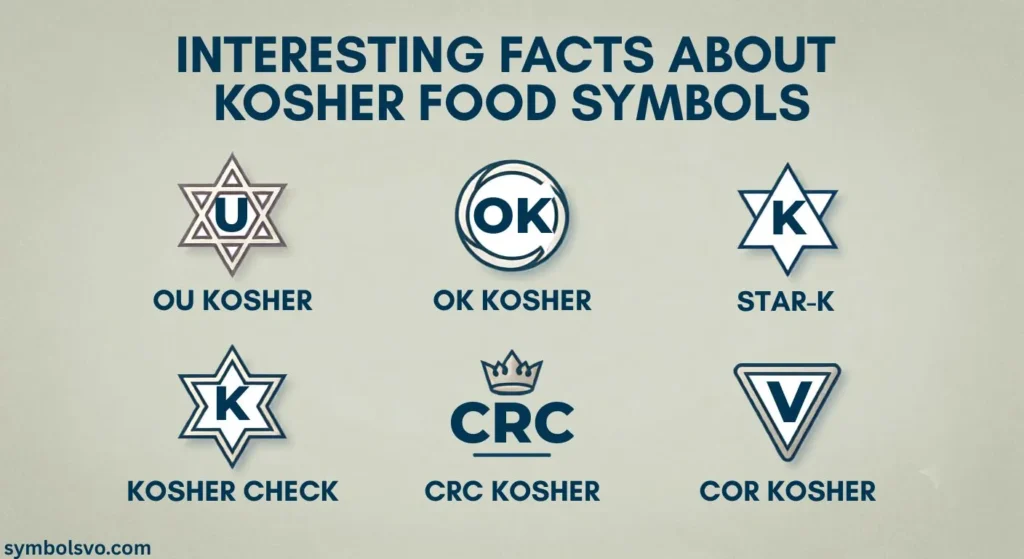
- The OU Symbol: A letter U inside a circle. This belongs to the Orthodox Union, the largest and oldest kosher certification agency in the world. It appears on hundreds of thousands of products globally.
- The OK Symbol: A letter K inside a circle. Managed by OK Kosher Certification, this symbol is internationally recognized for its rigorous corporate standards and technological tracking systems.
- The Star-K Symbol: A letter K placed inside a five-pointed star. Based out of Baltimore, this agency is highly respected for its expertise in food science and industrial kitchen technology.
- The Kof-K Symbol: The Hebrew letter Kof formed into a stylized emblem. This is a globally recognized symbol representing strict compliance with traditional laws.
Dietary Status Modifiers
Beside the agency symbol, you will often see small letters that reveal the exact classification of the food:
[OU] + D = Dairy
[OU] + M = Meat / Glatt
[OU] + Pareve = Neutral (No Meat, No Dairy)
[OU] + P = Kosher for Passover
- Dairy (D): This indicates the product contains milk ingredients or was processed on machinery that handles dairy. This is a critical marker for people with severe dairy allergies or those who are lactose intolerant.
- Meat (M or Glatt): This means the product contains meat or poultry products. It signifies that the meat was slaughtered according to strict humanitarian and ritual standards.
- Pareve (Plain or marked Pareve): This means the product is completely neutral. It contains absolutely no meat and no dairy. This status is highly sought after by strict vegans and vegetarians because it guarantees zero animal byproduct contamination.
- Passover (P): Do not confuse this with Pareve! The letter P means the product is Kosher for Passover, meaning it contains no leavened grains and meets special holiday standards.
The Concept of Pure Food Markings Across Different Cultures
While kosher food symbols belong to Jewish tradition, the practice of marking food to show physical and spiritual purity is a beautiful, universal human habit found across many major civilizations.
Ancient Egypt
In ancient Egypt, priests acted as the original food inspectors. Before an animal could be sacrificed in a temple or served to nobility, a priest had to inspect it for blemishes or disease. Approved animals were marked with a sacred linen cord or stamped with a clay seal to prove they were pure enough for consumption.
Ancient Greece
The Greeks relied on amphorae stamps. Wine, olive oil, and grain jars shipped across the Mediterranean were stamped with official seals from city officials. These seals guaranteed the geographic origin and processing quality, ensuring the items were fit for religious festivals and civic use.
Roman Culture
Romans took food regulation seriously for commercial and religious reasons. Garum (the famous Roman fish sauce) and premium olive oils carried detailed painted inscriptions called tituli picti. These markings acted as ancient barcodes, verifying that the contents were prepared according to traditional standards under official inspection.
Eastern Traditions
In Eastern cultures, food purity remains deeply tied to spiritual health. In Islamic traditions, Halal symbols certify that food is lawful and wholesome. In India, a simple green dot inside a square box is placed on packaging to certify that the food is purely vegetarian (Sattvic), ensuring it does not disturb a person’s meditative peace.
Indigenous Traditions
Many indigenous cultures across the Americas and the Pacific utilized complex totemic systems and taboos to govern food. While they did not use printed labels, specific carvers, elders, or spiritual leaders would designate certain hunting grounds, seasons, and preparation methods as sacred, ensuring the community only consumed food that was spiritually aligned with nature.
Similar Symbols and Their Meanings
Consumers often mix up kosher food symbols with other modern dietary certifications. Let us break down how they compare to prevent common misconceptions.
| Symbol / Certification | Similarities to Kosher | Differences from Kosher | Symbolic Relationship |
| Halal (Crescent M) | Focuses on spiritual cleanliness, ritual slaughter, and avoiding pork. | Allows certain mixtures of meat and dairy; bans all alcohol, which kosher allows in moderation. | Close cousin; many Muslims use kosher certification as a backup when Halal options are unavailable. |
| Vegan (Certified V) | Guarantees that no meat, dairy, or animal byproducts are used. | Focuses entirely on animal ethics; does not require rabbinic oversight or kitchen purification rituals. | Overlaps heavily with Kosher Pareve, though Pareve allows fish and eggs, which vegans avoid. |
| Non-GMO Project Verified | Focuses on purity, testing, and strict ingredient transparency. | Looks at genetic modification at a biological level; does not consider spiritual or traditional laws. | Partners in consumer trust; both reassure shoppers that the food has been heavily vetted. |
| Gluten-Free (GF) | Offers reliable safety boundaries for people with specific dietary restrictions. | Monitored entirely for medical safety and cross-contamination of grains like wheat and barley. | Shares the goal of allergen safety; Kosher for Passover items are frequently sought out by gluten-free shoppers. |
Kosher Food Symbols in Mythology and Folklore
The origins of kosher food laws are woven into ancient stories and folklore that have shaped modern meanings. In the biblical narrative, the book of Leviticus establishes a clear division between clean and unclean animals. Folklore surrounding these choices often centers on protection and spiritual resilience.
One famous historical reference comes from the Book of Daniel, where young captive youths refused to eat the unkosher delicacies from the king’s table, choosing simple vegetables instead. According to the story, their refusal to compromise their dietary integrity left them looking healthier and wiser than all the others.
In Eastern European folklore, stories abound of miraculous protection coming to those who kept their kitchens meticulously kosher despite poverty or persecution. The act of maintaining food purity became a symbol of spiritual resistance. These old tales passed down the idea that what you put into your body directly impacts your courage, character, and spiritual clarity.
Pop Culture, Art, and Modern Media

In modern times, kosher food symbols have transitioned from religious objects to iconic fixtures of design and popular culture.
+——————————————————-+
| KOSHER SYMBOLS IN MODERN LIFE |
+——————————————————-+
| [ POP CULTURE ] –> Referenced in classic sitcoms |
| and cooking competitions |
| [ BRAND TRUST ] –> Symbolizes premium quality on |
| major national brands |
| [ MODERN DESIGN ] –> Sleek, minimalist geometry on |
| clean-label food products |
+——————————————————-+
In television and movies, references to keeping kosher or looking for the U often appear as shorthand to showcase characters with strong principles, deep family traditions, or quirky urban identities. Cooking shows frequently feature chefs debating how to keep dishes kosher for special guests, bringing the concept into mainstream culinary discussions.
In the world of art and design, the minimalist geometry of a letter tucked neatly inside a circle is appreciated as a masterclass in clean branding. It tells a story of trust without cluttering the product aesthetic. Additionally, some people choose to integrate these symbols into tattoos, jewelry, or fashion items to make a bold personal statement about their dedication to lifestyle discipline, heritage, and pure living.
Spiritual and Dream Meaning of Kosher Food Symbols
When kosher food symbols appear in dreams or meditation experiences, they often carry a profound psychological message. Dreaming of a clear kosher symbol or searching for kosher food typically indicates a deep human desire for alignment and a need to clean up one’s life choices.
- Seeking Spiritual Nourishment: A dream about eating certified kosher food suggests you are looking for inputs (ideas, relationships, media) that are wholesome and spiritually elevating rather than toxic or chaotic.
- A Need for Boundaries: If you dream of inspecting food labels for a symbol, it often brings a cautionary message. Your subconscious might be warning you that your personal boundaries are blurred, and you need to be more selective about what you allow into your personal space.
- Seeking Protection: Seeing these symbols in a dream can represent a psychological search for safety, reassurance, and validation that you are on the right path.
Positive and Negative Meanings of Kosher Food Symbols
Like any powerful icon, kosher food symbols can represent both light and shadow concepts depending on how they are viewed.
| Positive Meaning (The Light) | Negative Meaning (The Shadow) |
| Purity and Cleanliness: Reassures consumers that food is free of hidden contaminants or unlisted processing aids. | Exclusionary Bureaucracy: Can sometimes feel like an elite, confusing club that limits access for those unfamiliar with the codes. |
| Community Cohesion: Fosters a deep sense of belonging, safety, and shared tradition across the globe. | Obsessive Scrupulosity: Can feed into religious anxiety or food-related neurosis if followed with fear rather than joy. |
| Ethical Supervision: Ensures extra sets of human eyes are watching industrial manufacturing conditions. | Commercialized Costs: The expense of certification can sometimes be viewed as a commercial burden on small businesses. |
Why Humans Are Attracted to Kosher Food Symbols
The lasting appeal of kosher food symbols comes down to basic human psychology and pattern recognition. The human brain is a pattern-seeking machine that is constantly scanning the environment for signs of safety or danger. A chaotic supermarket aisle filled with thousands of colorful, screaming marketing claims can cause decision fatigue.
When a shopper spots a familiar, disciplined icon like a circled U or a Star-K, the brain experiences a moment of relief. It bypasses the flashy marketing fluff and speaks directly to our collective cultural memory of what a trusted seal looks like. It turns a faceless corporate food product into an item that has been personally evaluated, approved, and blessed with human care.
Modern Uses of Kosher Food Symbols
Today, kosher food symbols have broken far beyond their original religious boundaries to become crucial tools in contemporary lifestyle branding, social media, and home decor.
- Allergen Safety: Millions of people with severe dairy allergies or lactose intolerance look for the Pareve symbol as a definitive life-saving marker, trusting it far more than standard corporate labels.
- Vegan and Vegetarian Lifestyles: Plant-based communities utilize these symbols on social media and shopping blogs to quickly identify foods that are guaranteed to be free from hidden meat processing juices or animal fats.
- Premium Branding: Modern food startups use kosher certification to signal premium quality, clean-label transparency, and high manufacturing standards to health-conscious buyers.
- Mindful Kitchen Design: In contemporary spirituality and home decor, labeled jars and designated kosher storage systems are used to create a clean, intentional cooking space focused on mindfulness.
Interesting Facts About Kosher Food Symbols
- The Oreo Miracle: It took over three years of intense factory reorganization and ingredient changes for Oreo cookies to successfully shift to kosher status in 1997, a monumental move celebrated by millions of cookie lovers worldwide.
- The Hidden Majority: Over 80% of all kosher certified products are actually purchased by people who are not religiously Jewish, including vegans, Muslims, vegetarians, and allergy-conscious shoppers.
- Passover Coca-Cola: Every spring, Coca-Cola produces a special run of soda with yellow caps stamped with an OU-P symbol, indicating it uses real cane sugar instead of high-fructose corn syrup to comply with holiday laws.
- Insect Inspection: Kosher certification involves checking vegetables under high-powered lights and microscopes to ensure absolutely zero microscopic insects are present, resulting in some of the cleanest produce on the market.
- Chemical Level Auditing: Kosher inspectors do not just check ingredients, they trace the origin of the enzymes, processing gases, and microscopic lubricants used on factory conveyor belts.
Frequently Asked Questions
What does the U inside a circle mean on food packaging?
The U inside a circle is the official trademark symbol of the Orthodox Union (OU), the world’s largest kosher certification agency. It indicates that the product was prepared in complete compliance with Jewish dietary laws under constant rabbinic supervision.
Can vegans trust a kosher symbol?
Vegans can absolutely trust kosher food symbols, provided they look for the word Pareve or a plain symbol without a D (Dairy) or M (Meat) modifier. A Pareve designation guarantees the item is completely free of meat, milk, or dairy byproducts, though it can legally contain eggs or fish.
Does a kosher symbol mean a rabbi blessed the food?
No, this is a common myth. A kosher symbol does not mean the food was blessed. Instead, it indicates that a qualified supervisor (a Mashgiach) inspected the ingredients, equipment, and manufacturing process to ensure it meets strict purity and processing standards.
What is the difference between a plain K and an enclosed kosher symbol?
A plain letter K is a generic letter and cannot be legally trademarked by a single agency. Therefore, anyone can print a plain K on a package. An enclosed symbol (like a U inside a circle or a K inside a star) is a legally protected trademark that proves an accredited agency is actively auditing the product.
Why do some kosher food symbols have a letter P next to them?
The letter P stands for Kosher for Passover. This means the product adheres to strict dietary rules for the eight days of the Jewish holiday of Passover, during which no leavened grains, wheat derivatives, or specific cross-contaminated ingredients are allowed.
Conclusion
Kosher food symbols are far more than mere corporate stamps or regulatory checkboxes on a grocery box. They are ancient anchors of faith, modern triumphs of food science, and deeply trusted symbols of transparency that speak directly to our psychological desire for clean, mindful living. By learning to read this subtle, quiet language hidden on our supermarket shelves, we can all bring a deeper sense of awareness, safety, and cultural connection to our kitchens. The next time you spot that tiny letter inside a circle, take a moment to appreciate the thousands of years of human story, care, and devotion wrapped up inside that one small mark.

I’m Daniel Brooks, a content creator and symbol enthusiast dedicated to researching the fascinating world of signs and symbols. I enjoy discovering the hidden meanings behind famous icons, emojis, historical emblems, and cultural symbols. Through my writing, I aim to provide trustworthy, well-researched, and reader-friendly information that helps people learn something new with every visit.
Books:
- The Complete Guide to World Symbols
- The Power of Universal Signs
 Mason Ellington
 Grace Whitmore