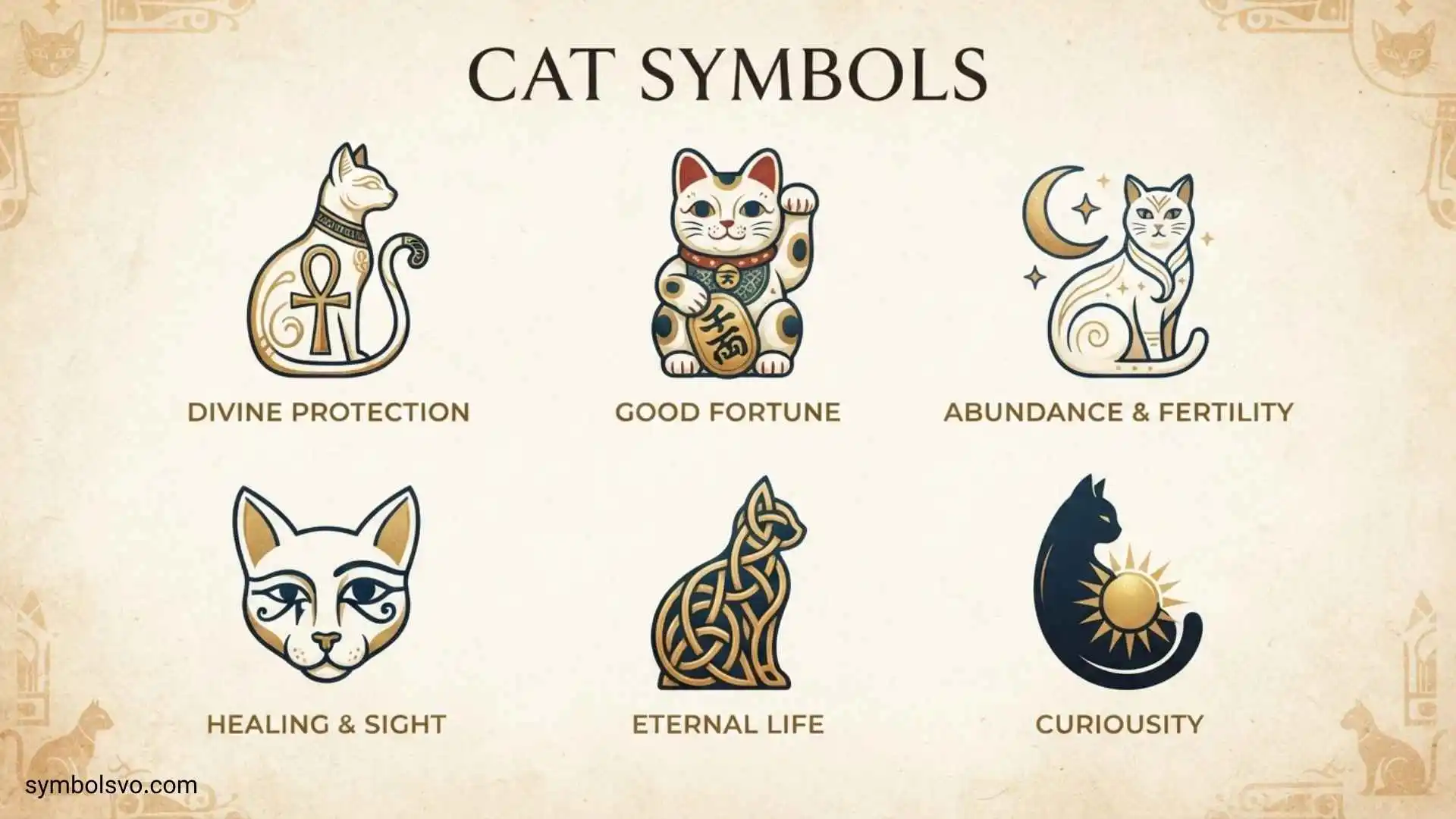
Cat Symbols can make simple text feel more playful, expressive, and personal. I love how a small cat character can add personality to a message, profile, or social media post without needing many words.
If you enjoy cute characters, you can find many Cat Symbols that match your style. I’ll help you discover easy options you can copy, paste, and use in your everyday online conversations.
You don’t need special design skills to use them. With the right Cat Symbols, you can make your text more fun, creative, and memorable in just a few seconds
Quick Answer
Cat symbols are powerful visual representations that embody independence, mystery, protection, magic, and dualism across human history. Rooted in ancient mythology and spiritual traditions, these icons represent the balance between light and dark, intuition, and the ability to navigate hidden realms of human consciousness.
Quick Facts About Cat Symbols
| Aspect | Information |
| Origin | Ancient Near East and early Nile Valley civilizations. |
| Historical Significance | Revered as divine protectors in Egypt and later feared during medieval Europe. |
| Main Meaning | Independence, intuition, resilience, grace, and deep mystery. |
| Spiritual Meaning | Guardians of the spirit world, psychic sight, and astral navigation. |
| Cultural Importance | Central icons in folklore, domestic protection rituals, and luck charms. |
| Modern Usage | Popular tattoo art, luxury branding, viral internet culture, and home decor. |
What Are Cat Symbols?
A cat symbol is a visual token that goes far beyond a simple depiction of a domestic pet. Historically, these symbols emerged when early agricultural societies noticed how felines protected grain stores from rodents. This practical partnership quickly transformed into a sacred relationship.
Over time, early people realized that cats possessed an eerie, quiet intelligence. Their glowing eyes in the dark made them natural symbols for foresight and hidden knowledge.
During the shift from ancient pagan traditions to medieval religious systems, the meaning of these symbols flipped drastically. Once celebrated as benevolent protectors, felines became targets of suspicion. Today, the modern world views these symbols as an expression of personal freedom, deep intuition, and untamed natural grace.
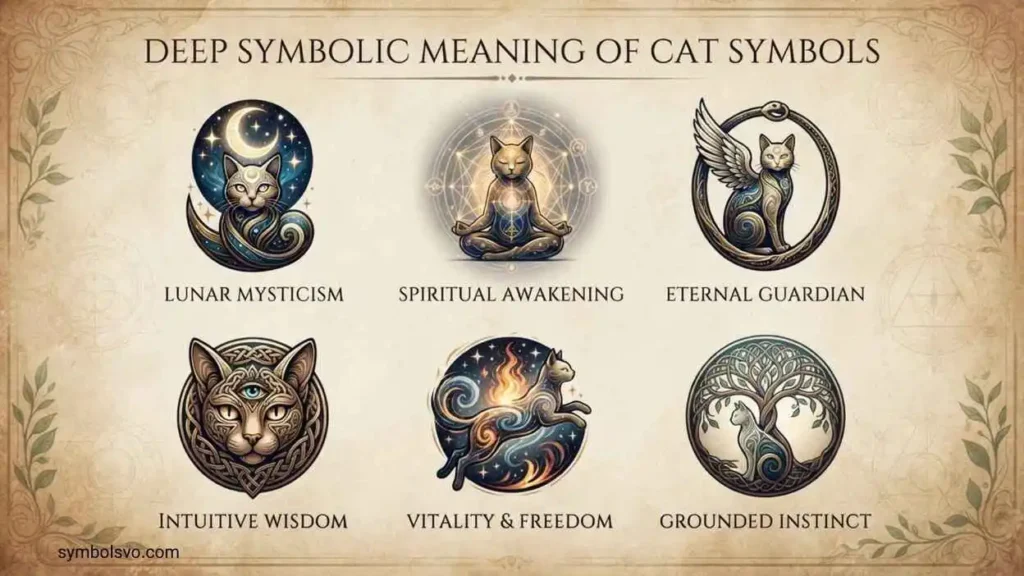
Deep Symbolic Meaning of Cat Symbols
Spiritual Level
On a spiritual level, cat symbols serve as ultimate guides for inner transformation. Felines are famous for their ability to see in the dark, making them symbols for spiritual sight and high psychic intuition. They encourage us to look deep within our own darkness to find hidden light. Many traditions believe cats walk between worlds, serving as bridges between our physical reality and higher realms of soul consciousness.
Psychological Level
Psychologically, these icons resonate with universal human emotions and archetypes. Carl Jung noted that animals in dreams represent our instinctual nature.
- The Shadow: Reflects our hidden, unexpressed desires and nighttime secrets.
- The Anima: Represents soft grace, flexible boundaries, and deep intuition.
- The Independent Rebel: Validates our psychological need to walk alone and reject peer pressure.
These symbols attract us because they remind us to accept our private thoughts and trust our instincts.
Cultural Level
Culturally, these icons build community beliefs around luck and home safety. In many societies, a feline emblem near a doorway brings social harmony and wards off negative energy. They represent a beautiful blend of shared domestic comfort and fierce individual boundaries.
Types and Variations of Cat Symbols
1. The Black Cat
- Visual Description: A sleek, midnight-colored feline, often depicted with glowing golden or green eyes.
- Meaning: Magic, mystery, hidden luck, and the deep unknown.
- Symbolism: Represents shifting fortunes, deep occult knowledge, and protection from negative spirits.
- Cultural Connection: Viewed as bad luck in Western folklore, but highly celebrated as a lucky charm in British maritime history and Japanese culture.
- Where It Appears: Halloween art, nautical protective charms, and ancient witchcraft folklore.
2. The Golden Bastet
- Visual Description: A slender sitting feline adorned with royal gold jewelry and sacred earrings.
- Meaning: Divine protection, fertility, joy, and home blessings.
- Symbolism: Represents maternal care, the nurturing warmth of the sun, and royal authority.
- Cultural Connection: Directly tied to the ancient Egyptian pantheon and temple rituals.
- Where It Appears: Temple ruins, modern protective amulets, and classic museum sculptures.
3. The Lucky Maneki-Neko
- Visual Description: A cheerful calico or white cat figurine holding a gold coin with one paw raised in a waving gesture.
- Meaning: Financial prosperity, welcoming hospitality, and good fortune.
- Symbolism: Inviting positive opportunities, driving away bad business, and attracting wealth.
- Cultural Connection: Deeply rooted in historic Japanese marketplace traditions.
- Where It Appears: Store entrances, Asian business counters, and modern lucky jewelry.
Cat Symbol Text
Cat symbol text refers to characters, symbols, and decorative text that visually represent cats or feline features. These can include simple cat faces, whiskers, paws, ears, and other creative combinations made with Unicode characters.
People commonly use cat symbol text in social media bios, usernames, messages, captions, profiles, and online communities. Unlike standard cat emojis, text symbols can often be combined in different ways to create a more personalized appearance.
Examples may include simple forms such as =^.^=, ฅ^•ﻌ•^ฅ, or decorative paw and face combinations. The exact appearance can vary depending on the font, device, or platform being used.
Cat Symbols Copy and Paste
Cat symbols are popular because they are easy to copy and paste into social media posts, usernames, comments, messages, and profile descriptions. Unicode-based symbols can usually be copied directly without needing a special keyboard or image editor.
Some cat-related symbols include:
- 🐱 Cat
- 🐈 Cat
- 🐈⬛ Black Cat
- 🐾 Paw Prints
- ฅ^•ﻌ•^ฅ Cute cat text
- =^.^= Classic cat face
When copying a symbol, remember that some characters may look slightly different across phones, browsers, operating systems, and social media platforms.
Cat Symbols Emoji
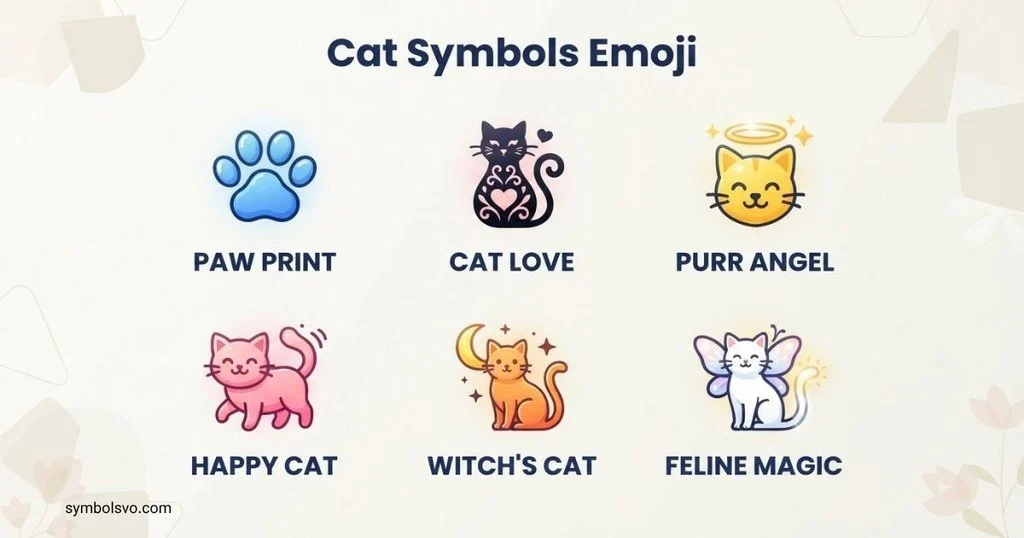
Cat symbols and cat emojis are closely related but are not exactly the same. A cat emoji is a standardized pictographic character, while a cat symbol can include Unicode characters, text art, punctuation, or decorative combinations.
Common cat emojis include 🐱, 🐈, and 🐈⬛. These are useful when you want a quick visual representation of a cat without creating a text design.
Cat emojis can express affection for animals, playfulness, independence, humor, or simply an interest in cats. Their meaning can also depend on the surrounding message and the context in which they are used.
Cute Cat Symbols
Cute cat symbols are designed to give messages, usernames, and profiles a playful or affectionate appearance. They often use combinations of facial characters, ears, whiskers, paws, and decorative Unicode symbols.
Examples include:
- ฅ^•ﻌ•^ฅ
- (=^・ω・^=)
- /ᐠ。ꞈ。ᐟ\
- 🐱✨
- 🐾♡
- 😺
Cute cat symbols work particularly well in casual conversations, social media bios, gaming profiles, and fan communities. You can also combine them with hearts, stars, flowers, or other decorative characters.
Aesthetic Cat Symbols
Aesthetic cat symbols are commonly used to create a visually pleasing style in usernames, captions, bios, notes, and digital artwork. They often combine cat-related characters with minimalist or decorative Unicode symbols.
For example:
- 𓃠
- 🐈⬛
- ♡₊˚ 🐈
- ⋆。°✩🐾
- ᓚᘏᗢ
- ₍^. .^₎⟆
The character 𓃠 is particularly popular in aesthetic designs because it resembles an ancient Egyptian-style feline figure. However, its appearance and interpretation can vary by font and platform.
Aesthetic cat symbols do not have one fixed meaning. Their purpose is often visual, helping users create a particular mood or style.
Things That Represent Cats
Cats can be represented by much more than a simple cat image or emoji. Throughout different cultures and periods, various objects, animals, behaviors, and symbols have been associated with feline qualities.
Common things that can represent cats include:
- Paw prints
- Whiskers
- Cat ears
- Moon imagery
- Claws
- Fish
- Yarn
- Bells
- Black cats
- Cat eyes
- Egyptian feline imagery
These representations can suggest qualities such as independence, curiosity, mystery, elegance, playfulness, patience, or agility. However, the meaning changes depending on cultural and historical context.
Cat as a Symbol
The cat has been used as a symbol in many cultures and traditions. Its meaning is not universal, but cats are frequently associated with independence, mystery, intelligence, agility, curiosity, and protection.
In ancient Egypt, cats had an especially important cultural and religious role. The goddess Bastet was associated with a lioness and later with a domestic cat, and cat imagery became connected with protection, domestic life, and motherhood.
In other cultures, cats have been viewed differently. Some traditions connect them with good fortune, while folklore in other places has associated particular cats, especially black cats, with mystery or superstition.
Because of these different traditions, the meaning of a cat symbol should always be considered within its cultural context.
Lucky Cat Symbols
Lucky cat symbols are strongly associated with the Japanese maneki-neko, often called the beckoning cat or lucky cat. The familiar figurine usually shows a cat raising one paw as though inviting good fortune or customers.
Maneki-neko figures are commonly displayed in homes, shops, restaurants, and businesses. Different versions may use different colors, objects, and paw positions, and these variations can have different traditional associations.
The lucky cat has also become a popular decorative symbol around the world. Today, people may use 🐱, 🐾, or maneki-neko imagery simply to represent good luck, prosperity, welcome, or Japanese-inspired aesthetics.
Egyptian Cat Symbols
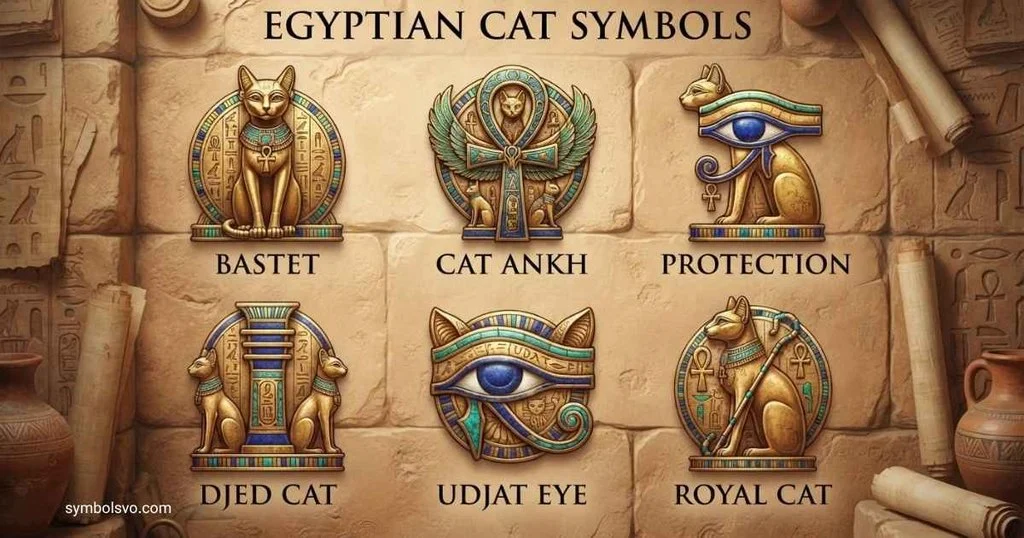
Cats have a strong connection with ancient Egyptian culture. Ancient Egyptian art frequently depicted cats and feline forms, and the animals were associated with several religious and cultural ideas.
One of the best-known feline-associated deities is Bastet, who was represented in later periods with the head or form of a domestic cat. She became associated with protection, the home, fertility, and motherhood.
Ancient Egyptian cat imagery can therefore represent protection, family, grace, and divine associations. Symbols inspired by Egyptian cats are now also widely used in jewelry, tattoos, artwork, logos, and decorative designs.
Ancient Cat Symbols
Ancient cat symbols appear in the art, religion, mythology, and material culture of several civilizations. Their meanings differed depending on the society and historical period.
Ancient Egypt is the most widely recognized example because feline imagery appears extensively in Egyptian art and religious traditions. Cats could be represented in statues, paintings, jewelry, and other objects.
Ancient cat imagery can symbolize different ideas, including protection, domestic life, femininity, power, mystery, and the relationship between humans and animals. It is important not to assume that every ancient cat image had the same meaning.
Celtic Cat Symbols
Cats appear in Celtic folklore and medieval Irish and Scottish traditions, although the idea of a single universal “Celtic cat symbol” is misleading. Different stories and traditions portray supernatural cats in different ways.
One famous example is the Cat Sìth, a supernatural cat-like creature from Scottish folklore. It is often described as a large black cat with a distinctive appearance. Stories about the Cat Sìth vary, and later popular culture has added its own interpretations.
Modern Celtic-inspired cat designs may therefore combine cats with Celtic knots, spirals, crosses, or other decorative patterns. These modern designs should be distinguished from historically documented Celtic symbols.
Medieval Cat Symbols
Cats had practical and cultural roles during the medieval period, but their symbolism was not uniform throughout Europe. They could be valued as useful animals, particularly because they helped control rodents, while religious and folkloric attitudes toward cats varied across time and place.
Medieval manuscripts and artwork sometimes included cats as part of everyday scenes, illustrations, or marginal decorations. Cats could also appear in stories and folklore.
Modern designs described as “medieval cat symbols” often draw inspiration from medieval manuscripts, heraldic artwork, illuminated letters, and historical illustrations rather than representing one standardized medieval symbol.
Giga Pet Cat Symbols
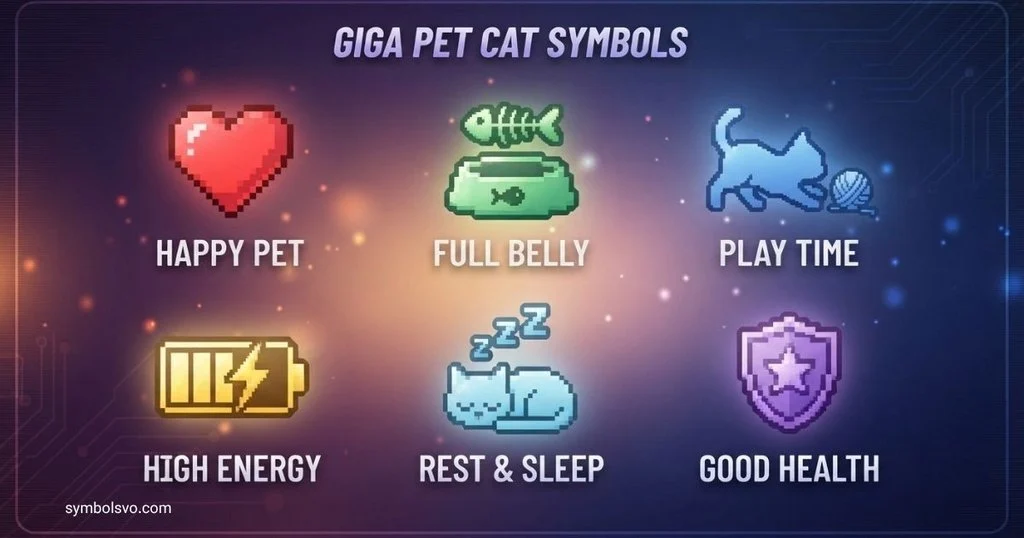
Giga Pet refers to the virtual pet toys that became popular during the 1990s. These electronic pets allowed users to care for and interact with digital animals, including cat-themed virtual pets.
Giga Pet cat imagery is now associated with retro technology, virtual pets, childhood nostalgia, and early electronic gaming culture. People interested in vintage digital aesthetics may use cat-related characters, icons, or pixel-art designs inspired by these devices.
Because Giga Pet was a commercial product and not an ancient symbolic tradition, its cat imagery is best understood as part of 1990s virtual-pet culture rather than as a historical cat symbol.
Cat Symbols Across Different Cultures
Ancient Egypt
In the Nile Valley, cat symbols were completely sacred. Felines were closely tied to the goddess Bastet, who protected homes from disease and evil forces. Harming a feline was a capital crime. Families went into deep mourning when a pet passed away, often shaving their eyebrows as a sign of grief.
Ancient Greece
Greek culture connected feline imagery to Artemis, the fierce goddess of the hunt and wild spaces. Mythological tales suggest that Artemis would occasionally take the form of a feline to escape cosmic dangers. Through this connection, the symbol came to represent stealth, untamed nature, and feminine autonomy.
Roman Culture
The Romans viewed the feline as the ultimate symbol of liberty and freedom. Felines were the only animals allowed inside the sacred temples of Libertas, the goddess of liberty. The imagery often showed the goddess with a feline resting at her feet, reminding citizens of their personal rights.
Eastern Traditions
Across Japan and China, cat symbols bring financial blessings and ward off evil. The famous Maneki-Neko figure is based on old legends of a feline saving a wealthy samurai from a lightning strike. In Buddhist traditions, these animals are admired for their quiet, meditative nature.
Indigenous Traditions
Many Indigenous North American tribes viewed wild felines, like the cougar or bobcat, as symbols of silent power, leadership, and acute hunting strategy. They believed these animals possessed deep medicine and taught humans how to watch, wait, and strike with absolute precision.
Modern Interpretations
In our current era, these icons represent the ultimate badge of independent lifestyle choices. The symbol is heavily used in digital art and creative subcultures to signify a proud, self-reliant personality that refuses to conform to rigid social rules.
Similar Symbols and Their Meanings
To truly grasp the essence of feline icons, we can compare them to other common animal markers.
| Symbol Type | Purpose | Key Focus | Lifespan |
| Cat Symbol | Internal mysteries & intuition | Independence and flexible boundaries | Timeless and adaptable |
| Dog Symbol | External relationships | Loyalty, duty, and community obedience | Grounded in social rules |
| Owl Symbol | Intellect & academic wisdom | Detached observation and mental logic | Fixed on intellectual truth |
A common misconception is that feline icons represent cold selfishness. In reality, they symbolize healthy boundaries. While a dog symbol represents loud devotion to a group, a feline symbol shows us how to love deeply while keeping our unique identity intact.
Cat Symbols in Mythology and Folklore
The world of myth is rich with feline stories that continue to shape our modern thoughts. In Norse mythology, Freya, the goddess of love, beauty, and magic, traveled in a grand chariot pulled by two massive grey cats. This myth linked felines to deep passion and supernatural sight.
[ Ancient Egyptian Protector ] —> [ Medieval Shadow Icon ] —> [ Modern Lucky Charm ]
In Celtic folklore, stories of the Cat Sith, a fairy creature, warned villagers to guard their hearths. These legends built an image of a creature that demands respect. By studying these ancient tales, we see that humans have always viewed felines as smart observers who hold the keys to hidden mysteries.
Cat Symbols in Art, Pop Culture, and Design
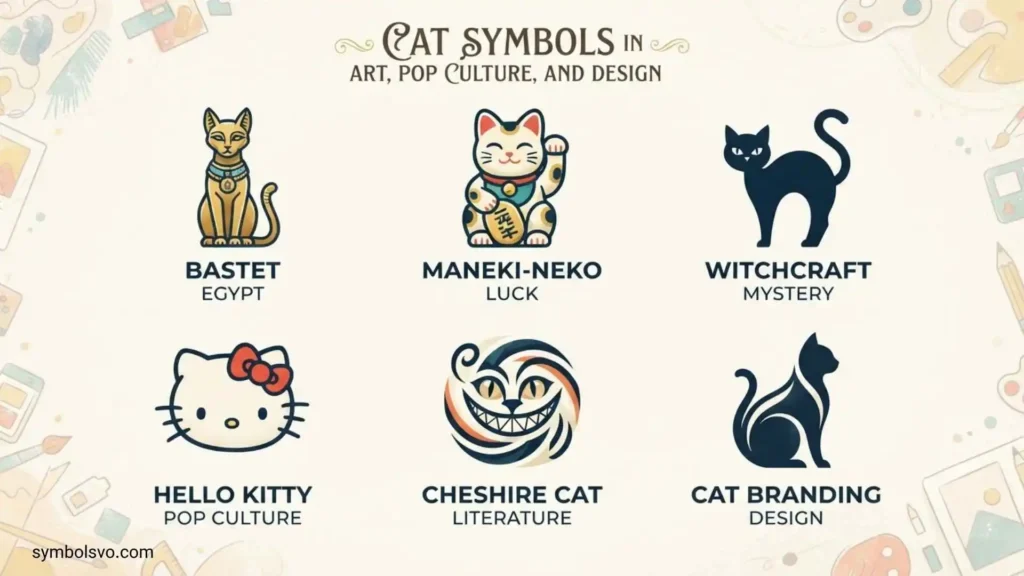
Feline iconography has left a permanent mark on human creativity. From the elegant ink drawings of traditional Japanese woodblock prints to the avant garde paintings of the twentieth century, artists use felines to capture quiet, domestic mystery.
In modern pop culture, these symbols have successfully conquered the digital world. They dominate social media memes, star in popular animated films, and serve as luxury emblems for high-end fashion houses. When a top fashion brand puts a sleek feline silhouette on a luxury handbag, they are instantly tapping into centuries of associated grace, mystery, and elite independence.
Spiritual and Dream Meaning of Cat Symbols
When cat symbols glide into your dreams or meditation sessions, they carry specific messages from your unconscious mind. Because our dreams speak in fluid metaphors, a feline rarely represents just a physical pet.
Instead, a calm feline in a dream usually points to an awakening of your natural intuition. It suggests you need to trust your gut feelings about a situation. However, if you dream of an aggressive or scratching feline, it may serve as a cautionary message that you are ignoring your true feelings or allowing someone to cross your personal boundaries in daily life.
Positive and Negative Meanings of Cat Symbols
Feline imagery holds a fascinating balance of light and shadow, changing its tone depending on context.
| Positive Meaning | Negative Meaning |
| Encourages deep intuition and insight. | Can represent emotional coldness or detachment. |
| Symbolizes resilience and starting fresh. | Associated with bad omens and hidden deception. |
| Celebrates individual freedom and style. | Linked to unpredictable or fickle moods. |
| Brings good luck, safety, and wealth. | Historically tied to fear and dark magic. |
Why Humans Are Attracted to Cat Symbols
Our deep attraction to these symbols is woven into human psychology. The human mind naturally loves patterns that balance mystery with comfort. Felines provide the perfect canvas for this.
We are drawn to their quiet movements because they remind us of our own hidden potential. In a busy, loud world that demands constant attention, the feline symbol stands as a quiet reminder of the beauty of silence, the strength of observation, and the supreme power of walking your own path without needing outside approval.
Modern Uses of Cat Symbols
In contemporary society, feline imagery continues to thrive in creative and practical ways.
- Tattoos: Chosen by individuals to mark a major comeback or celebrate their untamed nature.
- Jewelry: Sleek silver and gold pendants worn to attract good luck and intuitive strength.
- Branding: Used by cosmetics and fashion lines to project timeless elegance and premium grace.
- Home Decor: Stylized statues placed near windows and doors to invite peaceful energy into the home.
Interesting Facts About Cat Symbols
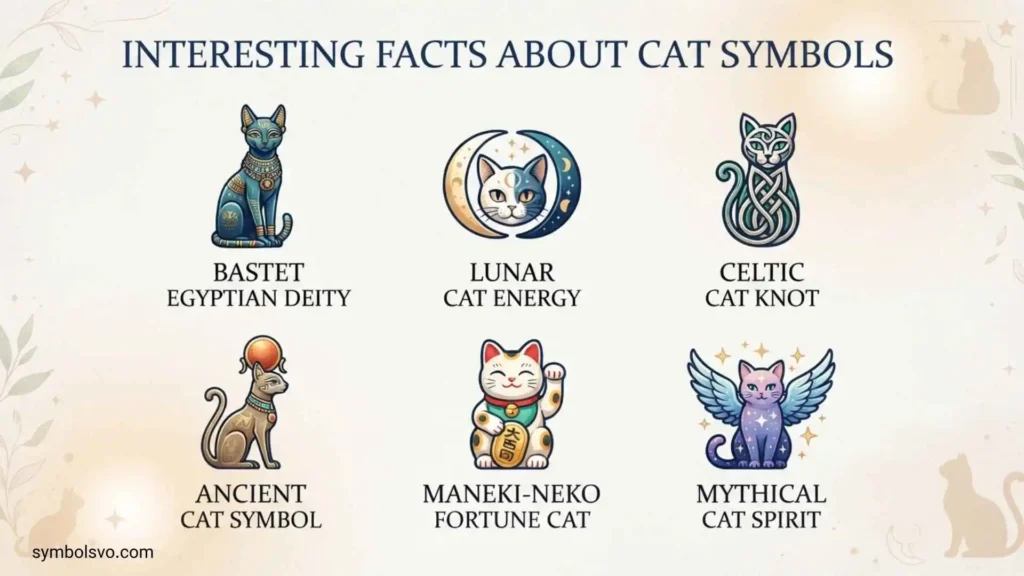
- In ancient Egypt, people would fully embalm and mummify felines to accompany them into the afterlife.
- Sailors kept black feline symbols on ships because they believed they could control the weather and guarantee safe seas.
- King Charles I of England loved his pet black cat so much that he had guards watch it day and night.
- The famous waving lucky cat figurine actually originated in Japan during the Edo period.
- Scientific studies show that listening to a cat purr can lower human blood pressure and reduce anxiety levels.
Frequently Asked Questions
Why do cat symbols represent mystery?
Felines are quiet, nocturnal hunters with eyes that glow in the dark. Their silent movements and preference for the night naturally link them to hidden secrets and the unconscious mind.
What does a cat symbol mean in a tattoo?
A feline tattoo usually symbolizes independence, resilience, protection, and the classic idea of having nine lives, marking a person’s ability to bounce back from tough times.
Are black cat symbols actually bad luck?
No. While medieval European folklore created this myth, many global cultures, including Japanese and Scottish traditions, view black felines as ultimate symbols of good luck and prosperity.
How did ancient Egyptians use cat symbols?
They used them in jewelry, temple art, and home amulets to invoke the protection of the goddess Bastet, ensuring safety, health, and family joy.
Conclusion
Cat symbols are enduring emblems of our deepest instincts and spiritual curiosities. They remind us to honor our personal boundaries, develop our intuition, and face life’s transitions with effortless grace. By carrying the weight of centuries of myth and psychological truth, these beautiful icons continue to teach us how to walk confidently between the light of the everyday world and the beautiful mysteries of the unknown.

 Grace Whitmore
 Daniel Brooks