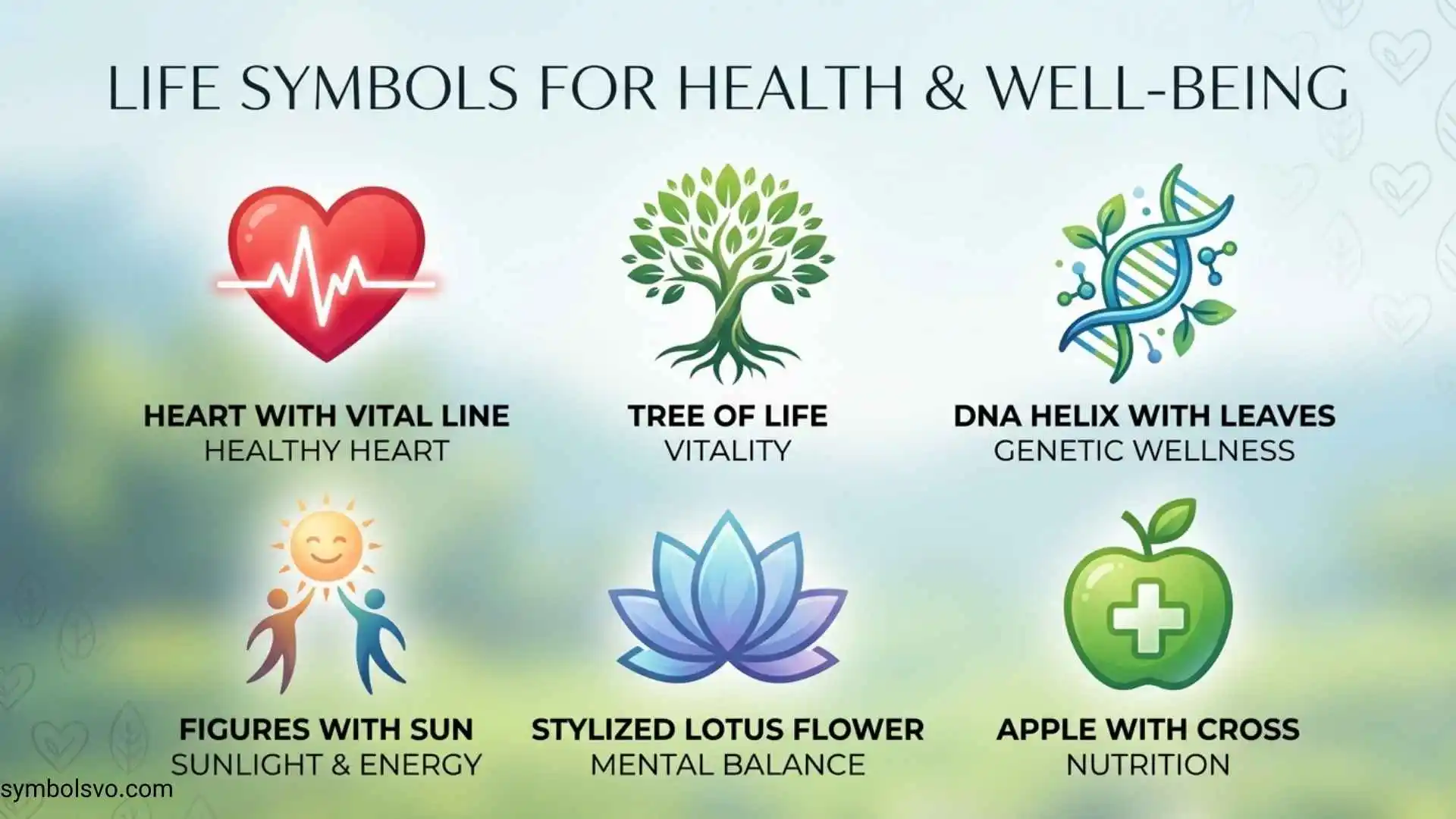
Health Symbols can help you understand important medical ideas at a glance. I know these signs can sometimes look confusing, but you can learn their meanings with a simple guide.
When I explore health symbols, I focus on the story behind each sign and how it is used. You can quickly discover why certain symbols appear in hospitals, pharmacies, medical websites, and health-related materials.
I want to make this topic easy and practical for you. By learning common health symbols, you can recognize important signs faster and understand their purpose with greater confidence.
Quick Answer
Health symbols are distinct graphic signs, emblems, or icons that represent medical care, wellness, physical healing, and protection. Rooted in ancient mythology, spiritual traditions, and historic military agreements, these icons communicate immediate trust, authority, and medical assistance across different languages and cultures worldwide.
Quick Facts About Health Symbols
| Aspect | Information |
| Origin | Ancient Mesopotamian cults, Greek mythology, and historic wartime humanitarian treaties. |
| Historical Significance | Guided wounded soldiers to neutral field hospitals and verified authentic apothecary remedies. |
| Main Meaning | Universal shorthand for safety, medical expertise, physical healing, and bodily preservation. |
| Spiritual Meaning | The restoration of life force energy, internal balance, and alignment between mind and body. |
| Cultural Importance | Defines global spaces of sanctuary, human rights protection, and community wellness. |
| Modern Usage | Digital medical charts, emergency vehicle livery, pharmacy branding, and wellness apps. |
What Are Health Symbols?
A health symbol is a targeted visual code designed to communicate the promise of healing and sanctuary instantly. The concept of using visual markers for medicine dates back thousands of years. Early humans required quick ways to identify healers, safe medicinal herbs, and spaces free from violence.
Over time, these symbols transformed from spiritual tribal tokens into official regulatory markers. In the ancient Mediterranean, a specific symbol outside a tent indicated that a priest of healing was present. By the middle ages, emerging apothecary guilds used distinct seals to prove their medicines were genuine and safe to consume.
During the nineteenth century, the rise of international warfare made global standardization a necessity. Civilians and soldiers needed a single, instantly recognizable sign that demanded neutrality and protection on blood-soaked battlefields. This urgent survival need turned local cultural emblems into the strictly regulated global icons we rely on today, transforming simple graphics into profound guardians of human life.
Deep Symbolic Meaning of Health Symbols
Spiritual Level
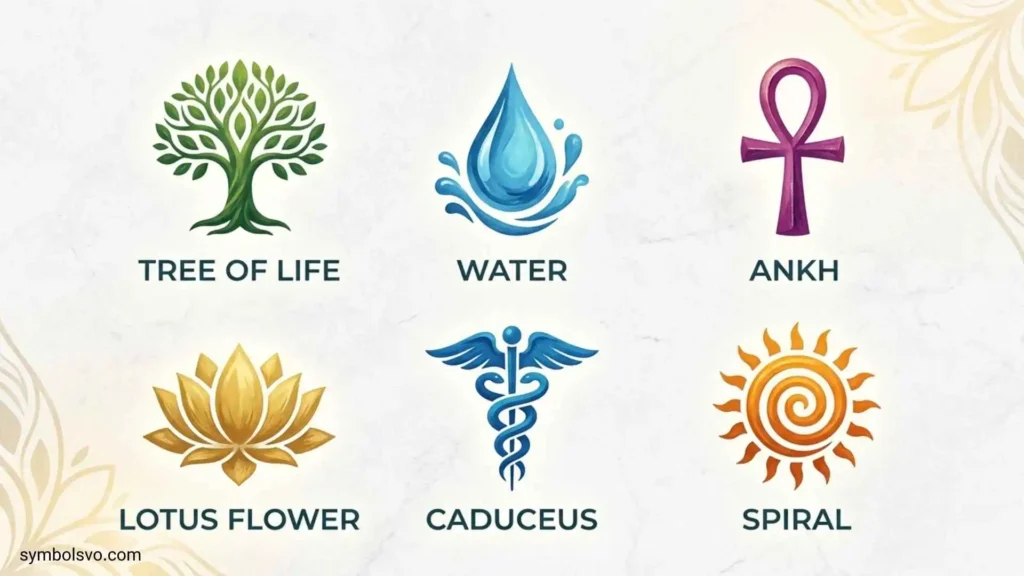
On a spiritual level, these symbols reflect the timeless journey of inner transformation and renewal. Many traditional icons feature themes of shedding old layers, which mirrors the process of a soul letting go of disease to reclaim its vitality. They serve as visual reminders that true healing requires a deep connection between human consciousness and the natural life force energy of the universe.
Psychological Level
Psychologically, health symbols tap into deep human archetypes that live within our collective unconscious. Relying heavily on Jungian symbolism, these icons interact with our mind on multiple levels.
- The Healer: Awakens our inner ability to recover and find balance.
- The Sanctuary: Offers a psychological safe haven from fear, pain, and mortality.
- The Rebirth: Represents our subconscious drive to survive and start anew after a crisis.
These visual archetypes build an intense emotional attraction, immediately lowering stress hormones by reassuring the subconscious mind that help has arrived.
Cultural Level
Culturally, these icons hold communities together by establishing shared beliefs about wellness, caregiving, and social responsibility. They mark the boundaries of safe spaces where human life is treated as sacred. Whether painted on a remote village clinic or a massive urban medical center, these symbols display a global cultural commitment to compassion and mutual survival.
Health Symbols Images
Health symbols images make it easier to recognize medical care, healing, wellness, and healthcare services at a glance. Common examples include the Red Cross, Rod of Asclepius, Caduceus, heart symbol, medical cross, stethoscope, and wellness icons. Each image can represent a different idea, such as emergency care, medicine, healing, prevention, or healthy living.
When adding health symbol images to an article, use clear visuals with descriptive alt text. For example, an image showing the Rod of Asclepius could use alt text such as “Rod of Asclepius health and medicine symbol.” This helps readers understand the image and can improve accessibility and image SEO.
Health Symbols and Meanings
Health symbols and meanings vary across medicine, culture, and wellness traditions. Some symbols represent professional healthcare, while others stand for physical healing, mental wellness, protection, or balance.
For example, the Rod of Asclepius is widely associated with medicine and healing, while a heart often represents health and care. A green cross may be used to identify certain health-related services, depending on the country and context. Understanding the meaning behind each symbol helps people recognize health messages more easily.
Healthcare Icons Free
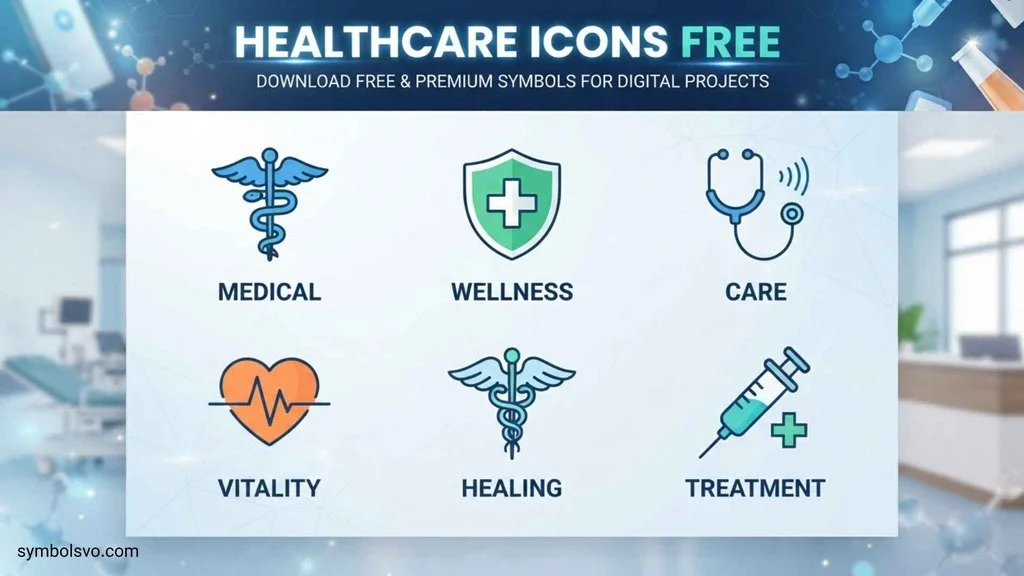
Free healthcare icons are useful for presentations, educational materials, websites, apps, and health-related designs. Common healthcare icon styles include hospitals, doctors, nurses, ambulances, medicine bottles, hearts, stethoscopes, syringes, and first-aid kits.
When using free icons, always check the license before publishing them commercially. Some icons are free for personal use but require attribution or a specific license for business and website projects. Choosing simple and recognizable healthcare icons can also make health information easier for users to understand.
Health Symbols Copy and Paste
Health symbols can be copied and pasted into messages, notes, social media posts, and simple documents. Popular options include:
⚕️ Medical Symbol
❤️ Heart
💊 Medicine
🏥 Hospital
🩺 Stethoscope
🩹 Bandage
🚑 Ambulance
🧬 DNA
🧠 Brain and mental health-related symbol
These symbols are useful for adding a quick visual meaning to text. However, emoji symbols and official medical symbols are not always interchangeable. Their meaning can depend on the platform and context where they are used.
Healthcare Icons for PowerPoint
Healthcare icons for PowerPoint can make medical presentations clearer and more engaging. Instead of explaining every concept with long paragraphs, icons can visually represent topics such as diagnosis, treatment, patient care, hospitals, medicine, prevention, and wellness.
For the best results, use a consistent icon style throughout the presentation. For example, avoid mixing detailed 3D medical images with simple line icons on the same slide. Keep icons relevant to the information and use them to support the main message rather than fill empty space.
Medical Icons Figma
Medical icons in Figma are commonly used for designing healthcare websites, mobile apps, patient dashboards, and medical interfaces. Useful icon categories include appointments, doctors, prescriptions, hospitals, emergency care, medical records, health monitoring, and laboratory testing.
A well-organized medical icon set can help designers create a consistent user experience. Icons should be easy to recognize, especially in healthcare interfaces where users may need to understand information quickly.
Medical Icons Vector
Medical vector icons are scalable graphics that can be enlarged or reduced without losing image quality. This makes them useful for websites, posters, infographics, presentations, apps, and printed healthcare materials.
Popular medical vector symbols include the medical cross, heart, stethoscope, medicine capsule, ambulance, hospital building, thermometer, and DNA strand. Vector formats are especially helpful for designers who need flexible and high-quality medical graphics.
Gezondheid Symbool
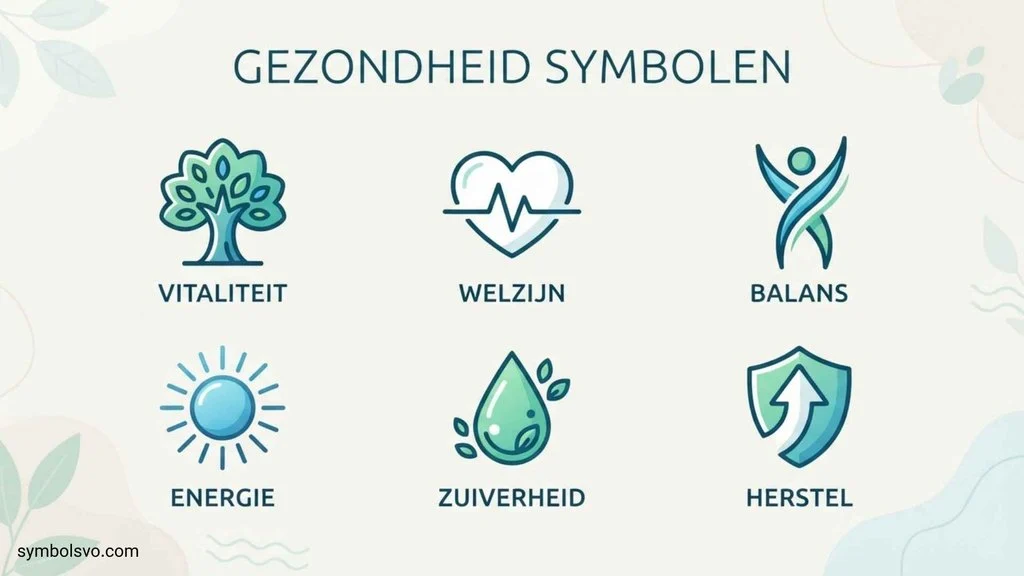
Gezondheid symbool is a Dutch search term meaning “health symbol” in English. It may refer to symbols connected with physical health, wellness, healing, medical care, or healthy living.
The meaning depends on the symbol being discussed. A heart can represent care and wellbeing, while the Rod of Asclepius is linked with medicine and healing. Health symbols are often used internationally because visual signs can communicate important ideas even when people speak different languages.
What Represents Health?
Many different things can represent health, depending on the situation. A healthy heart may represent physical wellbeing, while a green leaf can symbolize natural health and wellness. The Rod of Asclepius is one of the best-known symbols connected with medicine and healing.
Other common representations of health include:
- A heart for wellbeing and care
- A medical cross for healthcare services
- A leaf for natural wellness
- A human figure for fitness and healthy living
- A stethoscope for medical examination
- A snake and staff for medicine and healing
The best symbol depends on the exact message you want to communicate.
Symbols of Health and Wellness
Symbols of health and wellness often focus on balance, healing, energy, and overall wellbeing. Unlike strictly medical symbols, wellness symbols may also represent emotional, physical, and lifestyle health.
Common symbols of health and wellness include the heart, lotus flower, leaf, sun, water, human figure, and balance-inspired designs. These symbols are frequently used in wellness programs, health blogs, fitness brands, and self-care content because they communicate positive ideas quickly.
Medical Sign Meaning
A medical sign is a visual symbol used to communicate information about healthcare, medicine, treatment, or emergency services. The exact medical sign meaning depends on its design and where it appears.
For instance, ⚕️ is commonly recognized as a symbol connected with medicine and healthcare professions. A red cross has a specific protected meaning in humanitarian contexts and should not automatically be treated as a general decoration. Other signs, such as a hospital symbol or ambulance icon, help people quickly identify medical services.
Medical Symbols and Their Meanings
Medical symbols and their meanings help identify important healthcare concepts without requiring lengthy explanations. Some of the most recognized examples include:
- Rod of Asclepius — medicine and healing
- Caduceus — historically associated with Hermes and sometimes used in healthcare, especially in the United States
- Medical cross — healthcare or medical assistance in general contexts
- Heart — health, life, care, and wellbeing
- Stethoscope — medical examination and healthcare professionals
- DNA symbol — genetics and biological science
- Hospital symbol — medical facilities and patient care
Learning these meanings can prevent confusion, especially because some symbols that look similar have different historical origins.
Healthcare Symbols and Meanings
Healthcare symbols are designed to communicate information quickly in hospitals, clinics, pharmacies, ambulances, and health-related materials. Their meanings can include medical treatment, emergency support, patient care, medication, diagnosis, or prevention.
Clear healthcare symbols are especially important because they can help people identify services even when they do not speak the local language. A hospital icon, for example, immediately suggests a place for medical care, while a medicine symbol can point to treatment or pharmacy-related information.
Symbols for Health Care
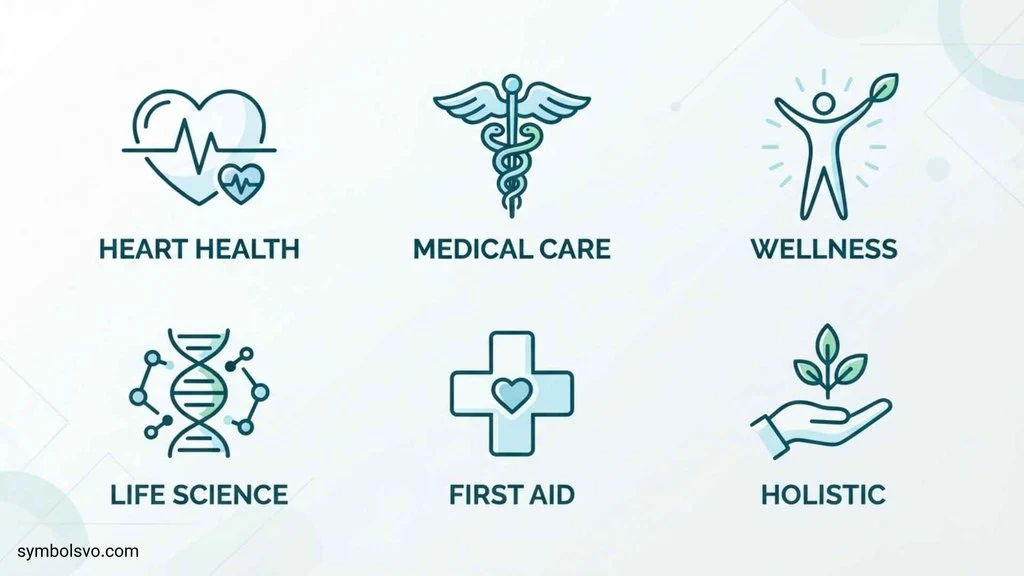
Symbols for health care include both traditional medical emblems and modern visual icons. They are used on signs, websites, apps, educational resources, and healthcare equipment.
Some widely recognized symbols for health care are:
- ⚕️ Medical symbol
- 🏥 Hospital
- 🩺 Stethoscope
- 💊 Medicine
- 🩹 First aid
- 🚑 Emergency medical transport
- ❤️ Health and care
Using familiar symbols can improve communication, but it is important to choose symbols that match the correct service and cultural context.
Health Healing Symbol
A health healing symbol generally represents recovery, restoration, care, or the process of becoming well. One of the most historically recognized symbols of healing is the Rod of Asclepius, which features a snake wrapped around a staff.
Other symbols associated with healing include the heart, lotus, water, hands, and natural leaf designs. Their meanings can differ. Medical symbols usually focus on professional healthcare, while spiritual or wellness symbols may represent inner peace, personal growth, and holistic wellbeing.
Symbols That Represent Health
Symbols that represent health can communicate ideas about physical strength, medical care, prevention, healing, and wellness. The most appropriate symbol depends on the purpose of the message.
A heart may represent overall wellbeing. A stethoscope suggests medical care, while a leaf can represent natural health. The Rod of Asclepius is strongly connected with medicine and healing. Together, these symbols show how the idea of health can be represented in many different visual forms.
The strongest health symbols are simple, recognizable, and connected to a clear meaning. A good symbol can communicate care, healing, or wellbeing before a single word is read.
Symbolism for Health
Symbolism for health explores how objects, images, and signs represent wellbeing and healing. Across history and different cultures, people have used symbols to express ideas about medicine, protection, life, recovery, and balance.
Modern health symbolism combines traditional meanings with practical communication. Medical emblems help identify professional services, while wellness symbols may focus on healthy lifestyles and personal wellbeing. Understanding the symbolism behind these images makes it easier to choose the right symbol for an article, design, logo, presentation, or educational project.
Types and Variations of Health Symbols
1. The Rod of Asclepius
- Visual Description: A single, unadorned wooden staff entwined by a single slithering serpent.
- Meaning: The true medical art of healing, clinical authority, and focused professional care.
- Symbolism: The staff represents stability and support, while the shedding snake symbolizes renewal and life restoration.
- Cultural Connection: Directly tied to ancient Greek medical schools and the historic Hippocratic Oath.
- Where It Appears: The World Health Organization logo, medical association badges, and professional physician crests.
2. The Caduceus
- Visual Description: A short, decorative staff topped with wings and entwined by two symmetrical, intersecting snakes.
- Meaning: Commerce, swift communication, balance, and administrative coordination.
- Symbolism: The wings represent rapid transit and mental agility, while the paired snakes symbolize duality and harmony.
- Cultural Connection: Linked to Hermes, the messenger god of trade, but frequently used in mistake for medical care.
- Where It Appears: Commercial pharmaceutical packaging, military medical logistics departments, and printing house emblems.
3. The Humanitarian Cross and Crescent
- Visual Description: A bold, even-armed red cross or reversed crescent set against a stark white background.
- Meaning: Neutrality, emergency humanitarian aid, absolute sanctuary, and wartime protection.
- Symbolism: Universal human compassion that stands completely above political or religious conflicts.
- Cultural Connection: Established by the Geneva Convention to mark neutral medical personnel during military conflicts.
- Where It Appears: Disaster relief operations, frontline ambulances, blood donation centers, and international aid cargo.
Health Symbols Across Different Cultures
Ancient Egypt
Egyptians relied heavily on the Eye of Horus as their primary symbol for holistic healing, protection, and bodily wholeness. According to myth, when Horus had his eye torn out in a divine battle, it was magically restored and healed. Physicians and amulet makers used this protective graphic to measure out specific ratios of medicinal ingredients, making it an early ancestor of the modern prescription sign.
Ancient Greece
In Greek society, the snake was viewed as a sacred creature possessing secret wisdom regarding medicine and the earth. People seeking cures would sleep on the floors of temples dedicated to Asclepius. If a non-venomous snake slithered over them in the dark, it was celebrated as a direct touch of divine healing, cementing the reptile as the ultimate icon of recovery.
Roman Culture
The Romans adopted Greek medical traditions and spread them across their vast empire. They stylized the healing staff and introduced the concept of specialized military field hospitals marked with specific emblems. For Romans, health icons were closely tied to Salus, the respected goddess of public health and societal welfare, linking physical health with civic duty.
Eastern Traditions
In Eastern traditions, particularly within Ayurvedic and Chinese medicine, health is symbolized by icons of balanced energy flow. The classic Yin and Yang symbol serves as a foundational health icon, showing that physical wellness is achieved only when opposing forces in the body find perfect harmony. Similarly, the Lotus flower represents a clean, healthy mind blooming beautifully out of muddy, toxic surroundings.
Indigenous Traditions
Indigenous cultures around the globe frequently use the Medicine Wheel as a sacred symbol of health and cosmic balance. The wheel features four distinct quadrants representing the physical, mental, emotional, and spiritual aspects of a human being. True health is achieved only when all four sections of the circle are respected, nurtured, and kept in perfect alignment with nature.
Modern Interpretations
In our current globalized society, health icons have become highly streamlined, digital, and abstract. Green crosses signify pharmacies across Europe, while digital hearts and pulse lines fill our smartphone fitness tracking apps, translating ancient protective instincts into quick, modern interactions.
Similar Symbols and Their Meanings
It is incredibly easy to confuse various historic signs that look similar but carry completely different meanings.
| Icon Type | Visual Elements | Core Meaning | Common Misconception |
| Rod of Asclepius | One staff, one snake | True clinical medicine | Mistakenly replaced by the Caduceus |
| Caduceus | Wings, two snakes | Trade and commerce | Frequently misused as a medical icon |
| Bowl of Hygieia | A goblet wrapped by a snake | Pharmacy and medicine preparation | Confused with general hospital care |
The most common mix-up occurs between the Rod of Asclepius and the Caduceus. During the early twentieth century, the United States Army Medical Corps mistakenly adopted the Caduceus as its official insignia. Because of this administrative oversight, millions of people worldwide now associate the winged staff of commerce with medical care, even though the single snake on the rough staff is the historically accurate icon of clinical medicine.
Health Symbols in Mythology and Folklore
The stories that shaped our modern health icons are filled with rich folklore and timeless lessons. The most famous legend involves Asclepius, a skilled ancient physician who became so talented at treating illness that he learned how to bring the dead back to life.
According to folklore, Pluto, the god of the underworld, grew worried that his kingdom would become empty if humans stopped dying. He complained to Zeus, who struck Asclepius down with a lightning bolt to preserve the natural order of the universe.
Even in death, humanity continued to honor Asclepius as a god, carving his snake-entwined walking stick into temple walls. This story taught ancient cultures that while medicine is a noble, semi-divine art, its ultimate purpose is to bring balance to life, rather than trying to escape the natural cycle of mortality entirely.
Health Symbols in Art, Pop Culture, and Design
Throughout history, classical painters included health emblems in portraits of famous doctors to signal their immense wisdom and specialized skills. In modern pop culture, these images have evolved to fit right into television, comic books, and street fashion.
[ Ancient Egyptian Eye of Horus ] —> [ Greek Staff of Asclepius ] —> [ Modern Digital Red Cross ]
Think about superhero logos or the classic glowing red cross seen in video game user interfaces. When your character is low on energy, running toward a flashing medical symbol provides an instant feeling of relief. In the fashion industry, streetwear designers frequently use medical crosses and pharmacy graphics to make bold commentary on modern lifestyle choices, showing how these protective signs continue to shape our daily creative culture.
Spiritual and Dream Meaning of Health Symbols
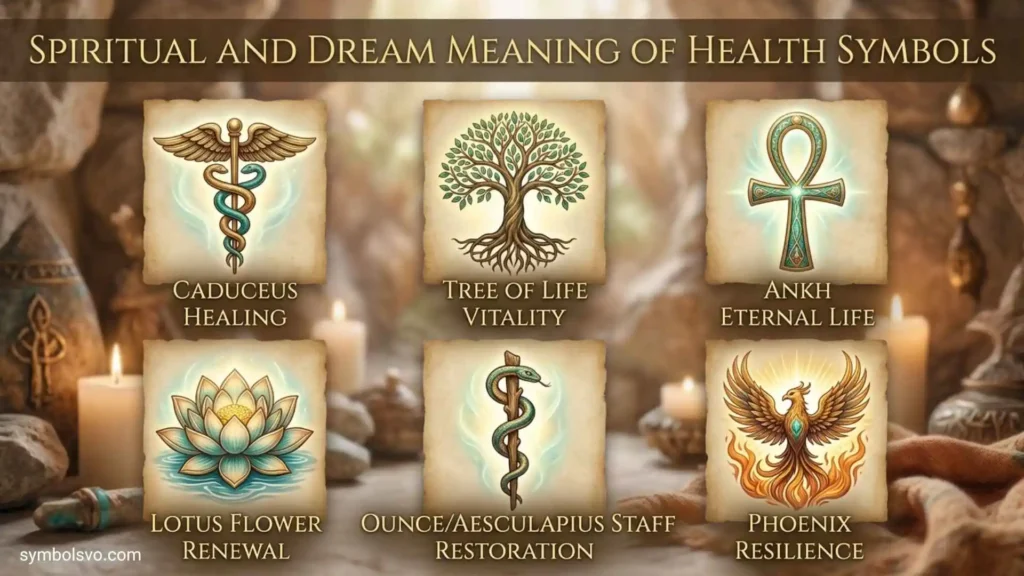
When health symbols pop up in your dreams or meditation sessions, they usually carry a deep message from your subconscious mind. Because our inner mind speaks through rich visual metaphors, dreaming about a healing icon rarely means you need to visit a doctor.
Instead, seeing a snake shedding its skin on a staff can indicate that you are going through a phase of emotional renewal or personal transformation. If a protective cross appears in your dream, it often highlights a subconscious need for emotional boundaries, safety, or a desire to find relief from daily stress. These nocturnal visions serve as useful internal check-ins, showing you exactly where your spirit is looking to fix imbalances and restore peace.
Positive and Negative Meanings of Health Symbols
Almost every powerful visual marker carries a balance of light and shadow, changing its emotional meaning depending on how and where it is displayed.
| Positive Meaning | Negative Meaning |
| Signals immediate safety, emergency aid, and rescue. | Can evoke deep fear of illness, accidents, or injury. |
| Represents expert clinical knowledge and trusted science. | Can feel cold, sterile, and distant from human emotion. |
| Inspires personal physical renewal and lifestyle balance. | Reminds us of our fragility and ultimate mortality. |
| Marks a safe neutral zone free from violence or conflict. | Can feel corporate when overused on medical bills. |
Why Humans Are Attracted to Health Symbols
Our strong psychological attraction to these graphics is deeply rooted in human biology. The human brain is naturally designed to recognize patterns that help us avoid danger and locate resources. When we are sick or injured, our stress levels skyrocket, which reduces our ability to process complex information.
During these critical moments, our brains seek out simple, high-contrast visual cues that promise safety. A well-known medical emblem acts like a comforting visual anchor, breaking through our panic and offering immediate hope. Additionally, these signs tap into our deep tribal memories, satisfying our timeless human desire to know that a protective caregiver is nearby to help us survive.
Modern Uses of Health Symbols
In our fast-paced modern world, these traditional emblems have successfully transitioned into the digital age.
- Body Art & Tattoos: Worn proudly by nurses, doctors, and survivors to celebrate a victory over illness.
- App Development: Streamlined into clean icons for health, fitness, and meditation tracking programs.
- Corporate Branding: Used by pharmacies and clinics to build immediate consumer trust and authority.
- Interior Design: Integrated into modern hospital layouts to help patients navigate buildings without language confusion.
Interesting Facts About Health Symbols
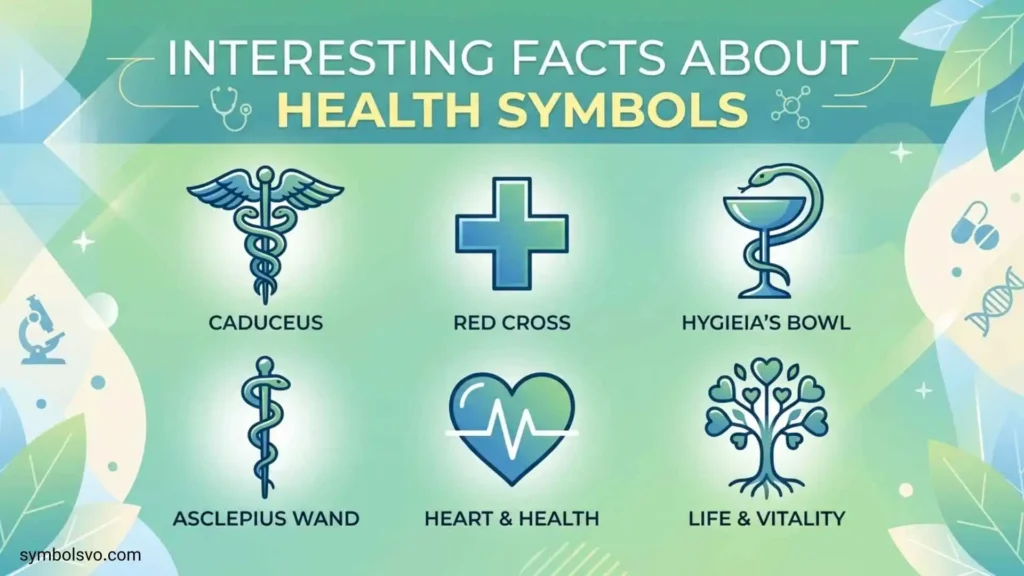
- The Red Cross emblem is a perfect color reversal of the Swiss national flag, created to honor the home country of its founder.
- In some countries, using the Red Cross symbol without official authorization is a crime under international law.
- The small horizontal bar seen on modern prescription pads is an evolved version of the ancient Egyptian Eye of Horus.
- Ancient Greek healers deliberately let harmless snakes crawl freely around hospital rooms to clean the air.
- The green pharmacy cross used across Europe was originally adopted because it avoided specific wartime political associations.
Frequently Asked Questions
Why is a snake used to represent health and medicine?
The snake represents health because it sheds its skin, which ancient cultures viewed as a powerful symbol of renewal, rebirth, and casting away disease to uncover a healthy body.
Is the Red Cross symbol religious?
No, the Red Cross is a neutral humanitarian sign. However, to avoid religious misunderstandings in different regions, the Red Crescent and Red Crystal are also used as official symbols of protection.
What is the difference between a medical staff with one snake versus two?
The staff with one snake belongs to Asclepius and represents true clinical medicine. The staff with two snakes and wings is the Caduceus of Hermes, which traditionally represents trade, commerce, and communication.
Why do European pharmacies use a bright green cross?
The green cross was adopted by European pharmacists after the international Red Cross symbol became legally restricted to official military and humanitarian relief organizations.
Conclusion
Health symbols are much more than simple corporate logos for modern hospitals and medical clinics. They are the living continuation of our ancient, shared human journey toward survival, recovery, and protective sanctuary. By blending timeless mythology with modern science, these icons offer a comforting sense of safety whenever our lives face unexpected disruption. The next time you spot one of these healing emblems, take a moment to appreciate the deep, historic thread of human compassion that continues to watch over our world.

I’m Nathan Holloway, a passionate researcher and writer with a deep interest in symbols, signs, and their hidden meanings. I enjoy exploring how symbols have influenced different civilizations, religions, and modern communication. Through my work, I aim to make complex historical and cultural concepts easy to understand for readers of all backgrounds. Every article I write is carefully researched to provide reliable and engaging information.
Books:
- Beyond the Symbol
- The Secret Meanings of Everyday Signs
Author 2: Grace Whitmore
Description:
My name is Grace Whitmore, and I love discovering the stories behind the world’s most fascinating symbols. I spend my time researching ancient civilizations, mythology, spiritual traditions, and modern iconography to uncover the meanings people often overlook. I believe that every symbol has a history worth telling, and I enjoy sharing that knowledge in a simple and reader-friendly way.
Books:
- Echoes of Ancient Symbols
- The Symbolic World
 Mason Ellington
 Grace Whitmore
 Daniel Brooks