
Dishwasher Symbols can look confusing at first, especially when you see an unfamiliar icon on your machine. I know how frustrating it can feel when you simply want to choose the right setting without guessing.
You want your dishes clean, your glasses protected, and your dishwasher running properly. That’s why understanding these symbols can make everyday dishwashing much easier and more convenient.
In this guide, I’ll help you understand common Dishwasher Symbols in simple language. You’ll learn what they mean, when to use them, and how to choose the right setting with confidence.
Quick Answer
Dishwasher symbols are standardized visual icons found on kitchen appliances that indicate specific wash cycles, water temperatures, drying modes, and maintenance alerts. These universal graphics streamline human-machine interaction, bypassing language barriers to ensure optimal appliance performance, energy efficiency, and total hygienic safety.
Quick Facts About Dishwasher Symbols
| Aspect | Information |
| Origin | Formulated by international standards organizations like the IEC in the late twentieth century. |
| Historical Significance | Shifted household management from exhausting manual labor to automated, predictable luxury. |
| Main Meaning | Direct instructions for water pressure, temperature settings, and drying preferences. |
| Spiritual Meaning | Ritualistic markers of purification, energetic cleansing, and restoring harmony to the home. |
| Cultural Importance | Symbolizes the democratization of leisure time and the elevation of domestic hygiene standards. |
| Modern Usage | Digital control screens, smart home applications, and eco-friendly resource management. |
What Are Dishwasher Symbols?

Dishwasher symbols are universally recognized graphic characters stamped or illuminated onto the control panels of kitchen appliances. While they may look like a random assortment of lines, waves, and brushes, they are actually highly regulated icons. Their primary purpose is to tell the user what the machine is doing and how it will treat the items loaded inside.
The history of these symbols traces back to the rise of globalization and mass appliance manufacturing in the mid to late 1900s. In the early days of automated dishwashers, control panels relied heavily on written text. As manufacturers began shipping appliances across international borders, translating words into dozens of languages became expensive and visually messy.
To solve this problem, engineers and design councils developed a standardized visual language. Drawing inspiration from international traffic signs and industrial design principles, they created simple icons that anyone could understand at a glance, regardless of their native language. Today, these symbols are vital components of accessible, inclusive user experiences worldwide.
Deep Symbolic Meaning of Dishwasher Symbols
Spiritual Level
On a deeper, spiritual level, these icons represent the ancient, universal human ritual of purification. Water has always been regarded across faiths as a sacred element that washes away negative energy, debris, and stagnation. The symbols representing spray arms, steam, and flowing water function as modern, automated altars of transformation, taking the chaotic, soiled remnants of a shared feast and restoring them to a state of pristine purity.
Psychological Level
Psychologically, interacting with these icons speaks directly to our subconscious desire for control and closure. A sink full of dirty dishes is a well-known visual trigger for mental anxiety, representing unfinished business and overwhelming domestic chaos. By selecting a specific icon, we engage with an archetype of order. The symbol acts as a reassuring contract, promising that our immediate environment will soon be made clean, safe, and organized once again.
Cultural Level
Culturally, these markings represent the hard-won gift of time. In older generations, cleaning family cookware required hours of grueling, manual scraping and boiling. The widespread adoption of these icons signals a society that values efficiency and personal leisure, celebrating a collective shift away from endless domestic drudgery toward a lifestyle focused on family, rest, and meaningful connection.
Types and Variations of Dishwasher Symbols
1. The Eco-Mode Icon
- Visual Description: The word ECO written plainly, sometimes framed by a stylized green leaf.
- Meaning: An energy-efficient wash program that uses lower water temperatures over a longer duration.
- Symbolism: Environmental stewardship, mindful consumption, and harmony with nature.
- Cultural Connection: Directly tied to the modern sustainability movement and conscious living.
- Where It Appears: Prominently featured on the main control panels of almost all modern European and American models.
2. The Intensive Wash Icon
- Visual Description: A graphic of a heavy pot or pan, sometimes paired with intense water droplets or spray lines.
- Meaning: High-temperature water blasts designed to dissolve stubborn, burnt-on food particles.
- Symbolism: Great strength, resilience, and tackling life’s toughest, heaviest burdens.
- Cultural Connection: Echoes the ancient communal fires where heavy iron cauldrons required intense heat and scrubbing.
- Where It Appears: Located on the heavy-duty cycle selection area of premium kitchen appliances.
3. The Rinse Aid Alert Icon
- Visual Description: A stylized, five-pointed star bursts or a circle surrounded by dotted rays resembling a shining sun.
- Meaning: A notification indicating that the liquid rinse agent is empty and needs a immediate refill.
- Symbolism: Ultimate clarity, brilliant light, and achieving flawless, streak-free perfection.
- Cultural Connection: Relates to the timeless human pursuit of vanity, luster, and maintaining a sparkling social presentation.
- Where It Appears: Found on the digital display dashboard or illuminated status indicator lights.
Dishwasher Symbols Across Different Cultures
Ancient Egypt
While ancient Egyptians obviously lacked automated appliances, they utilized hieroglyphic symbols for washing and purity that mirror our modern icons. The Egyptian symbol for pure water featured wavy parallel lines, a visual design cue that remains the primary foundation for our contemporary water-cycle symbols today.
Ancient Greece
The Greeks relied heavily on the concept of Katharsis, meaning emotional and physical cleansing. They used distinct potter marks on ritualistic water vessels dedicated to the goddess Hestia, the protector of the home and hearth. These ancient emblems served the same cultural purpose as our kitchen symbols, identifying tools explicitly meant to maintain household sanctuary.
Roman Culture
Roman bathhouses were masterpieces of early water engineering, featuring complex plumbing marked by carved stone directional signs. Symbols showing rising steam or water channels guided citizens through different temperature rooms. This early architectural signing system laid the groundwork for how we visually categorize hot water and steam cycles today.
Eastern Traditions
In classic Japanese design philosophy, simplicity and Subako (pure space) are deeply revered. This cultural background heavily influences modern Asian appliance design, resulting in minimalist, intuitive symbols that emphasize quiet harmony, water preservation, and seamless integration into a peaceful, clutter-free kitchen environment.
Indigenous Traditions
Many Indigenous cultures historically utilized specific geometric symbols on woven baskets and clay pots to designate vessels safe for food preparation versus those used for cleansing rituals. These historical markers honored the sacred nature of utility, reminding the community to respect the specific purpose of every tool.
Modern Interpretations
In our globalized world, these icons are universally understood across major continents. No matter where an appliance is installed, the universal symbol for water or drying bridges all cultural divides, acting as a shared, borderless language of contemporary home care.
Similar Symbols and Their Meanings
It can be incredibly helpful to compare dishwasher icons with other common domestic signs to avoid confusion in the laundry room or kitchen.
| Symbol Type | Purpose | Visual Theme | Common Misconception |
| Dishwasher Symbol | Guides internal kitchen appliance settings | Pots, pans, straight water sprays | Mistaken for clothes washing indicators |
| Laundry Care Tag | Directs textile washing methods | Square boxes, gentle clothing tubs | Confused with safe dishware materials |
| Food Safe Emblem | Identifies non-toxic materials | Wine glass and a matching fork | Mistaken for a dishwasher-safe approval mark |
A major point of confusion for many homeowners is mistaking the food-safe wine glass and fork symbol for a guarantee that an item can go in the appliance. In reality, the dishwasher-safe symbol typically looks like dishes sitting inside a rack under falling water droplets. Mixing these up can easily lead to ruined glassware or warped plastics.
Dishwasher Symbols in Mythology and Folklore
The concepts behind our daily kitchen icons are deeply rooted in classic mythology and folk tales. Water spirits, such as the Celtic Nixies or the Greek Naiads, were mythical protectors of clean water sources who punished those who dared to defile communal streams.
In European folklore, helpful household spirits like Brownies or Hobgoblins would quietly enter a home at night to wash dishes and sweep the floors, but only if the homeowners treated the space with deep respect. Our modern icons represent the ultimate fulfillment of these ancient fairy tales. With the push of a glowing button, an invisible, automated force takes over our burdens, executing the exact nightly magic that our ancestors dreamed about for centuries.
Dishwasher Symbols in Art, Pop Culture, and Design
In contemporary pop culture and art, these icons are frequently celebrated as triumphs of mid-century minimalist design. Modern graphic artists often feature them in exhibits showcasing the beauty of everyday industrial utility.
[ Wavy Water Lines ] + [ Dish/Pan Silhouette ] = Universal Language of Care
You can find these clean, geometric graphics printed on modern kitchen towels, incorporated into minimalist smart-home dashboard interfaces, and even worn as ironic minimalist tattoos by appliance designers and chefs. Within contemporary architecture and home design, the visibility of these symbols is heavily debated; sleek, luxury kitchens often conceal the control panels inside the door lip to hide the icons, prioritizing an ultra-clean, uninterrupted aesthetic.
Spiritual and Dream Meaning of Dishwasher Symbols
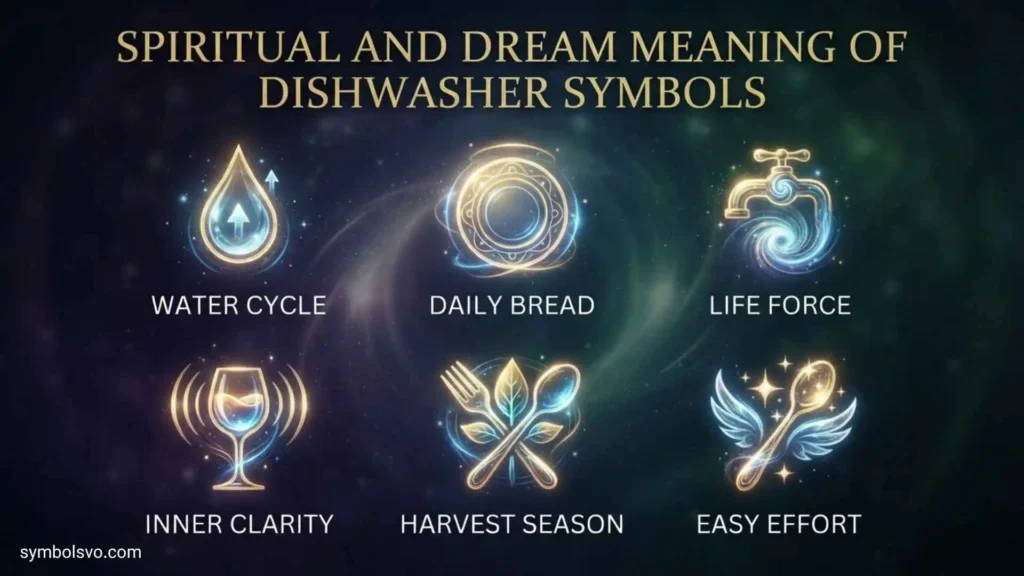
When these practical household markings start showing up in your dreams, your subconscious mind is usually trying to communicate an internal message. Because dreams speak in rich metaphors, seeing a flashing dishwasher icon rarely relates to actual kitchen chores.
Instead, dreaming of an intense wash symbol suggests that you are currently processing heavy emotional residue or dealing with a situation that requires deep inner work. A flashing salt or rinse aid alert icon might indicate that you are feeling depleted, reminding you to replenish your personal energy or emotional reserves. If you dream that you cannot understand the icons on the panel, it often reflects a waking feeling of being overwhelmed by modern responsibilities or losing control of your daily routine.
Positive and Negative Meanings of Dishwasher Symbols
Like any powerful visual tool, these symbols can carry both comforting and restrictive meanings depending on the context of your life.
| Positive Meaning | Negative Meaning |
| Brings reliable order to daily household chaos. | Can trigger mild anxiety over constant upkeep. |
| Promotes eco-friendly energy and water savings. | Represents the cold, sterile automation of life. |
| Emphasizes superior health, safety, and hygiene. | Creates dependency on complex, delicate technology. |
| Saves precious personal time for human connection. | Reduces mindful, hands-on physical engagement. |
Why Humans Are Attracted to Dishwasher Symbols
Our natural human attraction to these graphic icons is deeply rooted in our evolutionary cognitive development. The human brain is naturally built for pattern recognition, constantly seeking shortcuts to conserve mental energy.
When we are tired after a long day of making complex decisions, reading blocks of text on an appliance feels like exhausting work. Simple, clear symbols bypass our analytical minds completely, allowing us to operate complex machinery using instinct and basic intuition. This instant recognition creates a subtle, satisfying sense of mastery and comfort, making our daily routines feel secure, predictable, and remarkably stress-free.
Modern Uses of Dishwasher Symbols
In our current digital era, these icons have expanded far beyond the physical plastic buttons of the kitchen.
- Smart Home Apps: Displayed on mobile screens to allow remote monitoring of wash progress from anywhere.
- Eco-Labels: Integrated into global environmental rating systems to show certified resource conservation.
- Instructional Infographics: Utilized in digital manuals and home organization videos to teach energy-saving habits.
- Product Packaging: Printed on detergent boxes to guide consumers on which cycle matches specific product types.
Interesting Facts About Dishwasher Symbols

- The standard symbol for rinse aid is an international industrial design trademark used across dozens of different manufacturing brands.
- Early manual models tried using musical notes as symbols to tell users when a specific washing stage was finished.
- The wavy lines used for water cycles are scientifically calculated by designers to mimic the exact rhythm of natural ocean waves.
- Psychological consumer tests reveal that users feel an appliance is of higher quality when the symbols glow in soft blue or white rather than harsh red.
- Some high-end smart dishwashers project the operating symbols directly onto the kitchen floor using small laser lights.
Frequently Asked Questions
What does the symbol with two water drops mean?
This graphic usually represents the classic rinse-hold or half-load cycle. It is designed to quickly rinse a small batch of soiled dishes with cold water to prevent odors while you wait to fill the machine for a complete cycle.
Why do different brands use slightly different symbols?
While major international standards keep icons mostly uniform, individual brands tweak the visual styles to match their unique design language. However, the core elements like pots, water waves, and eco leaves always remain recognizable.
What does the snowflake symbol mean on a dishwasher?
The snowflake icon is actually the universal symbol for rinse aid. It represents the sparkling, crystal-clear, and frost-like shine your glassware achieves when the liquid agent is used during the final drying phase.
How do I know if a symbol means eco-friendly?
Look for the letters ECO or a simple design featuring a leaf or a small tree. This tells you the setting uses less water and lower heat to save energy, though the cycle will take longer to finish.
Conclusion
Dishwasher symbols are a beautiful, quiet reminder of how far human innovation has traveled to safeguard our comfort and health. They turn an intricate process of heat, water pressure, and chemistry into a simple, stress-free interaction that anyone can master in a second. By bridging ancient ideas of purity with modern design, these tiny kitchen glyphs create peace and order right at the heart of our homes. The next time you start a evening wash cycle, take a quick moment to appreciate the incredible centuries of history, psychology, and creative design written into those glowing shapes.

 Grace Whitmore
 Daniel Brooks