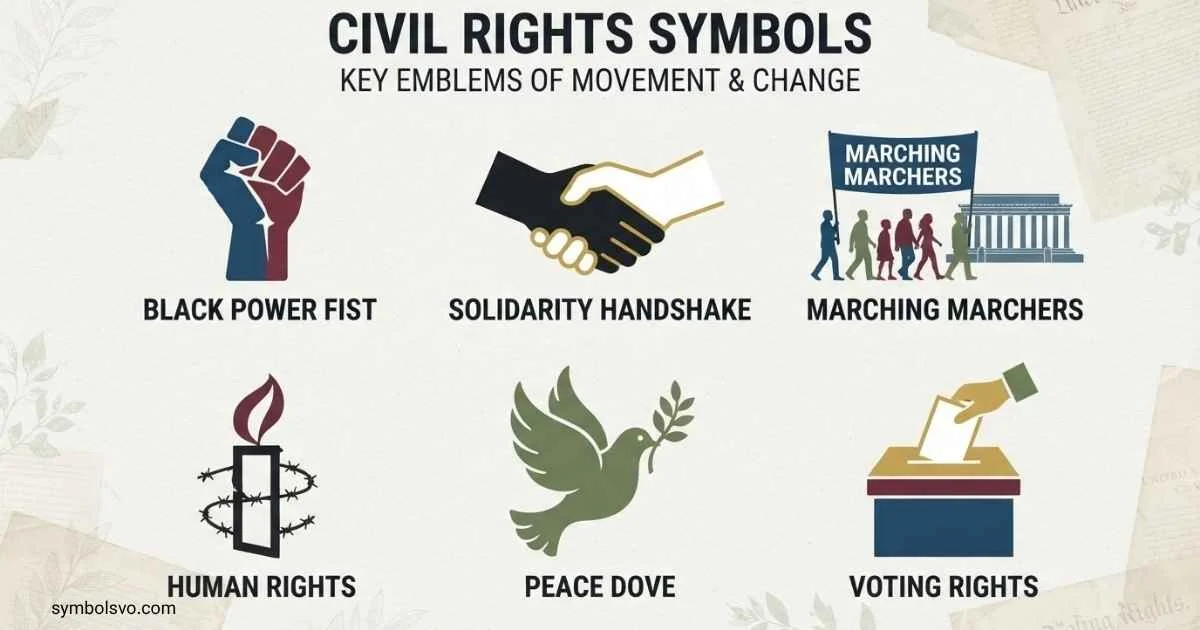
When I look at civil rights symbols, I see more than simple signs or images. They represent courage, equality, freedom, and the long struggle for human rights.
You may recognize some symbols instantly, but their deeper meanings and historical stories can be easy to miss. I’ll help you understand what these powerful symbols represent and why they still matter today.
Whether you’re a student, history enthusiast, or simply curious, you can explore these symbols and the stories behind them. By the end, you’ll have a clearer understanding of how visual symbols can communicate powerful ideas about justice and equality.
Quick Answer
Civil rights symbols are visual icons, logos, or gestures used to represent the struggle for equality, human rights, and social justice. These symbols consolidate complex political and moral movements into accessible imagery. They provide a sense of unity to marginalized groups, signal solidarity to allies, and communicate urgent calls for systemic change to the broader public.
Quick Facts About Civil Rights Symbols
| Aspect | Information |
| Origin | Emerged from historic labor strikes, religious protests, and abolitionist movements. |
| Historical Significance | Provided a unifying visual identity during intense periods of social transformation. |
| Main Meaning | Resistance against oppression, the pursuit of equality, and human dignity. |
| Spiritual Meaning | The triumph of moral truth over institutional corruption and hatred. |
| Cultural Importance | Defines the visual legacy of democratic progress and community empowerment. |
| Modern Usage | Digital activism, social media campaigns, murals, fashion, and protest art. |
What Are Civil Rights Symbols?
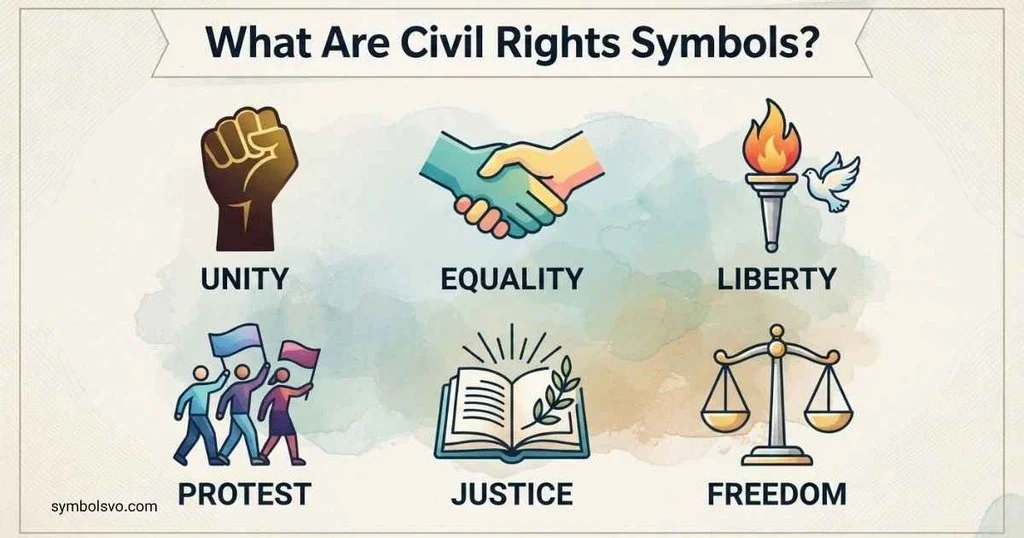
Civil rights symbols are the visual language of the fight for liberty. They evolved from early abolitionist woodcuts and labor movement pins to the sophisticated, high-contrast imagery seen in modern street art. These symbols were born from necessity. When people lacked a voice in media or government, they created images that were impossible to ignore.
Throughout history, these symbols have shifted to meet the needs of the time. Whether it is the raised fist of the labor movement or the rainbow flag of the LGBTQ+ rights struggle, these markers have one thing in common: they turn a dispersed group of individuals into a singular, powerful force. They became important because they offered a way for people to recognize one another across vast divides, signaling that they were part of a larger, unstoppable march toward progress.
Deep Symbolic Meaning of Civil Rights Symbols
Spiritual Level
On a spiritual level, civil rights symbols represent the sacred nature of the human spirit. They are reflections of the belief that every person possesses an inherent, divine worth that no government or law can revoke. Embracing these symbols often marks a moment of inner transformation, where an individual moves from silent frustration to an active, conscious commitment to justice.
Psychological Level
Psychologically, these symbols act as archetypes of the rebel and the healer. They tap into our primal need for fairness and community. When we see a symbol of protest, it triggers an emotional response that bypasses our analytical mind. It awakens a sense of solidarity and shared history. This collective recognition reduces the psychological burden of isolation for activists, providing a visual anchor that reaffirms they are not alone.
Cultural Level
Culturally, these symbols serve as living repositories of social memory. They remind a society of its past failures and its ongoing promises. They act as a mirror, challenging the status quo by bringing the realities of marginalized communities into the public square. By carrying these symbols, communities reinforce their values and educate younger generations about the costs and victories of past battles.
Types and Variations of Civil Rights Symbols
The Raised Fist
- Visual Description: A clenched hand raised vertically.
- Meaning: Strength, unity, and defiance against oppression.
- Symbolism: Reclaiming power in the face of institutionalized inequality.
- Cultural Connection: Widely used in the Black Power movement and international labor struggles.
- Where It Appears: Murals, protest posters, and contemporary social media graphics.
The Peace Sign
- Visual Description: A circle containing a vertical line with two downward-sloping lines.
- Meaning: Non-violence, harmony, and anti-war advocacy.
- Symbolism: The rejection of state-sponsored violence and the pursuit of peaceful resolution.
- Cultural Connection: Became the definitive mark of the 1960s counterculture movement.
- Where It Appears: Jewelry, clothing, and historic protest photographs.
The Rainbow Flag
- Visual Description: A multi-colored striped flag representing the LGBTQ+ community.
- Meaning: Inclusivity, diversity, and pride in identity.
- Symbolism: The beauty found in difference and the triumph of authenticity.
- Cultural Connection: A cornerstone of the global struggle for equal rights and marriage equality.
- Where It Appears: City squares, corporate displays, and personal accessories.
Civil Rights Symbols Across Different Cultures
Ancient Egypt
While the modern concept of civil rights is recent, the symbol of the Ankh represented life and eternal existence. It was used in early protest imagery to assert that the lives of all citizens held value, laying an ancient foundation for the concept of human dignity.
Ancient Greece
In ancient Athens, the concept of Isegoria, or equal speech, was symbolized by the public assembly. While limited to certain citizens, the visual representation of the orator in the marketplace established the idea that public space belonged to those who voiced the needs of the community.
Roman Culture
The Pileus or liberty cap was given to freed slaves in ancient Rome. This visual symbol was a clear, historical indicator of the transition from property to personhood, a theme that would eventually influence abolitionist movements globally.
Eastern Traditions
The lotus flower in Eastern traditions symbolizes purity rising from the mud. Many contemporary social justice movements in Asia have adopted this to signify the ability of marginalized groups to rise above systemic corruption and bloom with dignity.
Indigenous Traditions
Many indigenous cultures use the medicine wheel or specific geometric patterns to represent the interconnectedness of all living things. These serve as powerful civil rights symbols today, asserting the right to land, culture, and sovereign existence against colonial forces.
Similar Symbols and Their Meanings
| Symbol | Primary Context | Key Difference |
| Raised Fist | Political Empowerment | Focused on power and resistance. |
| Dove | Peace Movements | Focused on reconciliation and calm. |
| Interlocked Hands | Solidarity | Focused on union and partnership. |
A common misconception is that all civil rights symbols represent the same thing. While they share a goal of equality, they differ in their strategy. Some symbols focus on peaceful endurance, while others represent active, radical defiance.
Civil Rights Symbols in Mythology and Folklore
Many civil rights movements have drawn inspiration from mythological figures who challenged authority. Prometheus, who stole fire for humanity, is often referenced in labor and rights literature as the ultimate archetype of one who suffers for the sake of the collective good. These stories serve as moral frameworks, teaching activists that their current struggles are part of a timeless tradition of challenging the status quo.
Civil Rights Symbols in Art, Literature, and Pop Culture
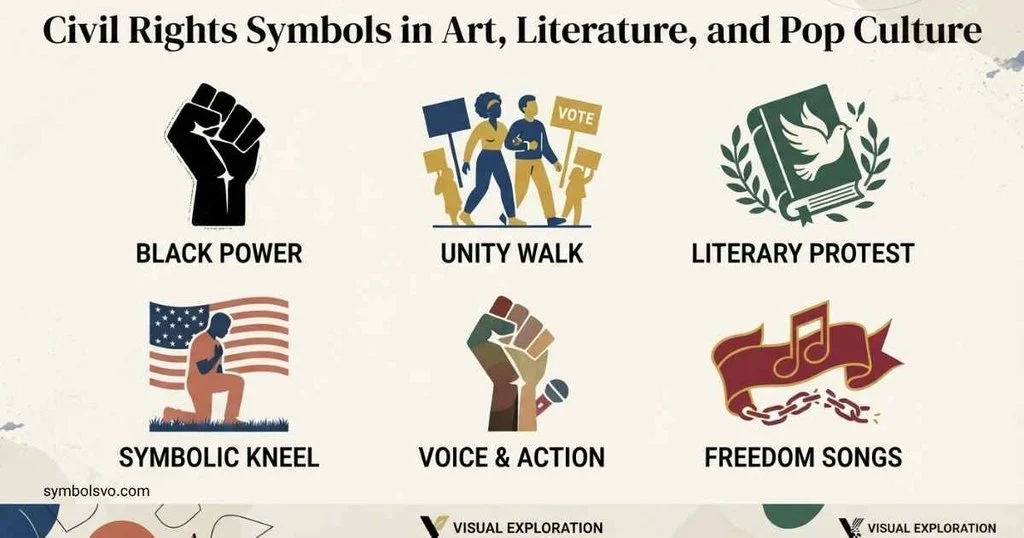
From the protest songs of the folk era to the graphic design of modern street art, civil rights symbols have consistently appeared in media to challenge perceptions. Literature often utilizes these symbols to denote character transformation, while movies use them to provide a quick, visceral shortcut to historical context. Today, these symbols are common in fashion, as designers and wearers use them to make clear statements about their personal stance on justice.
Spiritual and Dream Meaning of Civil Rights Symbols
Dreaming of civil rights symbols often indicates a personal calling to be more active in one’s community. These symbols appear in dreams when our inner moral compass is seeking a path of integrity. They can be seen as positive messages encouraging us to speak our truth, or as cautionary signs that we have been remaining silent when we should have been advocating for ourselves or others.
Positive and Negative Meanings of Civil Rights Symbols
| Positive Meaning | Negative Meaning |
| Inspires hope and long-term change. | Can be co-opted by commercial interests. |
| Builds community and shared identity. | May become a target for opposing groups. |
| Educates the public on history. | Can lead to oversimplification of complex issues. |
Why Humans Are Attracted to Civil Rights Symbols
Humans are attracted to these symbols because they satisfy our need for a clear narrative. In a complicated world, a symbol provides a simple, direct truth. We are pattern-seeking animals who find comfort and courage in the visual recognition that others share our struggles and our dreams.
Modern Uses of Civil Rights Symbols
Today, these symbols have moved into the digital realm. They function as profile pictures, viral hashtags, and animated icons. They allow people to participate in a movement from anywhere in the world, turning personal social media pages into platforms for global advocacy.
Interesting Facts About Civil Rights Symbols
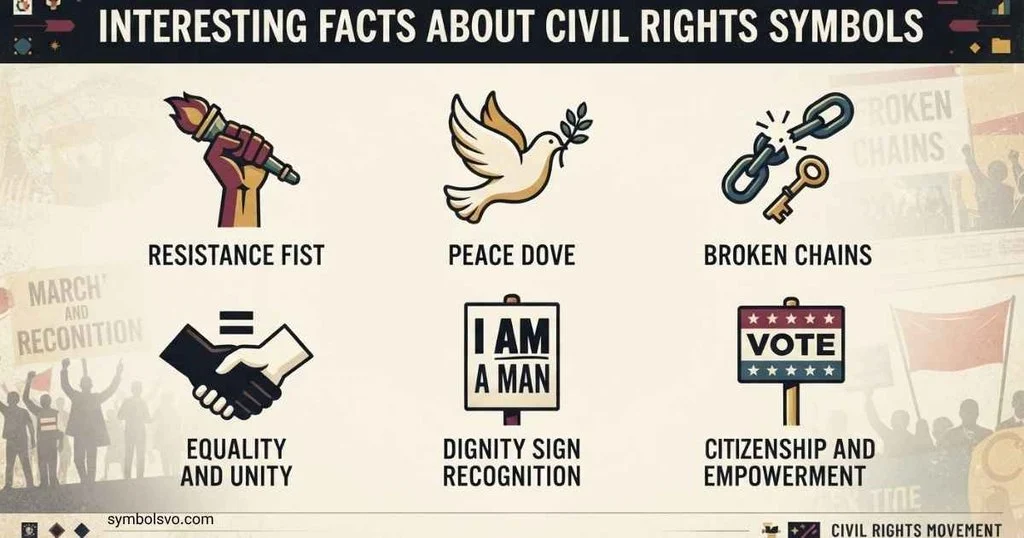
- The rainbow flag was originally designed as a symbol of hope during a time of intense political tension.
- The raised fist dates back to the Spanish Civil War but became globally recognized in the 1968 Olympics.
- Many symbols are now protected and preserved in digital archives to keep the history of activism alive.
- Color choices in these symbols are rarely accidental, often representing specific emotional states or historical movements.
- The most effective symbols are those that can be drawn easily by anyone, allowing for grassroots reproduction.
Frequently Asked Questions
Why do civil rights symbols change over time?
Symbols evolve because the specific challenges of a movement change. As society progresses, the visual language must adapt to stay relevant to the current generation.
Can symbols be harmful?
While the symbols themselves are usually positive, they can be harmful if used to represent ideologies that exclude others or if they are stripped of their historical context.
How do I respectfully use these symbols?
Respectful use involves understanding the historical struggle the symbol represents and ensuring your use of it aligns with the values of the community it represents.
Do symbols actually lead to social change?
Yes, they act as catalysts. They organize public opinion, foster a sense of belonging, and make abstract political goals visible and tangible for the entire society.
Conclusion
Civil rights symbols are the enduring legacy of the brave individuals who fought to make the world a fairer place. They remind us that the struggle for justice is not a solitary path, but a shared human experience that spans generations. By honoring these visual markers, we carry the torch forward into a future where equality is not just a dream, but a reality. Never underestimate the power of a symbol to ignite change and inspire the world to do better.

 Grace Whitmore
 Daniel Brooks