
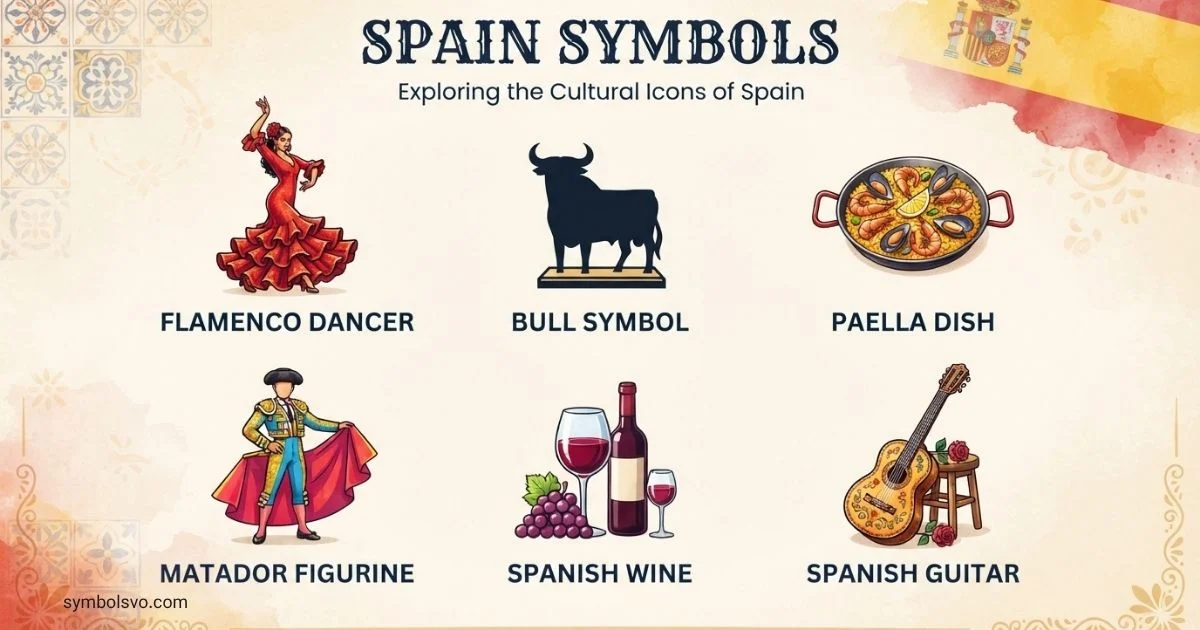
Spain is more than beautiful cities, sunny beaches, and rich traditions. I find its symbols fascinating because each one can reveal something about the country’s history, culture, and identity.
When you explore Spain symbols, you discover meaningful flags, animals, landmarks, colors, and cultural icons. You can also see how these symbols connect Spain’s past with its modern identity.
In this guide, I’ll help you understand the most important Spain symbols in a simple and practical way. You’ll learn what they represent, where they come from, and why they remain meaningful today.
Quick Answer
Spain symbols are cultural, historical, and national emblems that represent the identity, values, and diverse heritage of the Spanish people. From the national flag and the bull to religious icons and regional motifs, these symbols serve as visual shorthand for the nation’s profound history, passion, and artistic legacy.
Quick Facts About Spain Symbols
| Aspect | Information |
| Origin | Ancient Iberian, Roman, Visigothic, and Moorish roots. |
| Historical Significance | Evolved through centuries of reconquest, unification, and global influence. |
| Main Meaning | National unity, regional diversity, and cultural passion. |
| Spiritual Meaning | Deeply tied to Catholic devotion and transcendental art. |
| Cultural Importance | Defines the “Spanish way of life,” from flamenco to national holidays. |
| Modern Usage | Tourism branding, sports pride, and regional political expression. |
What Are Spain Symbols?
Spain symbols are the visual language of a nation that sits at the crossroads of Europe and Africa. The country has been defined by the layering of civilizations. Each era left behind a mark, from the stone carvings of the Romans to the intricate geometric patterns of the Moorish period.
These symbols became essential as Spain moved from a collection of smaller kingdoms into a unified nation. They were needed to rally people together and maintain distinct regional identities. Today, whether you look at the coat of arms on the flag or the iconic silhouette of a flamenco dancer, you are seeing a distillation of centuries of struggle, beauty, and resilience.
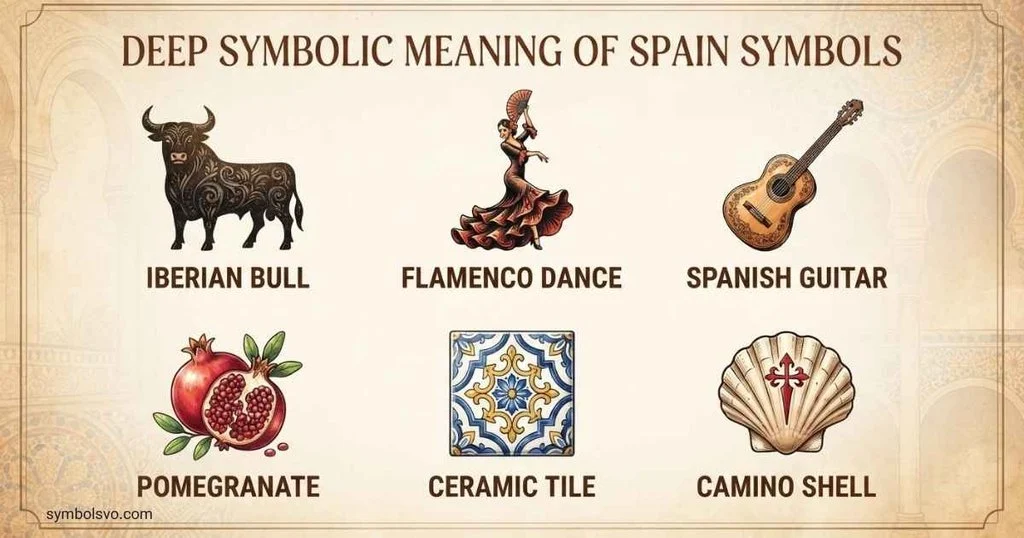
Deep Symbolic Meaning of Spain Symbols
Spiritual Level
On a spiritual level, many symbols in Spain are inextricably linked to Catholic mysticism. The figure of the Virgin Mary, often depicted in regional variations, represents comfort and divine protection. These symbols connect the soul to a sense of continuity, where faith is not just a Sunday practice but a daily rhythm of life.
Psychological Level
Psychologically, Spain symbols tap into the archetypes of passion and honor. The bull, for instance, represents raw, untamed power and the struggle between man and nature. This creates an emotional attraction because it resonates with the human desire for courage and vitality in the face of life’s challenges.
Cultural Level
Culturally, these symbols serve as glue for community life. Festivals like the Feria de Abril or the running of the bulls are not just events. They are collective rituals where every participant wears, dances, and eats in accordance with symbols that declare who they are and where they come from.
Types and Variations of Spain Symbols
1. The Spanish Flag and Coat of Arms
- Visual Description: Red and yellow horizontal stripes with a complex central crest.
- Meaning: Represents national unity and the history of the various kingdoms that formed the nation.
- Symbolism: Authority, sovereignty, and the historical pillars of Hercules.
- Cultural Connection: The primary symbol of national pride and constitutional governance.
2. The Bull (Toro de Osborne)
- Visual Description: A large, black, minimalist silhouette of a bull.
- Meaning: Strength, perseverance, and endurance.
- Symbolism: Represents the wild, majestic spirit of the Iberian landscape.
- Cultural Connection: Once a brand logo, it has become an unofficial national symbol found on hillsides across the country.
3. The Flamenco Guitar and Dancer
- Visual Description: A wooden instrument and a dancer in a vibrant dress.
- Meaning: Emotional intensity, sorrow, and joy.
- Symbolism: The triumph of the human spirit through artistic expression.
- Cultural Connection: Deeply rooted in Andalusian and Romani traditions.
Spain Symbols Across Different Cultures
Ancient Egypt
While not native to Spain, Egyptian motifs traveled through trade routes and left influences on Mediterranean aesthetics that later informed Spanish decorative arts.
Ancient Greece
The Greek influence is visible in the architecture and maritime symbols found along the Spanish coast, particularly in the legacy of colonies like Empúries.
Roman Culture
Rome left the most enduring physical symbols, such as the famous aqueduct in Segovia. These stone giants remain symbols of endurance and engineering brilliance.
Eastern Traditions
The Islamic influence from the Al-Andalus era introduced complex calligraphy and geometric patterns into the Spanish symbolic lexicon, which remain iconic in sites like the Alhambra.
Indigenous Traditions
The original Iberian and Celtic cultures left behind petroglyphs and nature-based symbols that still influence modern northern Spanish regional identities, especially in Galicia and Asturias.
Similar Symbols and Their Meanings
Many symbols share DNA with other Mediterranean nations, yet they hold a distinctly Spanish flavor.
| Symbol | Spanish Context | Similar Mediterranean Symbol |
| Pillar | Pillars of Hercules (Gibraltar) | Roman columns of authority |
| Bull | The fighting bull / resilience | Minoan sacred bull |
| Fan | Flamenco accessory / cooling | Alternative folding fan |
The key difference is the Spanish focus on intensity and passion as the primary narrative behind these objects.
Spain Symbols in Mythology and Folklore
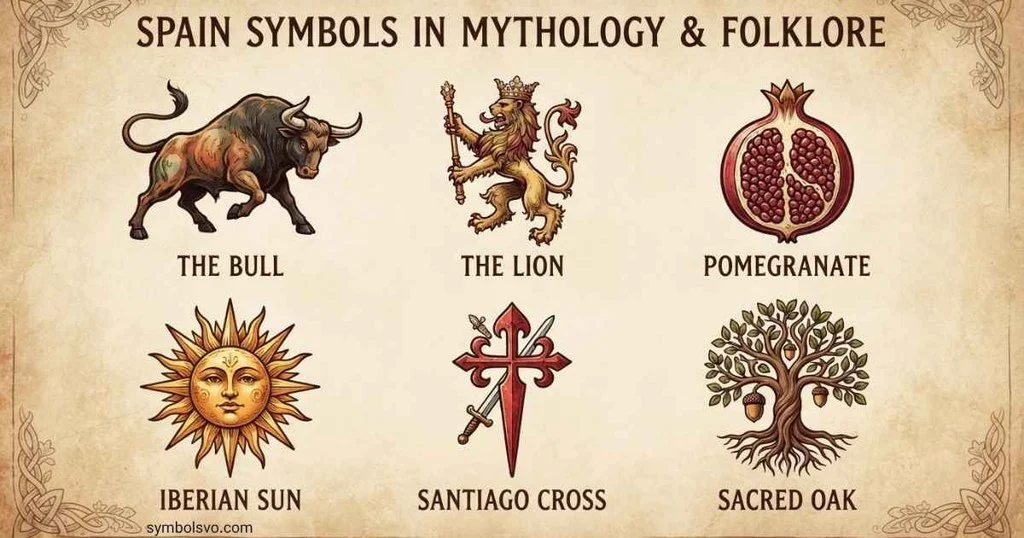
Spanish folklore is rich with creatures and legends, such as the Moura in the north or the brave figures of El Cid. These myths shaped the modern understanding of the Spanish character. Stories of heroes defending their land created a lasting cultural obsession with themes of honor, loyalty, and the defense of one’s home.
Spain Symbols in Art, Literature, and Pop Culture
From the master paintings of Velázquez and Goya to the literary tragedy of Don Quixote, Spanish symbols are everywhere. The windmill, famously fought by Quixote, has become a global symbol for tilting at windmills, representing the noble but futile pursuit of ideals. In movies and fashion, the polka-dot dress and the rose signify Spanish femininity and drama.
Spiritual and Dream Meaning of Spain Symbols
To dream of Spanish symbols often reflects a desire for more vibrancy in your life. Seeing a bull in a dream might suggest you are facing a powerful challenge that requires courage. Dreaming of a cathedral or religious icon may indicate a search for deeper purpose or a need to reconnect with your own history and values.
Positive and Negative Meanings of Spain Symbols
| Positive Meaning | Negative Meaning |
| Represents courage and resilience. | Can be associated with aggressive pride. |
| Celebrates artistic and cultural diversity. | May highlight past colonial struggles. |
| Connects families to their heritage. | Can be used for exclusionary nationalism. |
Why Humans Are Attracted to Spain Symbols
Humans are drawn to these symbols because they offer a sense of “dramatic life.” Spain is a place where emotions are worn on the sleeve. People find these symbols attractive because they represent a life lived with color, music, and deep historical roots. They provide a template for how to live fully.
Modern Uses of Spain Symbols
Today, you will see these symbols on high-fashion runways, digital travel campaigns, and home decor. They are no longer just restricted to historical sites. They have become part of a global aesthetic that celebrates passion, sunlight, and artisanal craftsmanship.
Interesting Facts About Spain Symbols
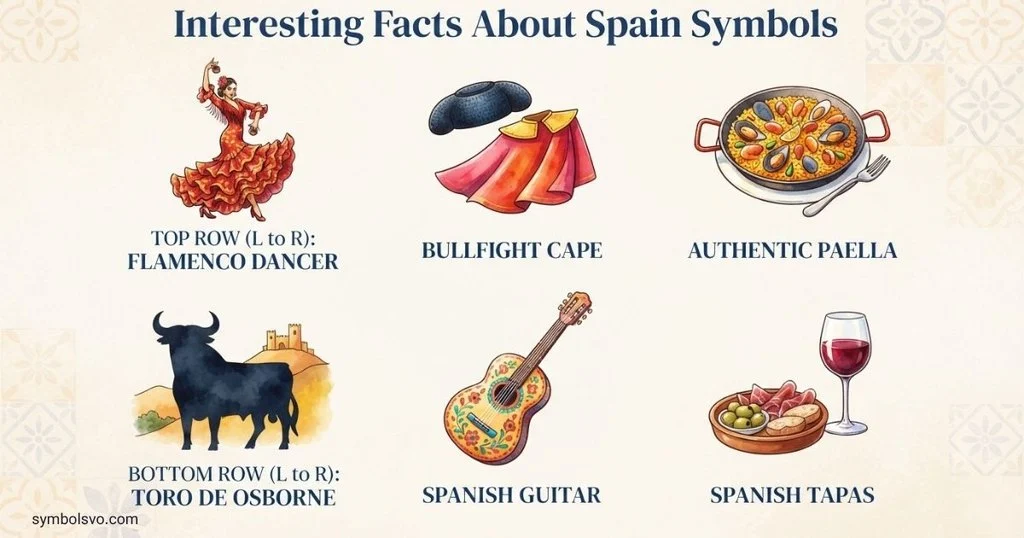
- The Toro de Osborne was originally a billboard for sherry but is now protected as a cultural heritage site.
- The national anthem of Spain has no official lyrics.
- The red and yellow flag colors were chosen to be highly visible at sea.
- Flamenco is recognized by UNESCO as part of the Intangible Cultural Heritage of Humanity.
- Spain is home to more than 40 UNESCO World Heritage sites, each with its own symbolic weight.
Frequently Asked Questions
What is the most famous symbol of Spain?
The bull and the flag are the most recognized, but flamenco and iconic architecture like the Sagrada Familia are equally powerful cultural symbols.
Do these symbols change by region?
Yes, significantly. Catalonia, the Basque Country, and Andalusia each have distinct symbols that reflect their unique languages and historical struggles.
Why is the bull so significant?
The bull represents raw power and is deeply ingrained in both ancient mythology and the modern cultural identity of the Spanish countryside.
Are Spanish symbols used in religion?
Deeply. Catholic symbols such as the crucifix and the various statues of the Virgin Mary are central to both public festivals and private spiritual life.
Conclusion
Spain symbols tell the story of a nation that has survived, evolved, and thrived through the centuries. They are more than just visual markers, as they carry the heartbeat of a people who value passion above all else. Whether you encounter them in art or history, they remind us that identity is built from the layers of our past. Let these icons inspire you to find the beauty and drama in your own personal story.

 Mason Ellington
 Daniel Brooks