
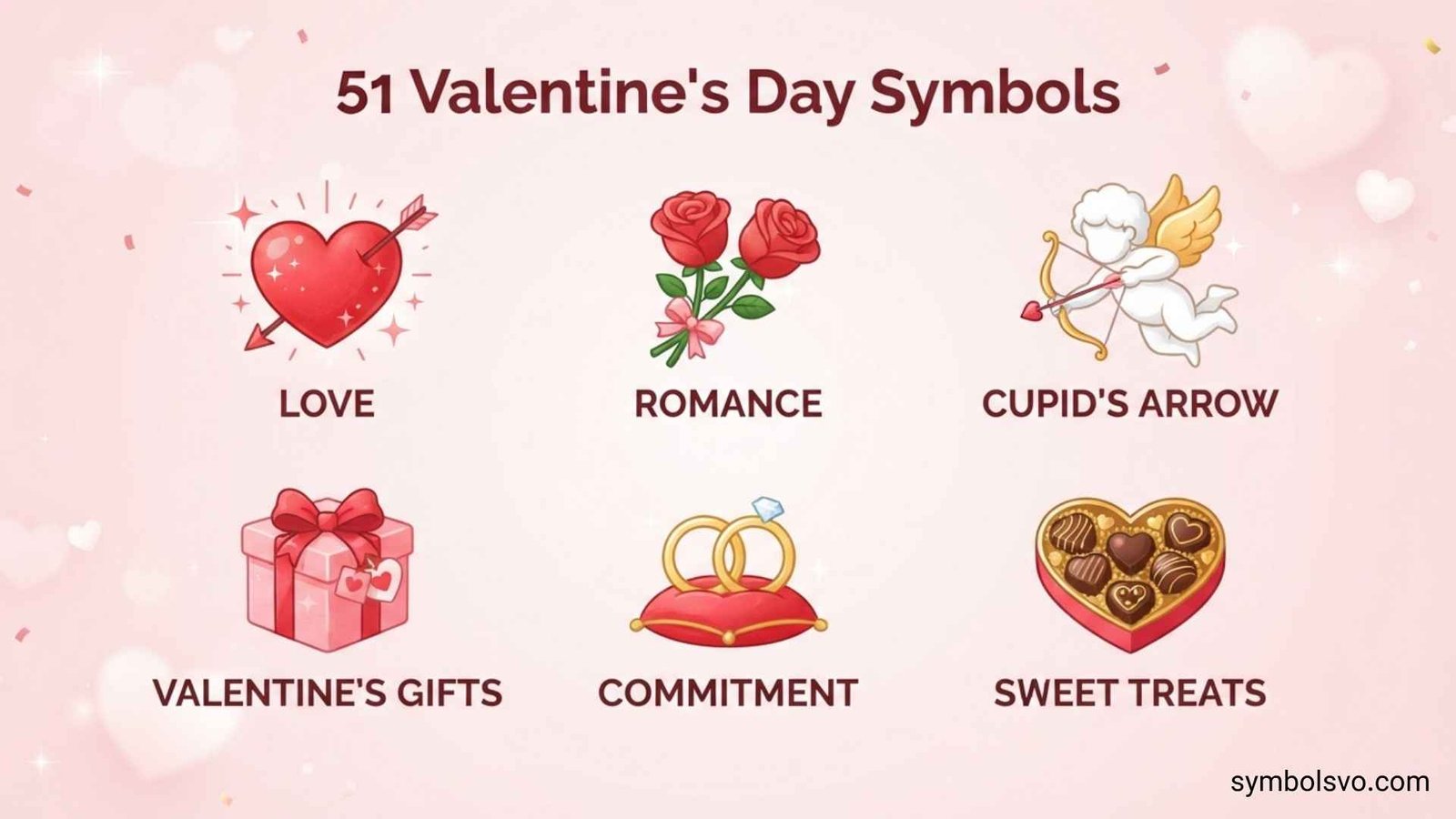
Valentine’s Day symbols are everywhere, from red roses and heart shapes to Cupid and lovebirds. I’ve always found it interesting how these simple images can express powerful feelings of love, affection, and connection.
If you’re wondering what these symbols really mean, you’re in the right place. I’ll help you discover the stories and meanings behind the most popular Valentine’s Day symbols in a simple and easy-to-understand way.
You may recognize many of them, but you might be surprised by their origins and hidden meanings. By the end, you’ll understand what each symbol represents and why it remains an important part of Valentine’s Day.
Quick Answer: What Are Valentine’s Day Symbols?
Valentine’s Day symbols are iconic visual emblems, archetypes, and tokens—such as hearts, Cupids, red roses, and lovebirds—used to represent romantic love, affection, and emotional devotion. Originating in ancient mythology, pagan festivals, and medieval literature, these symbols have evolved into a universal language of romance that bypasses words to communicate deep emotional states across different cultures.
Quick Facts About Valentine’s Day Symbols
| Aspect | Information |
| Origin | Ancient Greco-Roman mythology, Christian martyrology, and medieval European folklore. |
| Historical Significance | Evolved from Lupercalia rituals and courtly love traditions into modern romantic expressions. |
| Main Meaning | Unconditional love, passion, emotional vulnerability, and romantic devotion. |
| Spiritual Meaning | The sacred union of opposites, soul-to-soul connection, and divine affection. |
| Cultural Importance | Forms a global, multi-billion-dollar tradition of emotional exchange and relationship bonding. |
| Modern Usage | Digital emojis, greeting cards, fine jewelry, commercial branding, and artistic expressions. |
What Are Valentine’s Day Symbols?
To truly understand Valentine’s Day symbols, we have to look past the modern store shelves filled with chocolate boxes and plush toys. At their core, these symbols are powerful visual tools that humanity has used for centuries to express feelings that words often fail to capture. They are the shorthand language of the heart.
The origin of these romantic signs dates back thousands of years. Long before February 14 became synonymous with candlelit dinners, ancient civilizations celebrated mid-February as a time of fertility and renewal. The Romans celebrated Lupercalia, a wild festival focused on cleansing and fertility. As Christianity spread through Europe, the church transformed these pagan traditions by linking the mid-February celebrations to Saint Valentine, a third-century martyr who secretly performed marriages for Roman soldiers against the Emperor’s orders.
Over time, this blend of ancient mythology and religious history merged with medieval European folklore. During the Middle Ages, people noticed that birds began their mating season around mid-February. This natural phenomenon cemented the idea that mid-February was a sacred season for lovers. As courtly love and romantic poetry flourished in the Renaissance, artists and writers began standardizing these visual metaphors. What started as sacred myths and natural observations gradually evolved into the modern icons we recognize instantly today.
Deep Symbolic Meaning of Valentine’s Day Symbols
Every romantic emblem possesses a layer of meaning that goes far beneath its commercial surface. These icons resonate with us because they speak to multiple levels of our human consciousness.
Spiritual Level
On a spiritual level, these emblems represent the ultimate union of opposites. They symbolize the merging of two distinct souls into one harmonious energy. This is the concept of divine love, where affection transcends the physical body and touches the realm of the spirit. Many traditions view these tokens as symbols of inner transformation. Choosing to love someone requires a person to drop their ego, embrace vulnerability, and experience a spiritual awakening that expands their consciousness.
Psychological Level
Psychologically, these romantic images function as powerful archetypes. Famed psychologist Carl Jung wrote extensively about universal symbols stored deep within the collective human subconscious. The imagery of romance represents our innate psychological drive for connection, safety, and wholeness. The sudden strike of Cupid’s arrow represents the intense, uncontrollable nature of emotional attraction—the feeling of being completely overwhelmed by love. These symbols give visual shape to the complex chemicals, like oxytocin and dopamine, that flood our brains when we fall in love.
Cultural Level
Culturally, these icons serve as a vital social bridge. They provide a safe, universally accepted language for people to express their vulnerability. In many societies, sharing raw emotions can feel terrifying or taboo. Giving a physical token, like a red rose or a handwritten card, offers an elegant, structured way to say “I care about you.” It anchors individual relationships to a vast, shared human tradition, reinforcing community beliefs about loyalty, family, and the supreme importance of love.
Types and Variations of Valentine’s Day Symbols
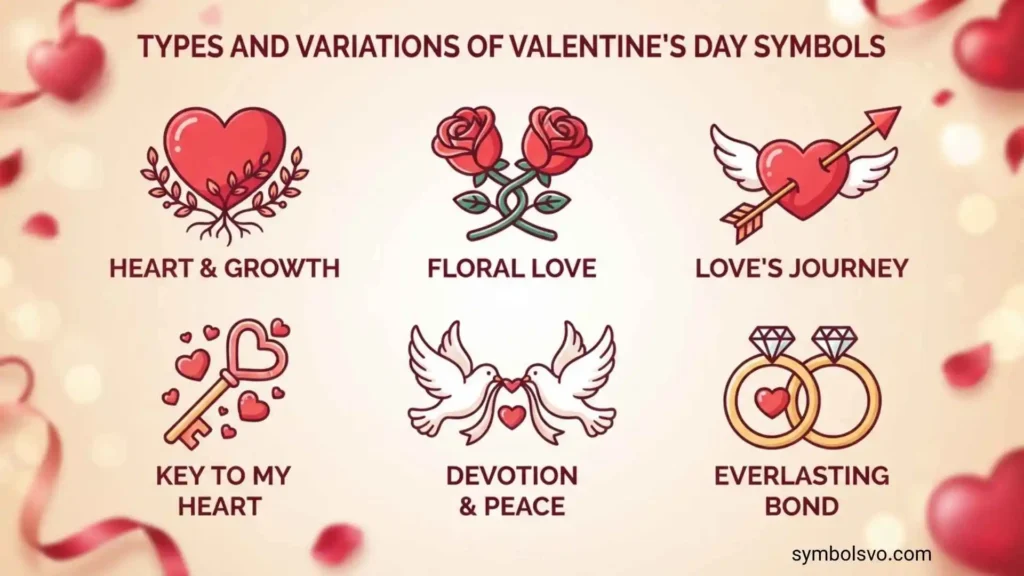
The classic imagery of romance is not uniform. It consists of several distinct, powerful symbols, each with its own visual language, historical origin, and psychological weight.
The Sacred Heart
The modern heart icon features two symmetrical lobes curving down into a sharp point. Interestingly, this shape looks very little like a real, anatomical human organ. Instead, historians believe it was modeled after the seed pod of the silphium plant, an ancient Roman form of birth control, or the stylized shape of ivy leaves, which symbolized eternal fidelity. The heart represents the absolute core of human emotion, vulnerability, and life force. In Western literature, it appears as the seat of the soul. Today, it is the universal shorthand for love, showing up everywhere from casual text message emojis to high-end diamond pendants.
Cupid and His Arrows
Cupid is typically depicted as a chubby, winged baby carrying a small bow and a quiver full of arrows. This visual style is a soft, commercialized version of his ancient identity. Originally, he was Eros, the handsome, powerful Greek god of desire who could bring gods and mortals to their knees. Cupid represents the unpredictable, sudden, and sometimes chaotic nature of romantic infatuation. His arrows symbolize how love pierces our defenses without warning. This imagery is deeply rooted in classical mythology and Renaissance art, and it remains a playful fixture on modern greeting cards and party decorations.
The Red Rose
The red rose is a crimson flower with delicate, overlapping petals protected by sharp thorns on its stem. It signifies intense passion, physical beauty, and the delicate balance between the joy and pain of love. Culturally, the red rose is tied directly to Aphrodite, the Greek goddess of love, who supposedly scratched herself on a white rose thorn while rushing to her dying lover, staining the petals red with her blood. This symbol dominates the global floral industry, poetry, and traditional courtship rituals around the world.
Lovebirds and Doves
Lovebirds are small, brightly colored parrots that sit close together in pairs, while doves are elegant, pure white birds known for their soft cooing. These birds represent peace, lifelong fidelity, and gentle companionship. This imagery stems directly from medieval European nature lore, which suggested that birds chose their mates for life on February 14. They appear frequently in classic literature, traditional wedding decor, and vintage Valentine illustrations.
Valentine’s Day Symbols Across Different Cultures
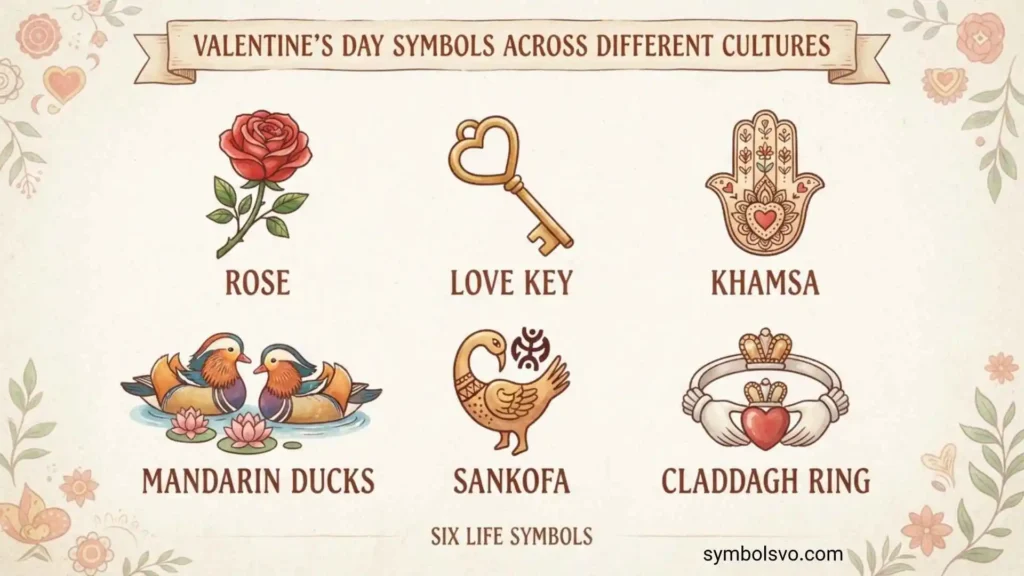
The language of love is universal, but different civilizations have interpreted and used these romantic symbols through their own unique cultural lenses.
Ancient Egypt
In the land of the pharaohs, love was deeply tied to cosmic balance and magic. The Egyptians viewed the lotus flower as a primary symbol of creation, rebirth, and romantic devotion. Goddesses like Hathor, who oversaw love, beauty, and music, were often depicted holding these sacred flowers. For Egyptians, offering a lotus was an act of profound spiritual and physical affection.
Ancient Greece
The Greeks viewed romantic icons through the lens of their vast mythology. They associated love with the apple, which represented desire and marital union. Throwing an apple at someone was a formal declaration of love, and catching it meant accepting that love. They also popularized the concept of the four distinct types of love, using various artistic representations to separate familial affection from burning romantic passion.
Roman Culture
Roman society laid the concrete foundations for our modern mid-February celebrations. They honored Juno, the goddess of women and marriage, during this season. The Romans utilized the laurel wreath and the Myrtle plant as symbols of lasting commitment and romantic triumph. During their fertility festivals, these plants were worn as crowns to invite romantic blessings into a relationship.
Eastern Traditions
In Eastern cultures, particularly in China and Japan, romantic symbolism relies heavily on nature and balance. Instead of a single heart, love is often represented by the Mandarin duck pair, which mate for life and signify marital bliss. The “Red Thread of Fate” is another beautiful Eastern concept, representing an invisible, unbreakable spiritual cord tied around the pinky fingers of two people destined to find each other and fall in love.
Indigenous Traditions
Many Indigenous cultures across North America view love symbols through an interconnected, natural lens. The eagle feather is often used to symbolize the highest form of love, respect, and spiritual connection between two people. Sharing a blanket during a sacred ceremony is another traditional practice, representing the physical and emotional sheltering of one another as they walk through life together.
Modern Interpretations
In our fast-paced, digital world, romantic imagery has undergone a massive transformation. Classic symbols have been streamlined into minimalist icons and digital emojis. The simple pink or red heart emoji is sent billions of times a day globally. Modern culture has also expanded these symbols to celebrate self-love, platonic friendships, and chosen families, ensuring that the ancient language of affection stays relevant in modern times.
Similar Symbols and Their Meanings
It is easy to confuse Valentine icons with other common cultural symbols. Looking at how they compare helps clarify their unique role in human expression.
| Romantic Symbol | Similar Concept | Key Similarities | Major Differences |
| The Heart | The Ankh | Both represent life force and vitality. | The heart focuses on emotional and romantic love, while the Ankh is an ancient Egyptian symbol for eternal life and cosmic breath. |
| Cupid | Angels / Cherubs | Both are winged, celestial beings that deliver messages. | Cupid represents romantic desire and sexual attraction, whereas angels symbolize divine protection, purity, and spiritual holiness. |
| Red Rose | Red Lotus | Both are beautiful red flowers tied to deep affection. | The red rose focuses heavily on physical passion and romantic devotion, while the red lotus represents spiritual purity and detachment from material desire. |
A common misconception is that the heart symbol has always been associated exclusively with romance. In reality, early human cultures used the stylized heart shape to represent fertility, agricultural abundance, and even medicinal plants before it ever became a symbol for romantic partnerships.
Valentine’s Day Symbols in Mythology and Folklore
The true power of these icons comes from the timeless stories that gave them birth. These ancient tales continue to influence how we feel today.
One of the most famous legends shaping our understanding of romance is the tragic and beautiful story of Cupid and Psyche. In this Roman myth, Psyche is a mortal woman so beautiful that she accidentally angers Venus, the goddess of love. Venus sends her son, Cupid, to scratch Psyche with an arrow and make her fall in love with a monster. Instead, Cupid accidentally scratches himself and falls completely in love with her. Their subsequent journey through trials, doubt, and ultimate spiritual union highlights the psychological truth that true love requires trust, vulnerability, and overcoming immense obstacles.
Folklore from the Middle Ages also played a massive role in molding these traditions. People genuinely believed that nature reset itself on February 14, serving as a clean slate for the animal kingdom to find companionship. This belief led young European individuals to gather on the eve of Saint Valentine’s Day to draw names out of an urn, wearing their chosen person’s name on their sleeve for an entire week. This old folk tradition gave rise to the popular modern phrase “wearing your heart on your sleeve.”
Valentine’s Day Symbols in Art, Literature, and Pop Culture
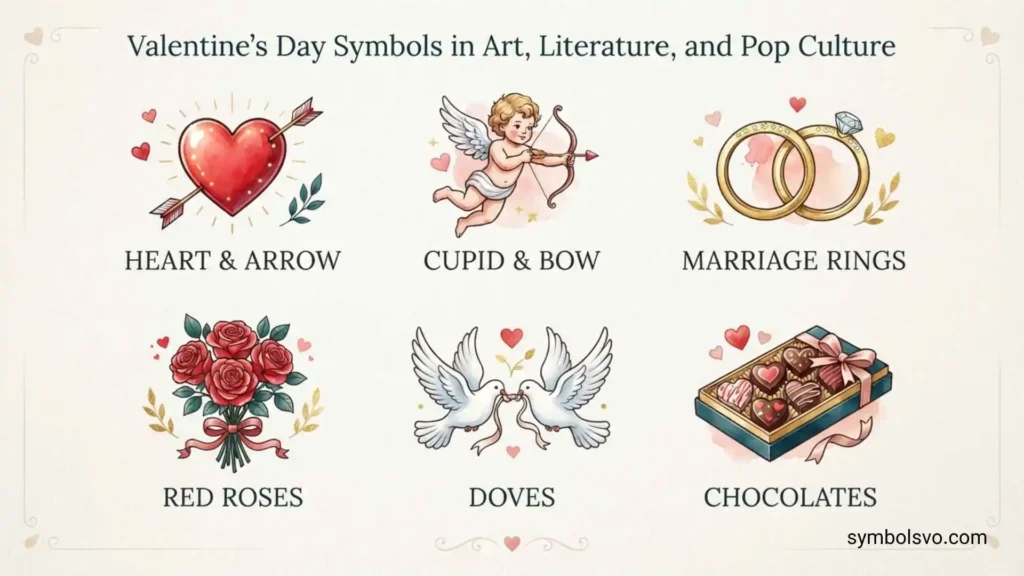
Artists and writers have long used these visual cues to add emotional weight to their creations, making them permanently visible in our daily lives.
In classical paintings by Renaissance masters like Sandro Botticelli, symbols like the red rose and the myrtle branch were strategically placed to signal divine love and physical desire to the viewer. Moving into literature, William Shakespeare masterfully utilized floral and avian symbols in plays like Romeo and Juliet to heighten the tragic romance of his characters, using the rose to show that love remains beautiful regardless of the names or labels society places upon it.
“What’s in a name? That which we call a rose
By any other name would smell as sweet.”
— William Shakespeare, Romeo and Juliet
In modern pop culture, these emblems remain incredibly prominent. Filmmakers use them in romantic comedies to instantly signal a character’s emotional state to the audience. Tattoos featuring sacred hearts or red roses are incredibly popular choices for body art, serving as permanent, highly personal declarations of passion, survival, and deep emotional commitment. In modern fashion and luxury branding, iconic houses use stylized heart and Cupid motifs to convey luxury, desire, and exclusivity.
Spiritual and Dream Meaning of Valentine’s Day Symbols
When these icons show up in our dreams or meditative states, they often carry profound messages from our subconscious minds.
Seeing a vibrant, healthy heart or a blooming red rose in a dream is generally an excellent sign. It usually points to an upcoming period of emotional healing, a deepening of an existing relationship, or a subconscious readiness to open yourself up to new romantic opportunities. These dreams serve as an inner validation that your emotional channels are clear and expanding.
However, these symbols can also carry cautionary messages depending on the context of the dream. Dreaming of a withered, drooping rose or a cracked, bleeding heart can be a warning from your subconscious. It often signals that you are neglecting your own emotional well-being, ignoring red flags in a relationship, or holding onto past emotional trauma that needs to be processed and released. Cupid appearing with broken arrows in a dream might suggest that you are trying to force a connection that is simply not meant to be.
Positive and Negative Meanings of Valentine’s Day Symbols
Most romantic emblems are complex, possessing dual meanings that represent both the light and shadow sides of human relationships.
| Symbol | Positive Meaning (The Light) | Negative Meaning (The Shadow) |
| The Heart | Compassion, unconditional love, emotional safety, empathy. | Heartbreak, emotional vulnerability, possessiveness, grief. |
| Cupid | Playful attraction, romantic inspiration, excitement. | Irrational infatuation, loss of logic, manipulation, obsession. |
| The Red Rose | Deep passion, breathtaking beauty, romantic devotion. | Danger, painful betrayal (the thorns), jealousy, fleeting youth. |
This duality reminds us that love is a comprehensive experience. You cannot experience the incredible joy of a blooming rose without accepting the potential risk of being pricked by its sharp thorns.
Why Humans Are Attracted to Valentine’s Day Symbols
Our universal attraction to these symbols is hardwired into our psychology and biology. Humans are natural pattern-seeking creatures. Our brains are designed to look for visual shortcuts to process complex information quickly. An emotion as massive, chaotic, and overwhelming as love is incredibly difficult to explain with words alone. A simple icon like a red heart condenses all of that heavy emotional energy into a single, instantly recognizable image.
Furthermore, these symbols tap into our deep collective memory. Because these images have been used for thousands of years across countless generations, they carry an undeniable comforting weight. They remind us that our personal struggles, desires, and triumphs in love are not unique to us. When we look at these emblems, we are participating in an ancient human ritual, connecting our modern lives to the long history of human emotion.
Modern Uses of Valentine’s Day Symbols
Today, these classic icons have successfully broken out of the boundaries of February 14 and integrated themselves completely into our daily lifestyles.
- Tattoos and Body Art: Used as permanent symbols of personal growth, passion, and remembrance.
- Fine Jewelry: Heart-shaped diamonds and infinity bands remain the top choices for engagements and anniversaries.
- Corporate Branding: Companies use these symbols to build an immediate emotional, trustworthy bond with consumers.
- Social Media: Emojis act as a vital emotional punctuation mark in our digital conversations.
- Home Decor: Stylized romantic art and floral motifs are used to create warm, inviting spaces.
Interesting Facts About Valentine’s Day Symbols
- The Heart’s True Roots: The popular heart shape looks remarkably like the extinct silphium plant pod, which was so valuable for romance in ancient Rome that its image was stamped onto their currency.
- The Secret Language of Roses: In the Victorian era, the number of roses you sent carried a precise secret message. Sending a single rose meant “love at first sight,” while sending exactly thirteen meant you had a secret admirer.
- Cupid’s Dark Side: In early Greek art, Cupid was not a cute baby. He was depicted as an athletic, unpredictable teenager who took great pleasure in causing emotional chaos for mortals.
- The Real Cost of Love: On Valentine’s Day, over 250 million roses are grown and shipped globally, requiring massive international logistics networks to deliver them fresh.
- Wearing Your Heart: The phrase “wearing your heart on your sleeve” originates from real medieval jousting tournaments, where knights tied a lady’s colored ribbon around their armor sleeve before charging into battle.
Frequently Asked Questions
Why is the heart the main symbol of Valentine’s Day?
The heart is the primary symbol because ancient philosophers believed it was the physical center of the human body and the literal seat of all emotions, including love, courage, and sorrow. Over time, this belief evolved into our modern visual shorthand for romantic devotion.
Was Cupid originally a baby?
No, Cupid was originally Eros, a powerful and athletic Greek god of desire. Over many centuries, Roman artists and Renaissance painters gradually softened his image, transforming him into a chubby, non-threatening infant to make him a more playful symbol of affection.
What do different colors of roses mean on Valentine’s Day?
While red roses represent intense romantic passion, other colors carry completely different meanings. Yellow roses represent deep platonic friendship, pink roses represent gratitude and gentle admiration, and white roses symbolize purity, new beginnings, and eternal respect.
Why are lovebirds associated with romance?
Lovebirds are associated with romance because of their natural biological behavior. They form monogamous pairs, sit incredibly close to one another on branches, and groom each other constantly. This sweet behavior mirrors human couples in love.
Conclusion
Valentine’s Day symbols are far more than mere commercial decorations designed to sell greeting cards. They are deep, resilient pillars of our shared human history, anchoring our deepest emotions to ancient myths, psychological archetypes, and the natural world. By understanding the true origins and complex meanings behind the heart, the red rose, and Cupid, we gain a profound appreciation for the timeless language of romance. The next time you share one of these tokens, remember that you are participating in a beautiful, ancient human tradition of expressing the most powerful force on earth: love.

 Mason Ellington
 Daniel Brooks