
I’ve always believed that the smallest symbols can carry the biggest feelings, and kindness symbols do exactly that. When you start noticing them, you realize how often people try to say “I see you” without using words.
You deserve tools that help you show care in a world that moves too fast. These symbols give you a quiet, powerful way to connect.
I want you to feel confident using them so every message you send can land a little softer and mean a little more.
Quick Answer
Kindness symbols are universal visual representations, such as the heart, the open hand, and the olive branch, used to communicate empathy, compassion, and peace across different cultures. Rooted in ancient mythology, psychology, and spiritual traditions, these emblems bypass language barriers to inspire prosocial behavior and express a shared commitment to human goodwill.
Quick Facts About Kindness Symbols
| Aspect | Information |
| Origin | Ancient civilizations, including Mesopotamia, Egypt, and Greece. |
| Historical Significance | Used to signal sanctuary, seal peace treaties, and mark safe havens. |
| Main Meaning | Unconditional love, empathy, generosity, and mutual support. |
| Spiritual Meaning | The divine spark within humanity, cosmic harmony, and interconnectedness. |
| Cultural Importance | Fosters social cohesion, community trust, and altruistic behavior. |
| Modern Usage | Digital emojis, charity branding, tattoos, and global humanitarian logos. |
What Are Kindness Symbols?
A kindness symbol is a visual metaphor that instantly communicates love, empathy, and a desire to help others. Long before written alphabets spread across the globe, early humans relied on imagery to express complex emotions and intentions. The evolution of these symbols reveals a beautiful transition from survival-based signaling to deep emotional expression.
In ancient times, displaying a recognized token of goodwill was a matter of life and death. Travelers moving through unfamiliar territories looked for specific markers carved into stone or painted on gates. These markers signaled that the people living there practiced hospitality and would offer shelter rather than hostility.
Over centuries, as isolated tribes grew into sprawling civilizations, these visual cues transformed. They moved from protective tribal signs into deeply spiritual and philosophical emblems. Today, they form a global visual language. When you see a specific emblem of goodwill, your brain instantly processes a feeling of safety, warmth, and connection.
Deep Symbolic Meaning of Kindness Symbols
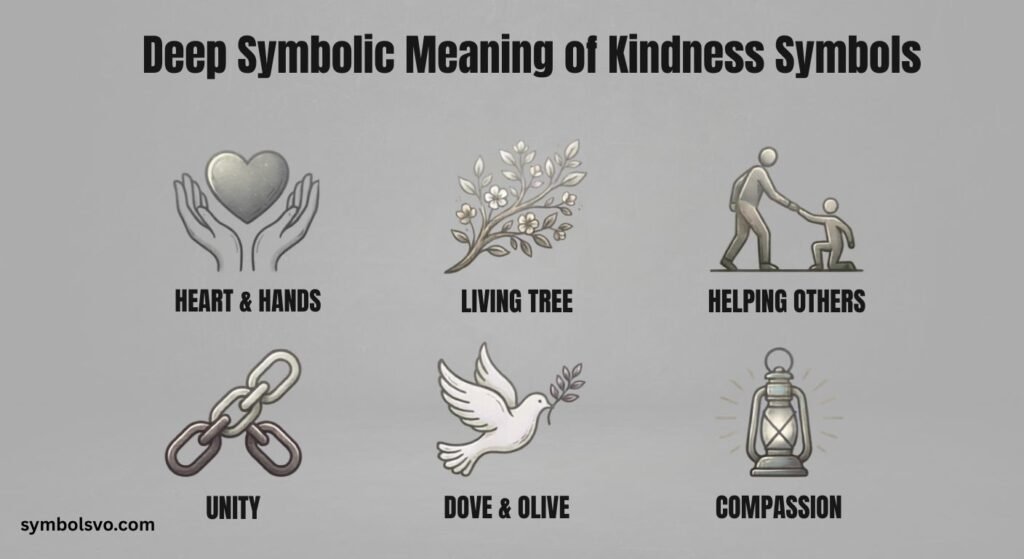
Spiritual Level
On a spiritual level, symbols of compassion represent the awakening of the soul and the recognition of the divine spark in others. Many ancient traditions view acts of goodwill not just as social politeness, but as sacred duties. For example, the imagery of a radiating light or an open flower signifies inner transformation, showing how a person’s consciousness expands when they move away from selfishness and step into universal love.
Psychological Level
Psychologically, these images tap into what Carl Jung called the collective unconscious. They act as archetypes of the Caregiver and the Healer. When we look at an image of gentleness, it triggers an immediate emotional response, lowering our stress levels and activating parts of the brain associated with social bonding. It satisfies our deep, subconscious need for safety, belonging, and emotional warmth.
Cultural Level
Culturally, these emblems serve as the social glue that holds communities together. They reinforce shared beliefs about charity, mutual aid, and respect for life. Through storytelling, folklore, and shared rituals, a society passes these visual reminders down to younger generations, ensuring that the core values of cooperation and empathy remain central to the community’s survival.
Kindness Symbol Flower: Flowers That Represent Love and Compassion
Flowers have been used for centuries as symbols of kindness, care, and emotional connection. Many flowers represent gentle feelings because they express warmth, beauty, and positivity without words.
The rose, especially pink roses, is often connected with kindness, gratitude, and appreciation. The lotus flower symbolizes compassion, purity, and inner peace in many cultures. The daisy represents innocence, friendship, and a caring heart.
Flowers are powerful kindness symbols because they remind people to show love, support, and respect toward others. Giving a flower is a simple gesture that can communicate kindness and thoughtfulness.
Kindness Symbol Drawing: Simple Ideas to Represent Kindness
A kindness symbol drawing can use simple images that visually express care, generosity, and compassion. These drawings are often used by children, artists, and educators to spread positive messages.
Common kindness drawing ideas include:
- A heart symbol showing love and care
- Two hands helping each other
- A smiling face representing happiness
- A flower symbolizing growth and kindness
- A dove representing peace and goodwill
Simple kindness drawings are effective because they are easy to understand and can communicate positive emotions across different cultures.
Kindness Symbols for Kids: Easy Symbols Children Understand
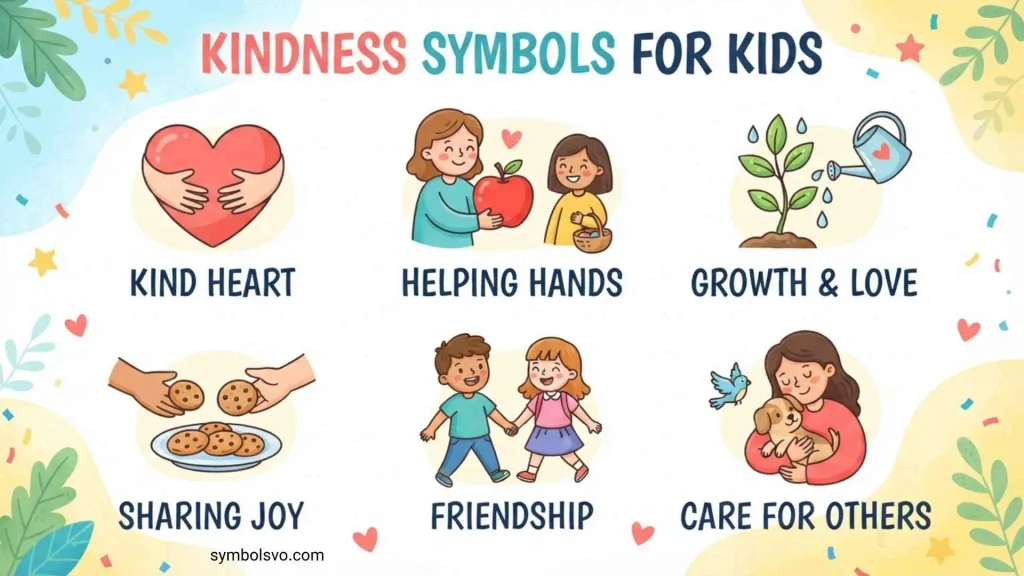
Children often learn kindness through simple images and symbols. Visual symbols help them understand important values like sharing, helping, and caring.
Some popular kindness symbols for kids include:
- ❤️ Heart: Love and caring
- 🤝 Helping hands: Support and friendship
- 🌈 Rainbow: Hope and positivity
- 🌻 Sunflower: Happiness and warmth
- 🕊️ Dove: Peace and kindness
These symbols can be used in classrooms, posters, crafts, and activities to encourage children to practice kindness every day.
Kindness Symbol Tattoo: Meaningful Designs and Their Symbolism
A kindness symbol tattoo represents compassion, empathy, and a commitment to treating others with care. Many people choose kindness tattoos as a reminder to stay gentle and helpful.
Popular kindness tattoo symbols include:
- A heart with hands: Represents caring and support
- A lotus flower: Symbolizes compassion and emotional growth
- An infinity symbol: Represents endless kindness
- A dove: Represents peace and goodwill
- A tree: Represents generosity and connection
The meaning of a kindness tattoo depends on personal experiences, but most designs share a message of love, understanding, and humanity.
Symbol of Kindness Animal: Animals That Represent Compassion
Many animals are considered symbols of kindness because of their qualities such as loyalty, protection, and care.
Common animal symbols of kindness include:
| Animal | Meaning |
| Dove | Peace and compassion |
| Butterfly | Transformation and gentle spirit |
| Elephant | Care, wisdom, and protection |
| Dog | Loyalty and unconditional love |
| Dolphin | Friendship and harmony |
Animals represent kindness because they remind us of patience, cooperation, and emotional connection.
Kindness Symbols Clipart: Visual Icons for Positive Messages
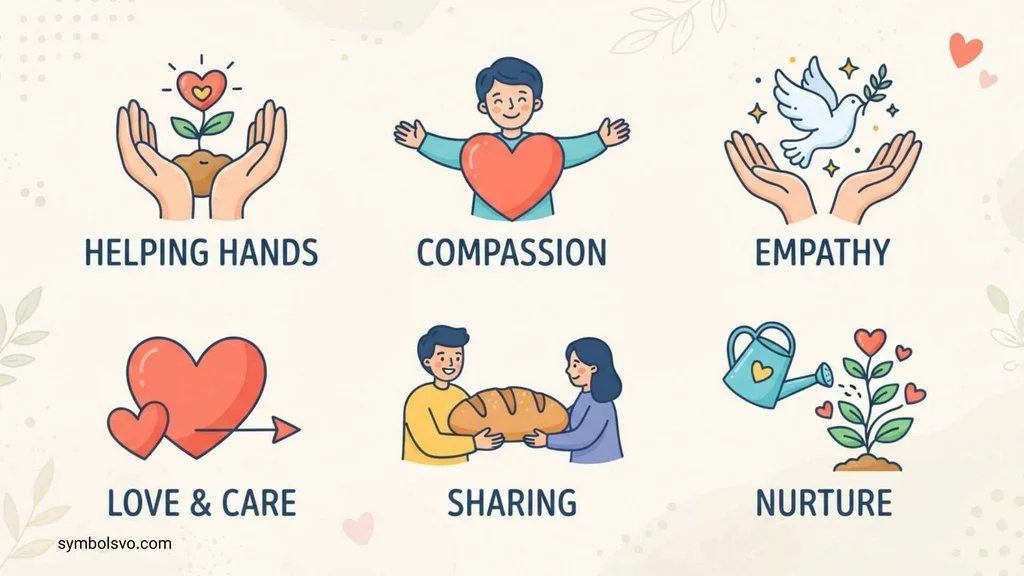
Kindness symbols clipart is commonly used for educational materials, social media posts, and inspirational designs. These images help share positive messages quickly.
Popular kindness clipart ideas include:
- Hearts
- Helping hands
- Smiling faces
- Flowers
- Peace signs
- Friendly animals
These simple visuals make kindness-related content more engaging and easier to understand.
Easy Kindness Symbols: Simple Images With Powerful Meanings
Easy kindness symbols are designs that anyone can recognize and create. They are often used in schools, campaigns, and community projects.
Some simple kindness symbols include:
- Heart: Love and affection
- Handshake: Friendship and cooperation
- Open hands: Giving and generosity
- Smile: Happiness and positivity
- Candle: Hope and support
Even simple symbols can carry deep emotional meanings and inspire people to act with kindness.
Kindness Symbols and Meanings: Common Symbols Explained
Kindness symbols represent positive human qualities such as compassion, generosity, and care. Different cultures use different images to express kindness.
| Symbol | Meaning |
| Heart | Love and kindness |
| Helping hands | Support and generosity |
| Flower | Growth and compassion |
| Dove | Peace and goodwill |
| Tree | Protection and connection |
These symbols remind people that small acts of kindness can create meaningful changes in society.
What Object Represents Kindness?
Many objects can represent kindness because they are connected with giving, helping, or caring for others.
Objects commonly associated with kindness include:
- A gift: Represents generosity
- A candle: Represents hope and guidance
- A blanket: Represents comfort and care
- A key: Represents opening opportunities for others
- A helping hand symbol: Represents support
Objects become kindness symbols when they carry a message of compassion and positive action.
Symbolism of Kindness: Understanding the Deeper Meaning
The symbolism of kindness represents empathy, generosity, and the willingness to help others. Kindness is often shown through symbols that express warmth, connection, and emotional support.
A heart symbolizes love, hands symbolize assistance, and flowers symbolize gentle care. These images remind people that kindness is not only an emotion but also an action.
Across cultures, kindness symbols encourage people to build stronger relationships and create more supportive communities.
Compassion Symbols: Images That Represent Caring and Empathy
Compassion symbols express the desire to understand and help others. They represent emotional awareness, kindness, and human connection.
Common compassion symbols include:
- Heart
- Lotus flower
- Helping hands
- Dove
- Tree of life
These symbols remind people to show patience, forgiveness, and support toward others.
Kindness Icon: Popular Symbols Used Digitally
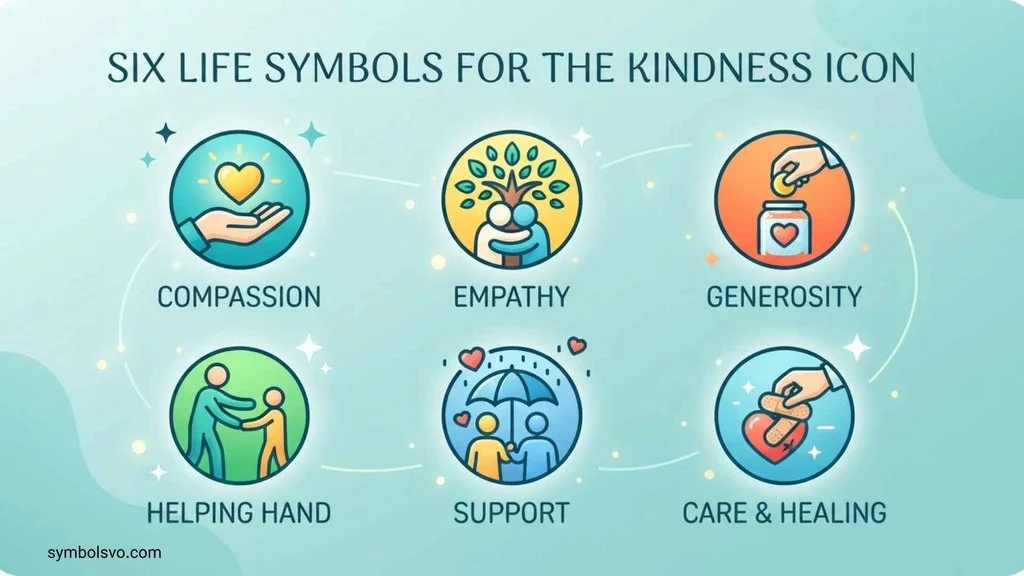
A kindness icon is a simple visual sign used online, in apps, and on social platforms to represent positive actions.
Popular kindness icons include:
- Heart icons
- Handshake icons
- Smile emojis
- Helping hand symbols
- Care symbols
These icons make it easier to share messages of positivity and encourage kindness in digital spaces.
Symbol for Goodness: Signs That Represent Positive Values
Goodness is often represented by symbols connected with purity, honesty, and compassion.
Common symbols for goodness include:
- White dove: Peace and purity
- Light: Hope and truth
- Heart: Love and kindness
- Lotus: Spiritual growth
- Sun: Positivity and warmth
These symbols represent the positive qualities that bring people together.
Simple Kindness Symbol: Minimal Designs With Deep Meaning
A simple kindness symbol does not need complex details to express a powerful message.
Examples include:
- A small heart
- Two hands holding each other
- A smiling face
- A flower
- A circle representing unity
Minimal symbols are effective because their meanings are clear and easy for everyone to understand.
Symbol Generosity: Symbols That Represent Giving
Generosity is closely connected with kindness because both involve caring for others without expecting something in return.
Symbols of generosity include:
- Open hands: Giving and sharing
- Gift box: Thoughtfulness
- Tree: Providing shelter and support
- Heart: Selfless love
These symbols represent the beauty of helping others.
What Symbolizes Kindness?
Kindness is symbolized by anything that represents love, support, and compassion. Some of the strongest kindness symbols include:
- Heart
- Helping hands
- Dove
- Flower
- Smile
- Rainbow
These symbols remind people that kindness can be shown through words, actions, and small gestures.
Kindness Emoji: Digital Symbols of Care and Support
Kindness emojis help people express positive emotions in online conversations. They make messages feel warmer and more personal.
Common kindness emojis include:
- ❤️ Red heart: Love and care
- 🤍 White heart: Peace and compassion
- 🤝 Handshake: Cooperation
- 😊 Smiling face: Happiness
- 🌸 Flower: Gentleness
These emojis are modern symbols that spread kindness through digital communication.
Symbols of Help: Images That Represent Support
Symbols of help represent assistance, teamwork, and caring relationships.
Common help symbols include:
- Helping hands
- Medical cross
- Heart
- Lifebuoy
- Handshake
These symbols show the importance of supporting people during difficult situations.
Symbols That Mean Kindness: Universal Signs of Compassion
Many symbols around the world represent kindness and caring. Some universal kindness symbols include:
- Heart
- Dove
- Lotus flower
- Helping hands
- Tree of life
These symbols communicate a message of love and respect regardless of language or culture.
Symbols of Caring: Signs of Love and Protection
Caring symbols represent emotional support, protection, and affection. They remind people to value relationships and show concern for others.
Examples include:
- Heart: Emotional connection
- Hands: Protection and assistance
- Blanket: Comfort
- Tree: Shelter and growth
Symbol for Gentleness: Representing Softness and Peace
Gentleness is associated with patience, calmness, and understanding. Symbols of gentleness often include soft and peaceful images.
Examples:
- Butterfly: Delicate beauty
- Feather: Lightness and peace
- Flower: Softness and care
- Dove: Calmness and harmony
Loving Kindness Symbol: Representing Unconditional Love
Loving kindness represents compassion, forgiveness, and genuine care for others.
Important symbols include:
- Heart
- Lotus flower
- Buddha’s compassionate imagery
- Helping hands
- Light
These symbols encourage people to practice love and kindness in daily life.
Ancient Symbol of Kindness: Historical Signs of Compassion
Throughout history, different cultures have used symbols to represent kindness and compassion.
Ancient kindness-related symbols include:
- Lotus flower in Asian traditions
- Dove in ancient Mediterranean cultures
- Tree of life in many civilizations
- Heart symbols representing love
These symbols show that kindness has always been an important human value.
What Symbol Represents Kindness?
The most recognized symbol representing kindness is the heart because it represents love, compassion, and emotional connection.
Other important kindness symbols include:
- Helping hands
- Flowers
- Doves
- Butterflies
- Trees
Each symbol represents a different part of kindness, from love and care to peace and generosity.
What Symbolizes Care?
Care is symbolized by images that represent protection, love, and support. Common care symbols include:
- Heart
- Hands
- Blanket
- Home
- Tree
These symbols remind us that caring means protecting, supporting, and valuing others.
Types and Variations of Kindness Symbols
The Heart
- Visual Description: A symmetrical shape with two rounded lobes at the top meeting in a sharp point at the bottom, typically colored red or pink.
- Meaning: Unconditional love, deep affection, and emotional vulnerability.
- Symbolism: The core of human emotion and the seat of the soul.
- Cultural Connection: Widely embraced globally as the definitive icon of love and care.
- Where It Appears: Valentine’s Day art, literature, modern digital emojis, and medical logos.
The Open Hand
- Visual Description: A human hand extended forward with the palm facing upward or outward, fingers relaxed and uncurled.
- Meaning: Generosity, honesty, and an absence of weapons or malice.
- Symbolism: Reaching out to help someone up or offering a gift without expecting anything back.
- Cultural Connection: Found in Middle Eastern, Buddhist, and Indigenous cultures.
- Where It Appears: Ancient rock art, religious blessings, charity posters, and modern logos for non-profit organizations.
The Olive Branch
- Visual Description: A small, slender branch adorned with narrow green leaves and occasionally small olive fruits.
- Meaning: Peace, reconciliation, and the cessation of conflict.
- Symbolism: The rebirth of life and the extension of a peaceful truce after a long struggle.
- Cultural Connection: Deeply rooted in Mediterranean history and Western philosophy.
- Where It Appears: Ancient Greek coins, United Nations emblems, classic literature, and political treaties.
Kindness Symbols Across Different Cultures
Ancient Egypt —> The Ankh (Life & Compassion)
Ancient Greece —> The Olive Branch (Peace & Safe Haven)
Eastern Paths —> The Lotus Flower (Pure Heart & Empathy)
Indigenous —> The Deer (Gentle Spirit & Kinship)
Ancient Egypt
In the fertile lands of ancient Egypt, compassion was closely tied to the concept of Ma’at, which represented truth, balance, and cosmic order. The Ankh, while primarily a symbol of life, was often depicted in the hands of gods who were pouring out blessings of health and kindness onto the pharaohs and the Egyptian people.
Ancient Greece
The ancient Greeks utilized the olive branch as a powerful token of goodwill and truce. During the ancient Olympic Games, all warring city-states would pause their conflicts under the sign of the olive branch. Additionally, the concept of Philoxenia, which translates to loving a stranger, was a sacred cultural law protected by Zeus himself.
Roman Culture
The Romans personified goodwill through their goddess Clementia, who represented clemency, mercy, and forgiveness. She was often depicted holding a sacrificial bowl and a scepter, symbolizing the ruling power’s willingness to show mercy and kindness to defeated enemies, transforming raw power into stable governance.
Eastern Traditions
In Eastern philosophies like Buddhism and Hinduism, the lotus flower serves as a profound emblem of compassion, known as Karuna. The lotus grows in muddy water but rises above the muck to bloom into a perfectly clean, beautiful flower. This represents the human ability to rise above a harsh, selfish world and develop a pure, compassionate heart.
Indigenous Traditions
Many Native American traditions look to the animal kingdom for emblems of gentleness. The deer is frequently viewed as a guide for kindness and unconditional love. Tribal stories teach that the deer’s gentle nature possesses a unique strength that can melt hardened hearts and bring harmony to a divided community.
Similar Symbols and Their Meanings
Understanding how symbols of goodwill relate to other common emblems helps clarify their unique purpose. While they share common ground with icons of peace, hope, and protection, their distinct focus remains on active empathy and generosity.
| Symbol | Primary Meaning | Key Difference from Kindness |
| Kindness Symbol | Active empathy, giving, and care. | Focuses on direct, helpful interaction between beings. |
| Peace Symbol | Absence of war and conflict. | Focuses on harmony, stillness, and systemic stability. |
| Hope Symbol | Anticipation of a better future. | Focuses on forward-looking optimism and personal endurance. |
| Protection Symbol | Guarding against harm or evil. | Focuses on defense, barriers, and safety. |
A common misconception is that a peace sign and a compassion sign are exactly the same. While peace creates the calm environment where goodwill can flourish, compassion is the active force of doing good deeds within that space. Peace is the quiet field; kindness is the act of planting seeds to feed others.
Kindness Symbols in Mythology and Folklore
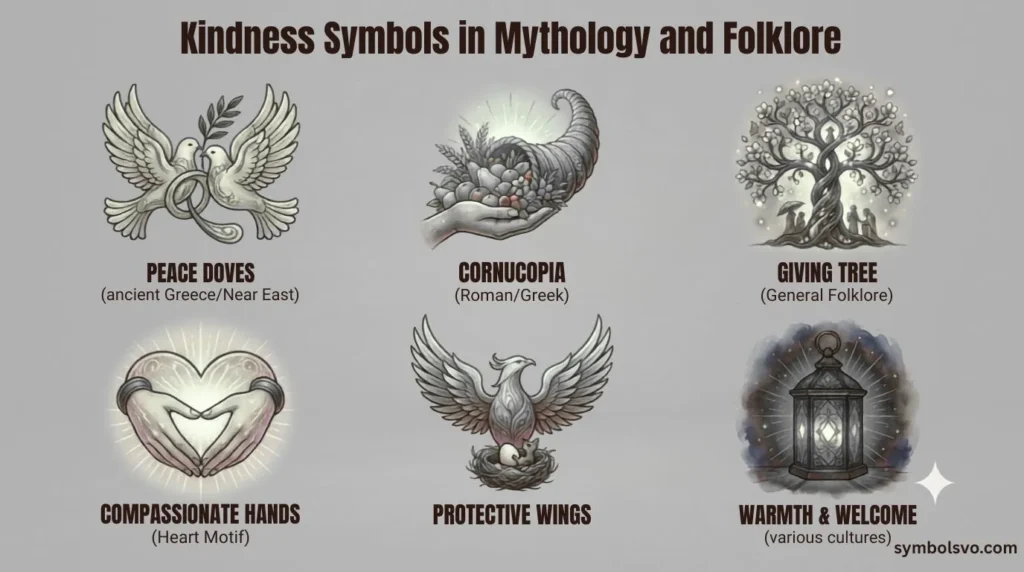
In Celtic mythology, the story of the Salmon of Knowledge highlights how small, generous acts lead to great wisdom. Similarly, the legend of the Claddagh ring tells of a young man captured and sold into slavery who forged a unique ring for his distant love. The ring features two hands holding a heart wearing a crown, symbolizing a beautiful blend of friendship, loyalty, and deep affection.
In Japanese folklore, the concept of Omotenashi represents a profound, selfless hospitality where a host anticipates every single need of a guest. This cultural mindset is often symbolized by the traditional folding fan or a specific bowing gesture. These stories and folk traditions have preserved these meaningful gestures, embedding them permanently into modern social etiquette.
Kindness Symbols in Art, Literature, Movies and Pop Culture
The world of art and literature has long leaned on these visual shortcuts to tell deeper stories. In classical paintings, master artists frequently painted figures holding white doves or offering bread to the poor to instantly signal a character’s pure, altruistic nature to the viewer.
In modern cinema and pop culture, these images have evolved into fresh forms. Think of the iconic yellow smiley face created in the twentieth century, which became a global emblem of cheerfulness and good vibes. In literature and movies, a simple act like a character sharing a dandelion or a piece of bread can turn a tiny flower or food item into a recurring motif for hope and empathy in a cruel world.
[Classical Paintings] –> Doves & Loaves of Bread (Altruism)
[20th Century Pop] –> Yellow Smiley Face (Goodwill & Joy)
[Modern Cinema] –> Shared Flowers/Food (Empathy in Dark Times)
Tattoo culture has also seen a massive rise in minimalist designs representing goodwill. People frequently get small outlines of open hands, lotus flowers, or interlocking hearts inked onto their skin. These permanent markers serve as a personal daily reminder to walk through a complex world with an open mind and a gentle spirit.
Spiritual and Dream Meaning of Kindness Symbols
Seeing these signs in your dreams or during quiet meditation often carries deep personal significance. If you dream of someone offering you an open hand or handing you a fresh green branch, it usually points to a subconscious need for healing, resolution, and self-compassion.
- An Open Hand: This dream image suggests you are either ready to receive help from others or you need to release a grudge you have been holding on to.
- A Blooming Flower: This symbolizes that your emotional walls are coming down, allowing your natural capacity for empathy to grow.
- A Glowing Light: This represents a spiritual awakening, urging you to bring warmth and comfort to the people around you who are currently struggling in the dark.
While these dreams bring comforting messages, they can also carry a gentle, cautionary reminder. If the emblem in your dream appears damaged, broken, or out of reach, it may mean you are neglecting your own emotional needs by overextending yourself to others without taking time to recharge.
Positive and Negative Meanings of Kindness Symbols
While these emblems are overwhelmingly positive, their meanings can shift dramatically depending on the context in which they are used. Understanding this balance helps us appreciate the full depth of visual communication.
| Positive Meaning (The Light) | Negative Meaning (The Shadow) |
| Genuine empathy and community support. | Naivety, toxic positivity, or blind compliance. |
| Generous giving without hidden strings. | Enabling bad behavior or ignoring personal boundaries. |
| Offering unconditional love and sanctuary. | People-pleasing at the expense of self-care. |
| Cultivating a peaceful, cooperative environment. | Faking charity for social status or personal vanity. |
This contrast shows how even the most beautiful signs can be twisted if they are used to hide deceit or manipulate others. True compassion requires strong boundaries and clear-sighted wisdom to ensure that our good intentions do not accidentally cause harm.
Why Humans Are Attracted to Kindness Symbols
Our deep attraction to these images is hardwired directly into our human biology and psychology. From an evolutionary perspective, early humans survived because they learned to work together, hunt in teams, and take care of the sick and injured members of their tribes. Our brains naturally developed a strong system of pattern recognition to quickly identify who was safe and who was dangerous.
When we see an icon of goodwill, it acts as a mental shortcut that triggers the release of oxytocin, which is often called the bonding hormone. This chemical reaction lowers our defenses, reduces anxiety, and makes us feel safe. We are drawn to these images because they satisfy a deep emotional hunger for connection, reminding us of our shared collective memory and our mutual desire to live in a peaceful world.
Modern Uses of Kindness Symbols
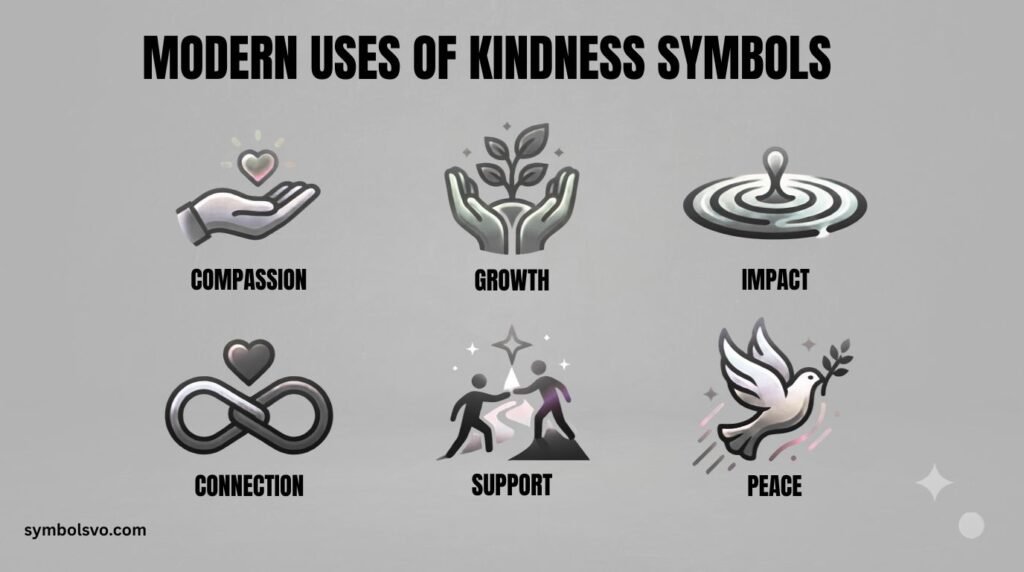
In our fast-paced digital age, these emblems have found a vibrant new life online and offline. On social media platforms, millions of people use the heart, the hugging face, and the sparkling hands emojis every single day to offer comfort and validation across thousands of miles.
Digital Space —> Emojis (Hearts, Hugs, Sparkles)
Business —> Ethical Branding & Non-Profit Logos
Personal Life —> Minimalist Tattoos & Welcoming Home Decor
Modern brands and non-profit organizations carefully design their logos using open hands, interlocking circles, and soft geometric shapes to communicate trust, sustainability, and ethical values to consumers. In home decor, items featuring these ancient signs are used to create a warm, inviting atmosphere, transforming a simple physical house into a peaceful sanctuary of love and comfort.
Interesting Facts About Kindness Symbols
- Ancient Roots: The classic heart shape we use today looks very little like a real human organ; it was actually modeled after the seeds of the ancient silphium plant, which Romans used for medicine.
- Global Peace Sign: The famous modern peace sign was originally designed in 1958 by Gerald Holtom using the naval semaphore flag signals for the letters N and D, standing for Nuclear Disarmament.
- The Power of Color: Across almost all global cultures, the color pink is universally recognized as the shade that represents gentleness, youth, and approachable warmth.
- The Right Hand Rule: In many ancient legal systems, showing an open right hand was required to prove you were not concealing a weapon, which is where our modern handshake ritual comes from.
- The Healing Tree: Olive branches became associated with recovery because the olive tree possesses an incredible ability to regenerate and sprout new leaves even after being burned down to the roots.
Frequently Asked Questions
What is the most universally recognized symbol of kindness?
The heart is the most universally recognized emblem of goodwill and love. It transcends language barriers and is instantly understood across almost every single culture on Earth as a sign of affection, care, and deep human empathy.
Are there specific flowers that represent compassion?
Yes, the lotus flower is a premier emblem of deep compassion in Eastern traditions. In Western floral language, pink roses represent gentleness, while white tulips are frequently used to express a desire for forgiveness and a peaceful reconciliation.
Why do many charity logos use the image of an open hand?
An open hand naturally represents transparency, honesty, and active assistance. It shows that an organization is ready to give support without holding anything back, making it a perfect visual fit for humanitarian groups.
How do symbols of kindness affect our mental state?
Looking at images of care and compassion triggers the brain to release calming neurochemicals like oxytocin. This reduces feelings of stress, lowers your heart rate, and creates an inner feeling of safety, warmth, and social connection.
Conclusion
Kindness symbols are far more than simple artistic designs; they are the enduring language of human empathy that connects our past, present, and future. By understanding their deep roots in history, psychology, and culture, we can use these images to build bridges across modern divides. Let these ancient tokens inspire you to share a little more warmth and compassion in your daily life, proving that a small gesture can truly change the world.

 Grace Whitmore
 Daniel Brooks