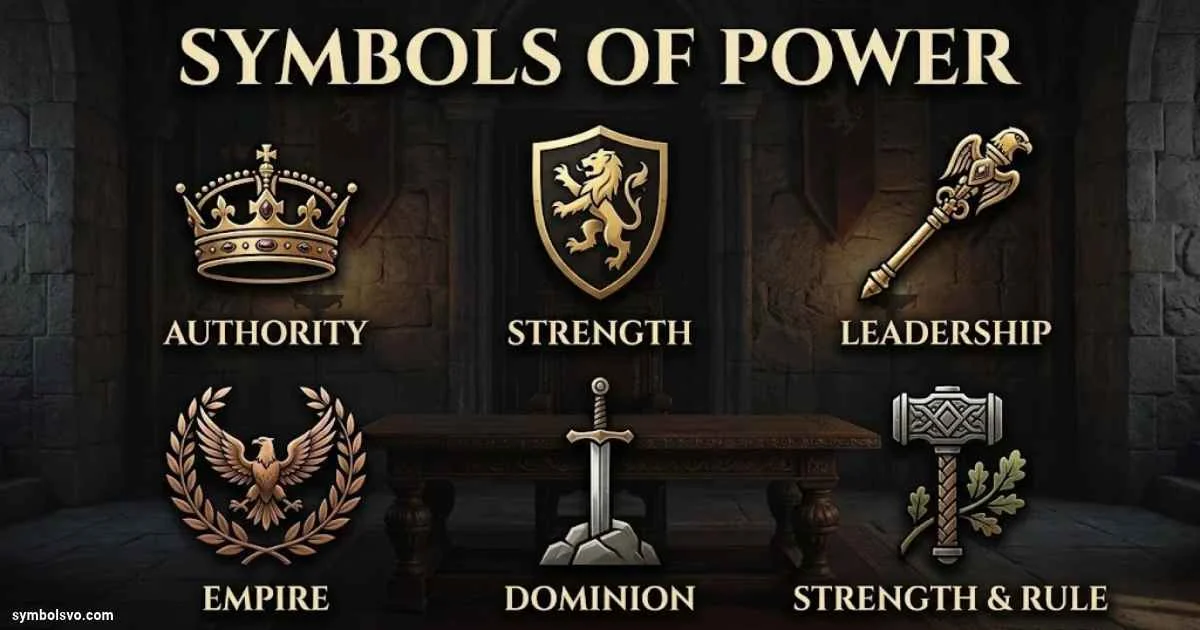
Power has many faces. Sometimes it appears as a golden crown resting on a monarch’s head. Other times, it takes the shape of a lion, an eagle soaring above mountains, or a phoenix rising from flames. Across history, people have used powerful images to express authority, courage, protection, and independence.
Symbols of Power represent more than physical strength or control. They communicate ideas about leadership, sovereignty, influence, confidence, and the ability to overcome challenges. Ancient civilizations placed them on royal clothing, weapons, temples, monuments, and official seals. Today, these symbols still appear in national flags, company logos, military insignia, artwork, and tattoos.
However, their meanings aren’t always the same. A dragon can represent wisdom and imperial authority in Chinese traditions, while European stories often portray dragons as dangerous creatures that heroes must defeat. Understanding these differences makes power symbolism far more interesting.
This guide explores more than 35 power symbols and their meanings, including ancient emblems, powerful animals, royal objects, natural forces, and modern symbols. You’ll also discover how different cultures interpret them and how to choose a symbol that reflects your personal values.
What Are Symbols of Power?
Symbols of power are visual representations of authority, strength, influence, leadership, or control. They communicate important ideas without requiring lengthy explanations. A crown, for example, immediately suggests royalty and political authority. A shield suggests protection, while a raised fist can communicate resistance and solidarity.
Throughout history, societies have used these images to establish identity, demonstrate status, and communicate who holds authority.
A ruler might wear a crown to demonstrate sovereignty. A military commander might carry a ceremonial staff to represent command. Similarly, a government might display an eagle on its official emblem to communicate strength and national identity.
These symbols generally represent several important forms of power:
- Physical strength: The ability to overcome physical challenges or defend against threats.
- Mental strength: Confidence, discipline, determination, and emotional control.
- Political authority: The recognized right to govern, make decisions, and establish rules.
- Leadership: The ability to guide, influence, and inspire others.
- Personal power: Independence, self-confidence, and control over personal decisions.
- Collective power: The strength people gain through unity, cooperation, and shared goals.
- Protection: The ability to defend oneself, one’s community, or something valuable.
- Sovereignty: The authority of a state or ruler to govern independently.
One important distinction deserves attention: power and authority aren’t identical. Power describes the ability to influence outcomes, while authority refers to a recognized right to exercise that influence.
A symbol can communicate several of these ideas simultaneously. That’s why its historical background and cultural setting matter.
Royal and Authority Symbols
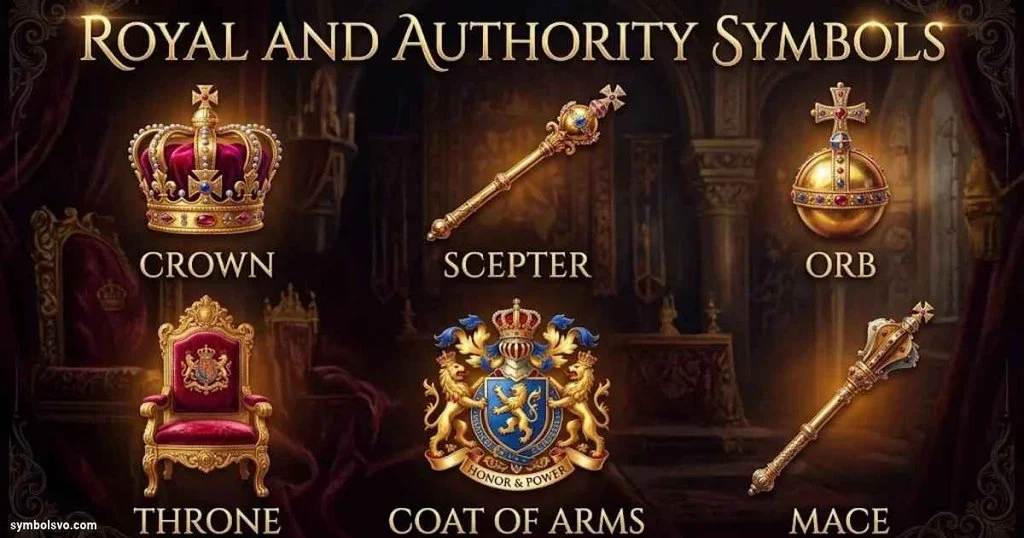
Royal symbols have played an important role in communicating leadership, political legitimacy, and social hierarchy. Kings, queens, emperors, and other rulers used recognizable objects to demonstrate their positions and responsibilities.
Crown – Royalty, Leadership, and Sovereignty
The crown is one of the most recognizable symbols of authority in the world. It represents monarchy, leadership, sovereignty, and royal status.
Historically, rulers wore crowns during coronations, official ceremonies, and important public occasions. Their materials often included gold, precious stones, and elaborate decorations that communicated wealth and political importance.
Crowns also carried religious meaning in some monarchies. European coronation ceremonies often connected royal authority with divine approval and sacred responsibility.
Today, crown imagery appears in:
- Royal coats of arms and official insignia.
- Luxury fashion and jewelry branding.
- Awards and achievement emblems.
- Logos representing prestige and excellence.
- Personal artwork associated with confidence and self-respect.
A crown can represent both inherited authority and personal achievement. Its meaning depends on how someone uses it.
Scepter – Command and Formal Authority
A scepter is a ceremonial staff traditionally carried by monarchs and other rulers. It represents command, sovereignty, and recognized political authority.
Unlike an ordinary walking stick, a royal scepter functions as an emblem of office. Its decoration often reflects the traditions and identity of a particular monarchy.
During European coronations, scepters became important pieces of royal regalia. They helped communicate that a monarch had received formal authority to rule.
The scepter’s central meanings include:
- Leadership and command.
- Political legitimacy.
- Royal responsibility.
- Sovereignty and governance.
- Institutional authority.
The scepter remains a recognizable visual representation of formal leadership, even outside royal ceremonies.
Throne – Institutional Power and Status
A throne represents the position from which a monarch or ruler exercises authority. It symbolizes political status, hierarchy, governance, and institutional power.
Throughout history, rulers used elaborate thrones to communicate wealth and prestige. Their size, materials, carvings, and placement often emphasized the importance of the person occupying them.
In paintings and royal portraits, a throne also established visual hierarchy. A seated ruler appeared above other individuals, reinforcing their elevated social position.
Today, the word throne frequently represents the highest position within a hierarchy. People also use it metaphorically when discussing political leadership or control.
Royal Orb – Sovereignty and Kingship
The royal orb is a ceremonial sphere associated with monarchy and sovereign authority. In European Christian coronation traditions, it often features a cross positioned above the globe.
The sphere represents the world, while the cross communicates Christian religious authority and the ruler’s responsibility within that tradition.
The British Sovereign’s Orb provides a well-known example. It forms part of the royal regalia used during coronation ceremonies.
Its principal associations include:
- Kingship and sovereignty.
- Religious authority.
- Political responsibility.
- Royal status.
- The relationship between earthly government and religious tradition.
The orb differs from a scepter because it represents the monarch’s sovereignty rather than primarily emphasizing command.
Royal Seal – Legitimacy and Official Authority
A royal seal is an official mark used to authenticate documents and demonstrate the authority of a ruler or institution.
Before modern printing and digital verification, seals played an essential role in government administration. Monarchs attached them to important letters, legal documents, grants, and official orders.
A genuine seal helped establish that a document came from an authorized source.
Royal seals therefore represent:
- Political legitimacy.
- Official recognition.
- Legal authority.
- Government administration.
- Institutional identity.
Modern government seals continue this tradition by identifying official documents, agencies, and public institutions.
Coat of Arms – Heritage, Identity, and Authority
A coat of arms is a heraldic design associated with a person, family, organization, or political institution.
Medieval European heraldry developed a visual language that helped identify individuals, especially during tournaments and warfare. Shields displayed distinctive designs, colors, animals, and other heraldic elements.
Common heraldic images include lions, eagles, crosses, stars, and crowns.
A coat of arms can communicate:
- Family heritage and ancestry.
- Military achievements.
- Noble status.
- Institutional identity.
- Political allegiance.
Not every coat of arms represents royalty. Many families, cities, universities, and organizations also use heraldic designs.
Animals That Symbolize Power and Strength
Animals have represented power in mythology, religion, warfare, national identity, and traditional storytelling. Their natural characteristics often influence their symbolic associations.
A lion suggests courage because of its reputation as a powerful predator. An eagle represents vision and freedom because it flies high above the landscape. Meanwhile, an elephant can communicate strength, wisdom, and royal prestige.
Lion – Courage, Strength, and Leadership
The lion is among the most recognizable animals that symbolize power. Its impressive appearance, strength, and position as a major predator have made it an enduring image of courage and authority.
Ancient civilizations frequently associated lions with rulers, warriors, and protective forces. In ancient Egypt, lions appeared in royal and religious imagery. European heraldry later adopted the lion as a popular emblem of bravery, nobility, and strength.
The lion also appears in national and royal symbolism. Its image can communicate confidence, leadership, and prestige.
Its major symbolic meanings include:
- Courage and bravery.
- Physical strength.
- Royalty and nobility.
- Leadership and dominance.
- Protection and confidence.
- Determination and fearlessness.
Why does the lion represent leadership?
Its powerful appearance and commanding presence make it an effective visual metaphor for authority. However, lion symbolism varies between cultures and shouldn’t be treated as universal.
Eagle – Freedom, Vision, and Sovereignty
The eagle represents freedom, strength, vision, and independence. Its ability to fly at great heights has made it a popular symbol of elevation, ambition, and authority.
Ancient Rome used the eagle as an important military emblem. Roman legions carried the aquila, a military standard featuring an eagle, which represented the identity and honor of the legion.
The eagle later became a national symbol in several countries. The bald eagle, for example, appears on the Great Seal of the United States.
Common eagle associations include:
- Freedom and independence.
- Political sovereignty.
- Vision and ambition.
- Military strength.
- National identity.
- Leadership and authority.
Its symbolism also makes it popular in government emblems, military insignia, and organizations that want to communicate strength and confidence.
Dragon – Supernatural Power, Wisdom, and Protection
The dragon is a powerful mythological creature with different meanings across cultural traditions.
In Chinese culture, dragons traditionally represent auspicious power, prosperity, wisdom, and authority. They have strong connections with imperial symbolism and natural forces, particularly rain and water.
Historically, the Chinese dragon became closely associated with emperors. Certain dragon designs and clothing patterns indicated imperial status.
European dragon traditions developed differently. Dragons frequently appear as dangerous creatures associated with destruction, greed, or challenges that heroic figures must overcome. However, they can also represent guardianship and extraordinary strength.
Important dragon meanings include:
- Supernatural power.
- Wisdom and intelligence.
- Protection and guardianship.
- Imperial authority.
- Transformation.
- Natural and cosmic forces.
The distinction between Chinese and European dragon symbolism is essential when discussing power symbols across cultures.
Bear – Physical Strength, Protection, and Endurance
The bear represents physical strength, endurance, courage, and protection. Its powerful body and ability to survive in challenging environments contribute to these associations.
In various Northern European and Indigenous traditions, bears appear in stories involving hunters, warriors, guardians, and spiritual relationships with nature. However, individual traditions interpret the animal differently.
Bears also appear in heraldry and national symbolism. Their image can communicate resilience, independence, and strength.
Common bear associations include:
- Physical power.
- Courage and bravery.
- Protection of family.
- Survival and endurance.
- Resilience during hardship.
- Confidence and independence.
The bear works particularly well as a metaphor for someone who values strength without constantly seeking confrontation.
Tiger – Fearlessness, Confidence, and Physical Power
The tiger symbolizes courage, physical strength, confidence, and fearlessness. Its speed, hunting abilities, and commanding appearance make it a powerful figure in traditional art and storytelling.
In several Asian traditions, tigers carry associations with protection and the ability to repel harmful forces. Chinese cultural traditions, for example, include tiger imagery connected with guardianship and military strength.
Tiger symbolism can communicate:
- Fearlessness and bravery.
- Independence.
- Physical strength.
- Confidence and determination.
- Protection against danger.
- Authority and dominance.
In modern culture, tiger imagery frequently appears in sports branding, clothing, and tattoos because of its association with boldness.
Horse – Freedom, Endurance, and Military Power
The horse has represented strength and freedom throughout human history. Its importance in transportation, agriculture, warfare, and trade made it one of the most influential domesticated animals.
Before modern vehicles, horses helped armies travel quickly and carry soldiers into battle. Cavalry units played major roles in military history across Europe, Asia, and the Middle East.
Horses also became associated with royal status. Owning and maintaining warhorses required considerable resources.
Their symbolic meanings include:
- Freedom and independence.
- Endurance and stamina.
- Military strength.
- Movement and progress.
- Loyalty and companionship.
- Social status and prestige.
A running horse often represents personal freedom and the ability to move forward without restraint.
Wolf – Loyalty, Leadership, and Survival
The wolf represents loyalty, survival, intelligence, and collective strength. Its appearance in mythology and folklore reflects both admiration and fear.
Wolves are social animals that cooperate when hunting and raising their young. Their group behavior has inspired associations with teamwork, family bonds, and shared responsibility.
Different cultures portray wolves differently. Some traditions connect them with guardianship and wisdom, while others associate them with danger and wilderness.
Wolf symbolism commonly includes:
- Loyalty and family bonds.
- Cooperation and teamwork.
- Survival and resilience.
- Independence.
- Intelligence and awareness.
- Leadership within a group.
The wolf is particularly relevant when discussing the difference between individual strength and collective power.
Bull – Raw Strength, Fertility, and Dominance
The bull has represented physical power, fertility, prosperity, and dominance in several ancient civilizations.
Ancient Egyptian, Minoan, and Mesopotamian traditions included important bull imagery. In some settings, the animal was associated with agricultural prosperity and divine power.
The bull also appears in ancient Mediterranean mythology. Its strength and reproductive associations made it an important symbol of vitality.
Its common meanings include:
- Physical strength.
- Fertility and abundance.
- Determination.
- Masculine power in certain historical traditions.
- Aggression and dominance.
- Prosperity and vitality.
Modern bull imagery often appears in financial markets, sports branding, and business logos.
Elephant – Wisdom, Strength, and Royal Authority
The elephant represents strength, wisdom, patience, and protection. Its impressive size and social behavior have made it an important figure in several Asian and African cultural traditions.
In South Asian traditions, elephants have long associations with royalty and ceremonial life. Rulers used decorated elephants in processions and important public events.
The elephant-headed Hindu deity Ganesha is especially significant. Ganesha is widely associated with wisdom, learning, auspicious beginnings, and the removal of obstacles. His symbolism has a distinct religious context and should not be reduced to a generic strength emblem.
Elephant symbolism can include:
- Wisdom and intelligence.
- Physical strength.
- Patience and endurance.
- Royal prestige.
- Protection and stability.
- Family and social bonds.
Weapons and Protection Symbols
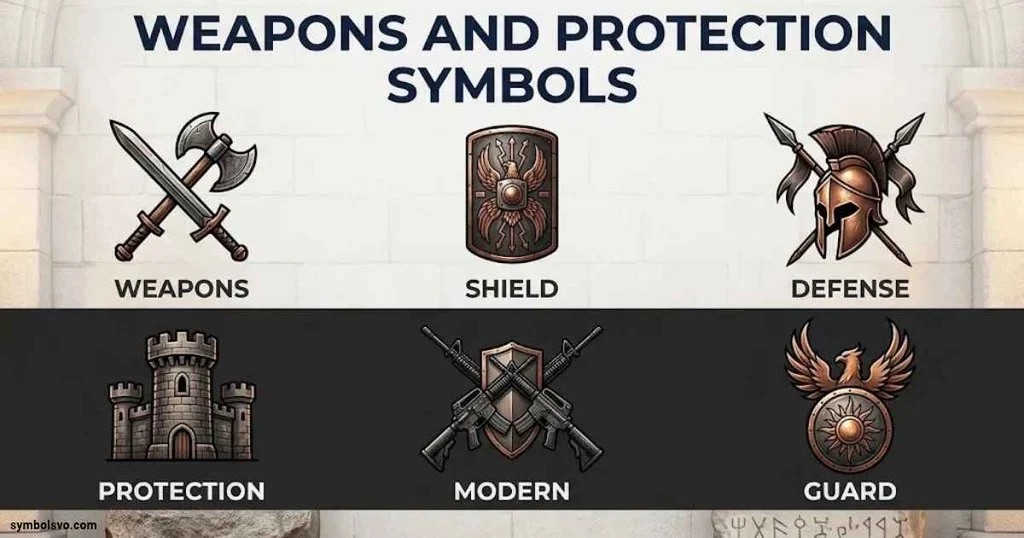
Weapons and defensive equipment have long represented military authority, courage, and the ability to defend a community. Their symbolic meanings often extend beyond their practical purpose.
Sword – Justice, Courage, and Military Authority
The sword represents strength, courage, justice, and military authority. Throughout history, it served as both a practical weapon and an important ceremonial object.
Kings and nobles sometimes received swords during ceremonies to symbolize their responsibilities. In medieval Europe, ceremonial swords could communicate the duty to defend a kingdom and uphold justice.
Swords also appear in religious imagery, mythology, and national emblems.
Their symbolic meanings include:
- Courage and bravery.
- Military power.
- Justice and judgment.
- Authority and command.
- Honor and duty.
- Protection against threats.
A sword can represent either the defense of justice or the destructive potential of violence. Its meaning depends on the context.
Shield – Protection, Security, and Defensive Strength
The shield is one of the clearest symbols of protection. Historically, warriors used shields to defend themselves against arrows, swords, and other weapons.
Over time, shields also became important in heraldry. Families, noble houses, and institutions displayed identifying designs on shield-shaped surfaces.
Today, shield imagery appears in security organizations, insurance companies, sports teams, and military emblems.
A shield commonly represents:
- Safety and security.
- Defensive strength.
- Courage and preparedness.
- Guardianship.
- Loyalty and responsibility.
- Protection of others.
Unlike a sword, which emphasizes action and force, a shield primarily communicates defense.
Armor – Preparedness and Resistance
Armor represents protection, preparedness, resilience, and the ability to withstand difficult circumstances.
Historical armor included helmets, breastplates, chain mail, and other protective equipment. Different materials and designs developed as warfare changed.
Armor became more than practical equipment in royal portraits and ceremonial displays. Elaborate suits sometimes communicated wealth, military achievement, and noble status.
Its symbolic meanings include:
- Protection from harm.
- Mental and emotional resilience.
- Courage during difficult situations.
- Readiness and discipline.
- Resistance and survival.
In modern language, people often use armor as a metaphor for emotional boundaries and psychological protection.
Spear – Strength, Defense, and Military Command
The spear represents military strength, readiness, courage, and authority. It was one of humanity’s earliest and most widespread hunting and warfare tools.
Ancient armies used spears because they were relatively practical to manufacture and effective in coordinated formations.
Mythology also gives spears important symbolic roles. Athena, the Greek goddess associated with wisdom and warfare, is frequently depicted carrying a spear.
Spear symbolism includes:
- Military power.
- Defense and protection.
- Courage and readiness.
- Discipline.
- Strategic strength.
- Authority in warfare.
Bow and Arrow – Focus, Precision, and Determination
The bow and arrow symbolize focus, precision, discipline, and determination. Historically, archery played important roles in hunting and military campaigns.
The bow requires patience, coordination, and control. An archer must understand distance, timing, and accuracy before releasing an arrow.
These qualities explain why archery imagery often represents purposeful action and concentration.
Its symbolic associations include:
- Determination and ambition.
- Focus and precision.
- Discipline and patience.
- Strategic thinking.
- Courage and independence.
The arrow itself can represent direction, progress, and movement toward a specific goal.
Natural Symbols of Power
Nature provides some of the strongest images of power. The sun produces light and energy, lightning demonstrates the force of storms, and mountains remain standing through centuries of change.
These natural elements have inspired religious beliefs, mythology, artwork, and traditional stories across civilizations.
Lightning Bolt – Divine Force and Energy
The lightning bolt represents sudden power, energy, destruction, and divine authority. Its dramatic appearance during thunderstorms made it an important symbol in ancient mythology.
In Greek mythology, Zeus carried the thunderbolt as his primary weapon. It represented his authority over the heavens and his ability to punish those who challenged divine order.
Other mythological traditions also connected thunder and lightning with powerful gods. These natural forces often represented supernatural strength and control over the weather.
Lightning symbolism includes:
- Divine power and authority.
- Energy and sudden transformation.
- Destruction and renewal.
- Strength and dominance.
- Speed and determination.
Today, lightning bolts appear in sports logos, entertainment branding, clothing, and popular artwork. They often communicate speed, intensity, and unstoppable energy.
Sun – Life, Vitality, and Authority
The sun symbolizes life, energy, renewal, and cosmic power. Its importance to human survival made it one of the most influential natural symbols throughout history.
Ancient Egyptians associated the sun with Ra, a major solar deity connected with creation and kingship. Solar imagery also appeared in other civilizations, including the Greeks, Romans, and several Mesoamerican societies.
The sun’s daily journey across the sky inspired ideas about renewal, time, and the continuity of life.
Its symbolic meanings include:
- Vitality and life.
- Leadership and authority.
- Renewal and new beginnings.
- Energy and confidence.
- Enlightenment and knowledge.
- Creation and cosmic order.
Sun imagery can also represent personal strength. Its appearance after darkness provides a natural metaphor for hope and perseverance.
Fire – Transformation, Passion, and Renewal
Fire represents energy, transformation, passion, destruction, and renewal. It has shaped human civilization through cooking, heating, metalworking, and other essential activities.
Ancient cultures often treated fire as a sacred element. Greek mythology includes the story of Prometheus, who brought fire to humanity and faced punishment from Zeus.
Fire also plays an important role in religious ceremonies and purification traditions. Its ability to destroy and create new conditions gives it powerful symbolic meaning.
Fire commonly represents:
- Passion and determination.
- Strength and energy.
- Transformation and change.
- Destruction and purification.
- Renewal and rebirth.
- Courage during difficult times.
Fire has a dual meaning. It can provide warmth and protection, but it can also destroy homes, forests, and entire communities.
Mountain – Stability, Endurance, and Strength
The mountain symbolizes stability, endurance, resilience, and spiritual elevation. Its enormous size and lasting presence make it a natural representation of strength.
Many religious and mythological traditions connect mountains with sacred places. Mount Olympus, for example, served as the legendary home of the Greek gods. Mount Meru holds an important place in Hindu, Buddhist, and Jain cosmological traditions.
Mountains also represent challenges that require patience and determination.
Their symbolic associations include:
- Physical and mental strength.
- Stability and permanence.
- Endurance and perseverance.
- Spiritual growth.
- Achievement and ambition.
- Overcoming obstacles.
A mountain can represent the difficult journey toward a meaningful goal. Reaching its summit becomes a metaphor for achievement.
Tree – Growth, Stability, and Resilience
The tree represents growth, stability, wisdom, and the connection between different stages of life. Its deep roots provide a natural image of grounding, while its branches represent expansion and development.
Trees appear in many religious and mythological traditions. Norse mythology includes Yggdrasil, a great world tree connecting different realms of existence.
The Bodhi tree also holds major importance in Buddhism. According to Buddhist tradition, Siddhartha Gautama attained enlightenment while meditating beneath a Bodhi tree.
Tree symbolism includes:
- Growth and personal development.
- Stability and strong foundations.
- Wisdom and knowledge.
- Family and heritage.
- Longevity and endurance.
- Connection between life and nature.
A tree is particularly meaningful as a symbol of resilience because it can survive changing seasons and continue growing after difficult conditions.
Ocean – Immense Power, Mystery, and Strength
The ocean symbolizes immense natural power, mystery, depth, and transformation. Its vastness makes it a powerful representation of forces beyond human control.
Ancient civilizations connected oceans and seas with powerful deities. Greek mythology associated Poseidon with the sea, earthquakes, and horses. His trident became a recognizable emblem of divine authority.
The ocean also represents emotional depth because its surface can appear calm while powerful currents move underneath.
Its common symbolic meanings include:
- Immense strength and natural force.
- Mystery and the unknown.
- Freedom and exploration.
- Emotional depth.
- Creation and destruction.
- Change and transformation.
Ocean symbolism works especially well when discussing power that cannot easily be controlled or contained.
Mythological and Spiritual Symbols of Power
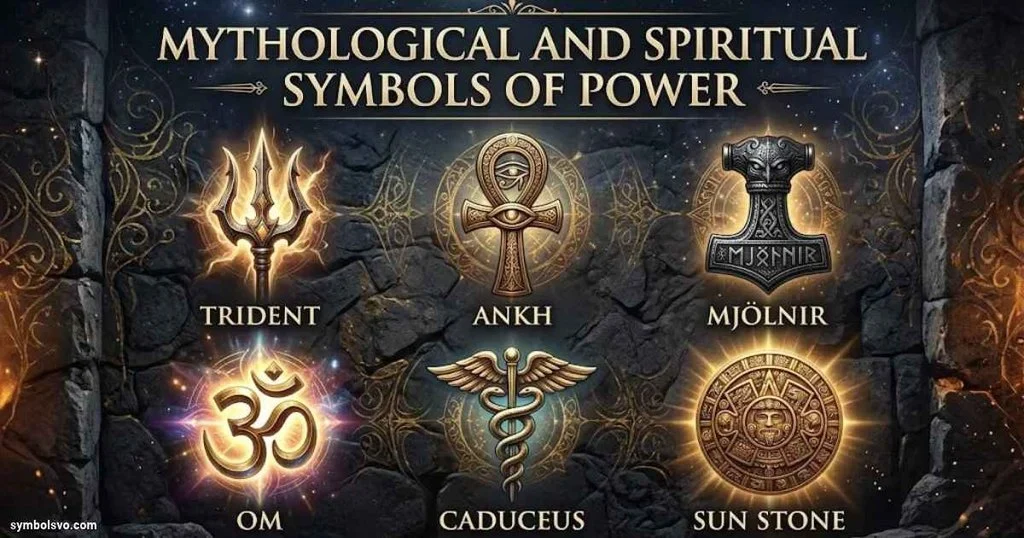
Mythological and spiritual symbols represent ideas that go beyond physical strength. They often communicate divine authority, protection, immortality, wisdom, and the relationship between humans and the supernatural.
Their meanings depend heavily on the religious and cultural traditions in which they developed.
Phoenix – Rebirth, Renewal, and Resilience
The phoenix is a legendary bird associated with fire, death, renewal, and rebirth. Its most recognizable story describes a magnificent bird that dies in flames and emerges again from its ashes.
Ancient Greek and Roman writers described phoenix traditions, although the details differed between accounts. Earlier Egyptian traditions also included the Bennu bird, a sacred figure associated with creation and renewal. The Bennu and phoenix have connections in later interpretations, but they aren’t identical figures.
Today, the phoenix represents the ability to recover after hardship and begin again.
Its symbolic meanings include:
- Rebirth and renewal.
- Personal transformation.
- Emotional resilience.
- Survival after difficulty.
- Hope and determination.
- New beginnings.
The phoenix is especially popular in artwork and tattoos because its story offers a powerful metaphor for overcoming personal challenges.
Trident – Divine Authority and Control
The trident is a three-pronged weapon strongly associated with Poseidon in Greek mythology and Neptune in Roman mythology.
As a divine attribute, it represents authority over the sea and the natural forces associated with it. Ancient artistic representations frequently show Poseidon carrying this distinctive weapon.
The trident also appears in other cultural and religious settings. In Hindu traditions, the trishula is associated with Shiva and carries specific religious meanings.
These objects have different historical and spiritual contexts, even though both feature three points.
Trident symbolism can include:
- Divine authority.
- Command over natural forces.
- Strength and protection.
- Destructive power.
- Spiritual significance.
Avoid treating every three-pronged symbol as interchangeable. Its meaning depends on its specific tradition.
Winged Sun Disk – Divine Power and Protection
The winged sun disk is an ancient symbol found in Egyptian and other Near Eastern artistic traditions.
In ancient Egypt, it became associated with royal protection and divine authority. Egyptian depictions sometimes show a sun disk with extended wings and protective cobra figures.
Related winged sun imagery also appeared in ancient Near Eastern cultures, including Assyrian and Persian contexts. However, these traditions had distinct religious meanings.
The symbol commonly communicates:
- Divine protection.
- Royal authority.
- Sacred power.
- Protection of rulers.
- Cosmic order.
Its combination of wings and solar imagery makes it a recognizable representation of supernatural protection and sovereignty.
Ankh – Life, Vitality, and Divine Power
The ankh is an ancient Egyptian hieroglyph shaped like a cross with a loop at the top. Its primary meaning is life.
Egyptian gods and goddesses frequently appear holding the ankh in tomb paintings, temple reliefs, and other religious artwork. Sometimes, divine figures hold it near a ruler’s face to represent the gift of life.
The symbol also appears in scenes connected with the afterlife and eternal existence.
Its meanings include:
- Life and vitality.
- Immortality.
- Divine protection.
- Spiritual existence.
- Renewal and continuity.
Although the ankh resembles a cross, its origins and original religious meanings belong to ancient Egyptian culture.
Laurel Wreath – Victory, Achievement, and Honor
The laurel wreath represents victory, achievement, honor, and public recognition. It developed from ancient Greek traditions and later became important in Roman culture.
In ancient Greece, laurel wreaths were awarded to winners of certain athletic and cultural competitions. The Pythian Games at Delphi, for example, awarded laurel crowns to victors.
Roman writers and artists also used laurel imagery to celebrate military success and political achievement.
The laurel wreath symbolizes:
- Victory and accomplishment.
- Honor and recognition.
- Leadership and prestige.
- Excellence and distinction.
- Success through effort.
Modern academic and ceremonial imagery still uses laurel branches to communicate achievement.
Fasces – Political Authority and State Power
The fasces is an ancient Roman symbol consisting of a bundle of wooden rods, traditionally tied together around an axe.
In Roman public life, it represented the authority of certain magistrates. The rods communicated the power to impose corporal punishment, while the axe represented the power of execution in particular contexts.
The fasces later appeared in European political symbolism and became strongly associated with Italian Fascism during the twentieth century.
Its history illustrates how a symbol can change meaning over time.
Its historical associations include:
- Government authority.
- Political power.
- Law enforcement.
- Collective strength.
- State control.
- Authoritarianism in later political usage.
The fasces is an important example of why historical context matters when interpreting symbols of power and authority.
Ancient Symbols of Power Across Civilizations
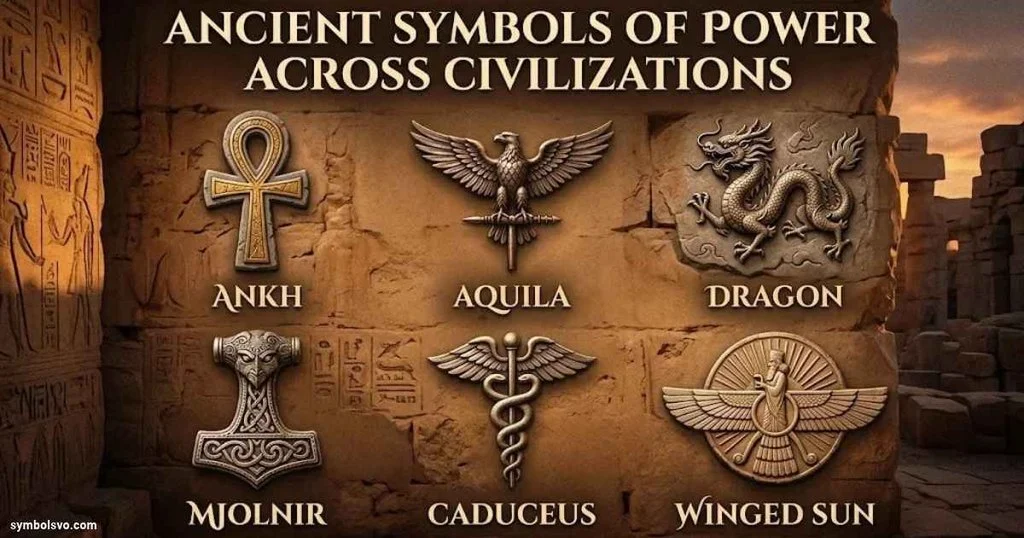
Ancient civilizations developed their own visual languages to communicate leadership, religious beliefs, military achievement, and political legitimacy.
Although certain symbols appear across multiple societies, their meanings often reflect specific historical conditions.
Ancient Egyptian Symbols of Power
Ancient Egyptian rulers used elaborate crowns, ceremonial objects, religious imagery, and animal figures to communicate their authority.
Pharaohs held political and religious responsibilities. Royal symbols therefore represented both earthly kingship and connections with the divine.
Important Egyptian symbols include:
Uraeus: The upright cobra worn on royal crowns. It represented royal protection and divine authority.
Crook and flail: Objects associated with kingship. The crook represented shepherd-like guidance, while the flail carried associations with authority and royal power.
Ankh: The hieroglyph representing life and immortality.
White and Red Crowns: The White Crown represented Upper Egypt, while the Red Crown represented Lower Egypt. Their combination in the Double Crown represented the unified kingdom.
Winged Sun Disk: A protective symbol associated with divine and royal authority.
Together, these objects helped establish the pharaoh’s identity and communicate the structure of ancient Egyptian kingship.
Ancient Roman Symbols of Power
Ancient Rome used military standards, ceremonial objects, political insignia, and public monuments to communicate imperial authority.
Some of its most recognizable symbols included:
- Roman Eagle: The aquila served as an important military standard for Roman legions.
- Fasces: Represented the authority of certain Roman magistrates.
- Laurel Wreath: Communicated victory, achievement, and public honor.
- Scepter: Represented royal or ceremonial authority in different historical contexts.
- Imperial Portraits: Displayed the emperor’s image on coins and monuments.
Roman symbols often connected military success with political legitimacy. The eagle, in particular, became an important expression of Roman military identity.
Ancient Greek Symbols of Power
Ancient Greek mythology connected divine authority with recognizable objects and natural forces.
Important examples include:
- Zeus’s Thunderbolt: Represented divine power and command over the heavens.
- Poseidon’s Trident: Symbolized his authority over the sea.
- Athena’s Aegis: Represented divine protection and military strength.
- Lion Imagery: Communicated courage and physical power.
- Laurel Wreath: Represented victory and achievement.
These symbols appeared in pottery, sculptures, temples, coins, and other forms of Greek art.
Chinese Imperial Symbols of Power
Chinese imperial symbolism developed through centuries of political, artistic, and religious traditions.
The dragon became one of the most important symbols associated with the emperor. Its connections with rain, water, prosperity, and auspicious power made it particularly suitable for imperial imagery.
During several dynasties, dragon designs appeared on imperial clothing, ceramics, furniture, and palace decorations. The five-clawed dragon became especially associated with imperial status, although the exact rules and exceptions varied across periods.
Museum Dictionary- Kyoto National Museum+2
Other important symbols included:
- Phoenix: Associated with auspiciousness and, in imperial symbolism, the empress.
- Jade: Connected with virtue, status, ceremonial importance, and elite culture.
- Imperial Seal: Represented official authority and legitimacy.
- Dragon Throne: Symbolized the emperor’s position and authority.
- Imperial Robes: Displayed motifs that communicated rank and status.
Chinese imperial symbols demonstrate how clothing and decorative objects could communicate precise social distinctions.
Medieval European Symbols of Power
Medieval European rulers relied on royal regalia and heraldic imagery to establish their political identity.
Crowns, scepters, orbs, ceremonial swords, and thrones appeared in coronations and official portraits.
Heraldic animals also became important. Lions and eagles appeared on shields, banners, and coats of arms to communicate courage, nobility, and political identity.
Other important symbols included:
- Royal seals.
- Ceremonial robes.
- Noble family emblems.
- Castles and fortified residences.
- Military standards.
- Religious insignia.
These objects reinforced the relationship between monarchy, land ownership, military strength, and social hierarchy.
Symbols of Power and Protection
Power and protection often work together. A person, ruler, or institution may possess authority, but that authority also comes with the responsibility to defend something valuable.
Throughout history, people have used protective emblems to communicate security, courage, guardianship, and readiness.
Symbols Associated With Physical Protection
These symbols traditionally represent defense against physical threats:
| Symbol | Meaning | Common association |
| Shield | Defense and security | Protection from danger |
| Armor | Preparedness and resistance | Physical defense |
| Sword | Courage and justice | Defense and military authority |
| Spear | Readiness and strength | Warfare and protection |
| Lion | Courage and guardianship | Royal and personal protection |
| Bear | Strength and defense | Survival and family protection |
A shield communicates the clearest protective message. A sword, on the other hand, represents the ability to confront threats directly.
Symbols Associated With Spiritual Protection
Several religious and cultural traditions use symbols to express divine protection and spiritual safety.
Examples include:
- Ankh: Associated with life, vitality, and divine protection in ancient Egyptian imagery.
- Uraeus: The protective cobra associated with Egyptian kingship.
- Aegis: A protective object associated with Athena and Zeus in Greek mythology.
- Winged Sun Disk: Associated with divine protection in ancient Egyptian and Near Eastern traditions.
- Guardian Animals: Lions, dragons, and other creatures frequently appear as protective figures in religious and architectural settings.
These symbols have specific cultural and religious backgrounds. Their meanings shouldn’t be separated from the traditions that produced them.
Symbols Associated With Emotional Strength
Some symbols represent the ability to remain strong during personal difficulties.
- Phoenix: Recovering after hardship and beginning again.
- Mountain: Remaining steady during challenging circumstances.
- Tree: Developing strong foundations and continuing to grow.
- Bear: Endurance, courage, and survival.
- Lion: Confidence and determination.
These associations make natural and animal imagery useful when expressing personal resilience.
What Is the Difference Between Power and Protection?
Power and protection are closely related, but they describe different abilities.
Power refers to the ability to influence situations, make decisions, or control outcomes. Protection focuses on defending people, possessions, or communities against harm.
For example, a crown communicates authority, while a shield communicates defense. A sword can represent both because it historically served as a weapon and a ceremonial emblem of responsibility.
The distinction becomes important when selecting a symbol with a specific personal meaning.
Symbols of Personal Power, Confidence, and Inner Strength
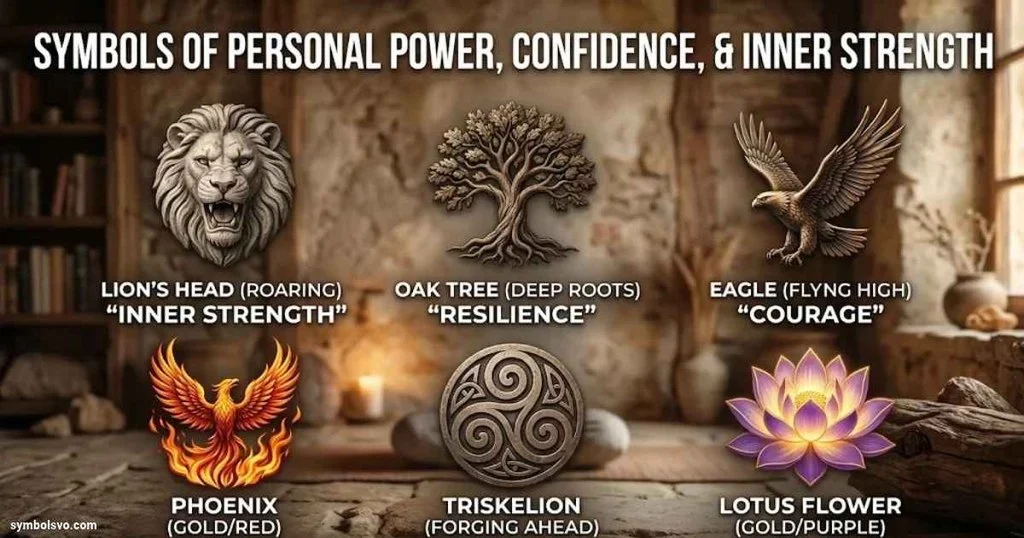
Not every powerful symbol needs to represent a king, military commander, or political institution. Many symbols communicate qualities that individuals develop through experience.
Personal power involves self-confidence, independence, discipline, emotional resilience, and the ability to make meaningful decisions.
These symbols often appeal to people who want to represent personal growth rather than social status.
Symbols of Inner Strength
Inner strength describes the ability to remain determined when circumstances become difficult.
The following symbols represent different aspects of that quality:
| Symbol | Personal meaning |
| Mountain | Stability and perseverance |
| Bear | Endurance and courage |
| Tree | Strong foundations and growth |
| Lion | Confidence and bravery |
| Sun | Vitality and optimism |
| Phoenix | Recovery and resilience |
A mountain represents the ability to withstand difficult conditions. A tree offers a different message: lasting strength comes from having deep roots.
Symbols of Personal Transformation
Transformation involves leaving behind old patterns and developing a stronger sense of direction.
Several traditional symbols communicate this process.
Phoenix: Represents rebirth after difficult experiences. Its legendary return from flames makes it an especially recognizable image of renewal.
Fire: Represents change, purification, passion, and the destruction of old conditions.
Ouroboros: Depicts a serpent or dragon consuming its own tail. It represents cycles, continuity, and renewal in several historical traditions.
Sun: Represents vitality, new beginnings, and the return of light after darkness.
These symbols can express the idea that personal growth often requires change.
Symbols of Confidence and Leadership
Confidence and leadership aren’t simply about controlling other people. They also involve responsibility, sound judgment, and the ability to make difficult decisions.
Symbols commonly associated with these qualities include:
- Crown: Personal authority, self-respect, and leadership.
- Eagle: Vision, independence, and ambition.
- Lion: Courage, confidence, and commanding presence.
- Laurel Wreath: Achievement, honor, and recognition.
- Scepter: Formal leadership and responsibility.
A crown can represent self-confidence in personal artwork, even when the person wearing or displaying it holds no royal position.
Symbols of Freedom and Independence
Freedom represents the ability to make choices without unnecessary control or restriction.
The following symbols communicate different forms of independence:
- Eagle: Freedom, vision, and independence.
- Horse: Movement, exploration, and personal freedom.
- Open Wings: Elevation and the ability to move beyond limitations.
- Raised Fist: Resistance, solidarity, and collective freedom.
These symbols are particularly useful when expressing independence through artwork, jewelry, and personal designs.
Symbols of Leadership, Authority, and Sovereignty
Leadership, authority, and sovereignty are related ideas, but each has a different meaning.
Leadership involves guiding others toward a goal. Authority refers to a recognized right to make decisions or give instructions. Sovereignty describes independent governing power.
Their symbols reflect these differences.
Symbols of Leadership
Leadership symbols often communicate responsibility, courage, and the ability to guide others.
- Lion: Confidence, bravery, and commanding presence.
- Eagle: Vision, independence, and ambition.
- Staff: Guidance and ceremonial leadership.
- Crown: Leadership and recognized status.
These symbols frequently appear in organizational branding and official insignia.
Symbols of Political Authority
Political authority requires more than personal influence. It involves recognized institutions, laws, and systems of governance.
Important symbols include:
- Scepter: Formal royal authority.
- Throne: Institutional and monarchical power.
- Royal Seal: Official legitimacy.
- Fasces: Historical governmental authority.
- Government Emblem: Institutional identity and official recognition.
Such symbols help communicate who represents an institution and who has the recognized authority to act on its behalf.
Symbols of Sovereignty
Sovereignty refers to the supreme governing authority of an independent state or political entity.
National flags, royal crowns, imperial seals, and ceremonial orbs can communicate sovereignty.
A national flag is particularly important because it represents a political community rather than simply one individual ruler.
Symbols of Military Power
Military symbols communicate discipline, rank, service, and the ability to defend a country or institution.
Examples include:
- Eagles and other military animals.
- Swords and ceremonial weapons.
- Military standards.
- Medals and decorations.
- Rank insignia.
- Official uniforms.
Their meanings depend on the armed force, historical period, and national tradition.
Positive and Negative Meanings of Power Symbols
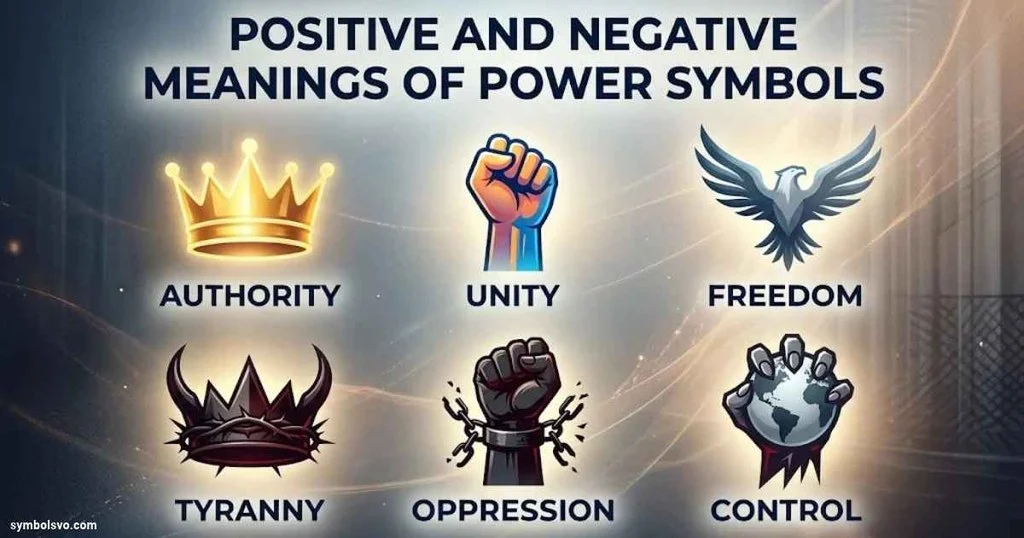
Power doesn’t always represent something positive. The same image can communicate courage in one setting and intimidation in another.
A sword, for example, can symbolize justice and protection. However, it can also represent violence and military domination.
Understanding both sides provides a more accurate interpretation of power symbolism.
Positive Meanings of Power
Many symbols communicate qualities that societies generally value.
| Positive association | Example symbol | Explanation |
| Courage | Lion | Facing challenges without fear |
| Protection | Shield | Defending people and communities |
| Leadership | Crown | Responsibility and authority |
| Freedom | Eagle | Independence and self-direction |
| Resilience | Phoenix | Recovering after hardship |
| Achievement | Laurel wreath | Recognition and success |
| Solidarity | Raised fist | Collective action and unity |
| Stability | Mountain | Endurance and consistency |
| Wisdom | Elephant | Patience and thoughtful strength |
| Renewal | Sun | New beginnings and vitality |
These meanings explain why certain symbols remain popular across generations.
Negative Meanings of Power
Power can also become associated with oppression, aggression, and excessive control.
Negative associations include:
- Domination: Controlling others through force or intimidation.
- Oppression: Restricting people’s rights and freedom.
- Authoritarianism: Concentrating political power without meaningful accountability.
- Aggression: Using force to achieve personal or political objectives.
- Coercion: Forcing someone to act against their wishes.
- Abuse of authority: Using an official position for personal advantage.
The fasces offers a particularly clear historical example. Its earlier Roman associations involved magistrates’ authority, but its later adoption by Italian Fascism gave it a strong association with authoritarian politics.
Can a Symbol of Power Have Different Meanings?
Absolutely. Symbolic meanings develop through history, cultural traditions, and changing social conditions.
Consider three examples:
The sword: It can represent justice, courage, military authority, or violence.
The dragon: Chinese traditions often associate it with auspicious power and imperial authority, while many European stories portray it as a dangerous adversary.
The raised fist: It can communicate solidarity and resistance, although its precise political meaning depends on the movement displaying it.
The surrounding context often matters more than the image itself.
Modern Symbols of Power in Everyday Life
Power symbolism remains part of modern society. Governments, businesses, sports organizations, military institutions, and political movements continue using visual imagery to communicate their identities.
These symbols influence how people understand leadership, trust, status, and collective belonging.
Power Symbols in Government and Politics
Governments use official symbols to represent national identity and institutional authority.
Common examples include:
- National flags.
- Government seals.
- Presidential and royal emblems.
- Official insignia.
- Military standards.
- Parliamentary symbols.
A national flag is especially important because it can unite people under a shared identity. It represents the country, its history, and its sovereignty.
Government seals serve another purpose. They authenticate official documents and identify the institutions responsible for issuing them.
Power Symbols in Business and Branding
Businesses frequently use powerful animals and objects to establish recognizable brand identities.
A company might choose a lion to communicate confidence or a shield to suggest security. A mountain can represent reliability, ambition, and stability.
Common branding associations include:
| Logo symbol | Intended brand association |
| Crown | Prestige and luxury |
| Lion | Leadership and strength |
| Eagle | Freedom and ambition |
| Shield | Protection and trust |
| Mountain | Stability and achievement |
| Bull | Energy and determination |
| Lightning bolt | Speed and performance |
These associations are marketing choices rather than fixed historical meanings.
A shield logo doesn’t automatically prove that a company provides better protection. Instead, it communicates the qualities the business wants customers to associate with its brand.
Power Symbols in Architecture
Architecture can communicate political and institutional power without using traditional emblems.
Large government buildings, monuments, and courthouses often use visual features that suggest stability and importance.
Examples include:
- Massive columns.
- Symmetrical building designs.
- Grand staircases.
- Elevated entrances.
- Monumental scale.
- Towers and domes.
- Large public monuments.
Classical columns, particularly those inspired by Greek and Roman architecture, often communicate tradition, order, and institutional permanence.
Building height and scale can also establish a visual hierarchy. A large structure can make an institution appear more prominent within its surroundings.
Power Symbols in Clothing and Uniforms
Clothing can communicate social status, rank, and institutional membership.
Historically, royal robes and expensive fabrics distinguished rulers from ordinary citizens. Military uniforms developed a different visual language through badges, medals, colors, and rank insignia.
Common examples include:
- Military insignia: Identifies rank and position.
- Medals: Recognizes service or achievement.
- Official badges: Communicates institutional membership.
- Royal robes: Represents ceremonial authority.
- Ceremonial uniforms: Establishes official status.
- Academic gowns: Represents educational achievement and institutional tradition.
These visual details allow people to recognize an individual’s role without needing a verbal explanation.
Power Symbols in Gestures
Human gestures can communicate authority, solidarity, confidence, and resistance.
Unlike permanent objects, gestures depend heavily on movement, setting, and cultural interpretation.
Examples include:
Raised Fist: A recognizable gesture associated with resistance, labor movements, solidarity, and collective strength.
Salute: A formal gesture representing respect, discipline, and military tradition.
Raised Hand: Can represent greeting, participation, a request to speak, or an instruction to stop.
Victory Gesture: Often communicates achievement, success, or celebration.
Gestures demonstrate that symbols of power don’t always need to be physical objects. Human actions can carry equally strong messages.
Symbols of Power for Tattoos
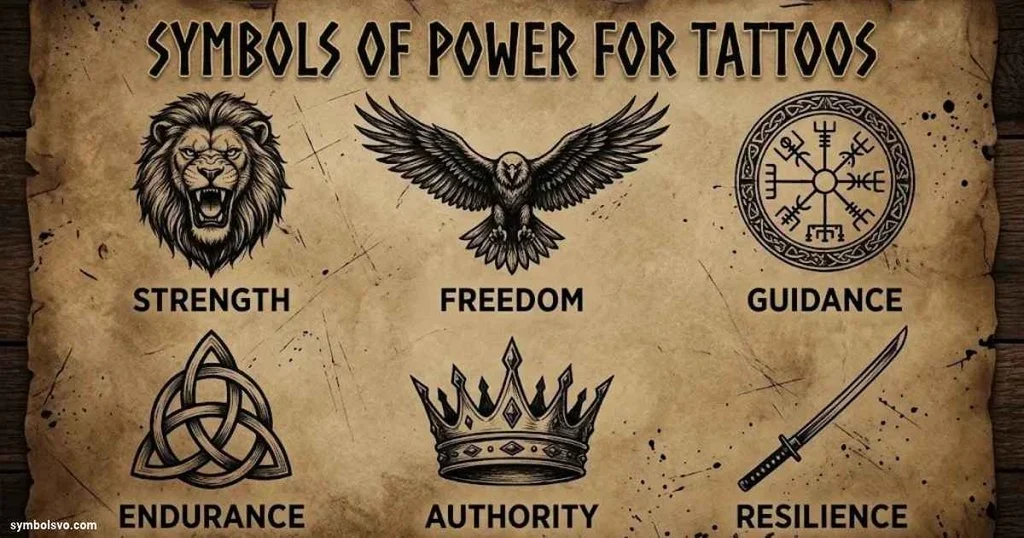
Power symbols are popular tattoo choices because they communicate personal values through recognizable imagery. Some people choose animals that represent courage, while others prefer ancient emblems associated with protection, transformation, or authority.
However, a meaningful tattoo should reflect more than an attractive design. Understanding its cultural background helps you choose an image that communicates the right message.
Best Animal Symbols of Power for Tattoos
Animal tattoos often represent qualities people admire or want to develop.
| Tattoo symbol | Meaning | Represents |
| Lion | Courage and leadership | Confidence |
| Eagle | Freedom and vision | Independence |
| Dragon | Wisdom and supernatural power | Authority |
| Tiger | Fearlessness and strength | Determination |
| Bear | Endurance and protection | Resilience |
| Wolf | Loyalty and survival | Family and unity |
| Horse | Freedom and movement | Independence |
| Elephant | Wisdom and strength | Patience |
A lion tattoo can represent confidence and courage, while an eagle may express independence and ambition. Someone who values family loyalty might prefer a wolf design.
Best Symbols of Inner Strength for Tattoos
If you want a tattoo representing personal growth, consider symbols that communicate endurance and transformation.
Phoenix: Represents rebirth and the ability to recover after difficult experiences.
Mountain: Symbolizes stability, determination, and overcoming obstacles.
Tree: Represents personal growth, strong foundations, and lasting resilience.
Sun: Communicates vitality, optimism, and new beginnings.
Fire: Represents passion, transformation, and the courage to embrace change.
These designs work well for people who want to commemorate an important life experience or personal achievement.
Best Symbols of Leadership and Authority for Tattoos
Some symbols communicate confidence, responsibility, and personal authority.
- Crown: Self-respect, leadership, and personal achievement.
- Lion: Courage, confidence, and strength.
- Eagle: Vision, independence, and ambition.
- Scepter: Command and formal authority.
- Laurel Wreath: Victory, honor, and accomplishment.
A crown tattoo doesn’t necessarily represent royalty. Many people use it as a reminder to value themselves and take responsibility for their decisions.
Best Symbols of Protection for Tattoos
Protective tattoos often represent personal safety, family, courage, and spiritual beliefs.
Popular choices include:
- Shield: Defense and security.
- Armor: Emotional strength and preparedness.
- Ankh: Life and ancient Egyptian spiritual symbolism.
- Aegis: Divine protection in Greek mythology.
- Guardian Lion: Strength and guardianship.
- Bear: Protection, endurance, and courage.
Research religious and cultural symbols carefully before using them. Their traditional meanings may carry significance beyond personal interpretation.
How to Choose a Meaningful Power Symbol Tattoo
Choosing the right design becomes easier when you understand what you want it to represent.
Consider these factors:
- Identify your main message: Decide whether you want to express courage, protection, freedom, leadership, or resilience.
- Research its history: Understand where the symbol originated and how different cultures interpret it.
- Consider cultural significance: Avoid using sacred or ceremonial imagery without understanding its traditional meaning.
- Choose an appropriate design: Decide whether you prefer a traditional emblem, minimalist outline, or detailed illustration.
- Think about long-term meaning: Select something that reflects your values rather than a temporary trend.
A meaningful tattoo should tell a story that remains important to you over time.
What Is the Difference Between Power, Strength, Authority, and Leadership?
People often use power, strength, authority, and leadership as if they mean the same thing. However, each concept describes a different quality.
Understanding these differences makes it easier to interpret the symbols associated with them.
| Concept | Definition | Example symbol |
| Power | Ability to influence situations or control outcomes | Crown |
| Strength | Physical or mental ability to withstand challenges | Bear |
| Authority | Recognized right to give instructions or make decisions | Scepter |
| Leadership | Ability to guide and influence others | Lion |
| Sovereignty | Independent governing authority | Royal orb |
| Protection | Ability to defend against harm | Shield |
| Resilience | Ability to recover after difficulties | Phoenix |
| Freedom | Independence and self-direction | Eagle |
| Courage | Willingness to face danger or difficulty | Lion |
| Influence | Ability to affect people’s opinions or actions | Eagle |
Power vs. Strength
Power describes the ability to influence or control something. Strength describes the ability to withstand challenges or perform demanding tasks.
For example, a political leader may possess considerable power without having exceptional physical strength. Meanwhile, an athlete may demonstrate extraordinary physical strength without holding political authority.
Power vs. Authority
Power is the ability to influence outcomes, while authority is the recognized right to exercise control.
A person might influence an organization through experience and personal relationships without holding an official position. An appointed manager, however, may possess formal authority through their organizational role.
Leadership vs. Dominance
Leadership involves guiding people toward shared goals. Dominance focuses on maintaining a superior position or controlling others.
A good leader earns trust through responsibility and judgment. Dominance may rely more heavily on intimidation or unequal power.
These distinctions explain why different symbols communicate different forms of influence.
How to Choose the Right Symbol of Power
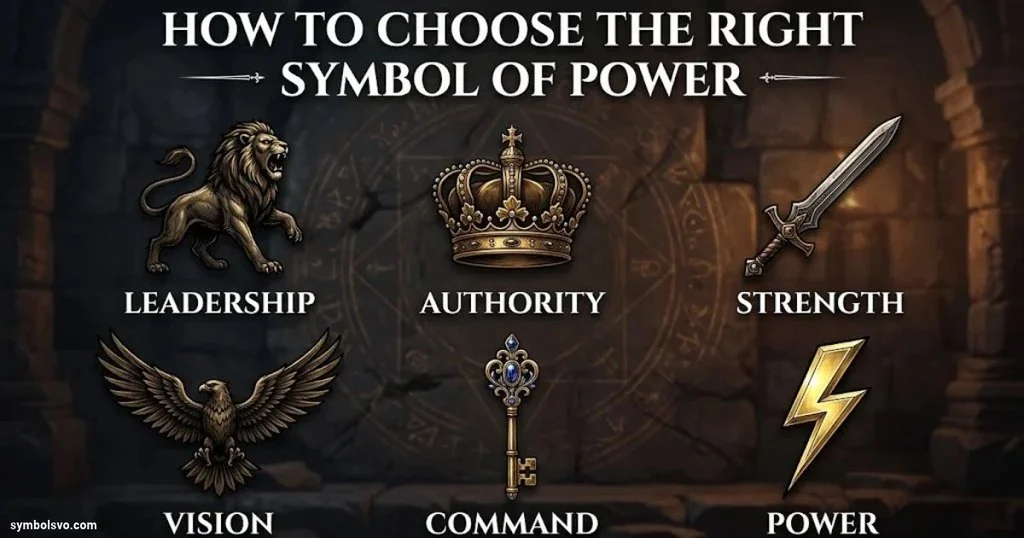
The best symbol depends on the message you want to express. A person seeking confidence may choose a lion, while someone interested in personal transformation may prefer a phoenix.
Use the following guide to identify symbols that match your intentions.
| Your intended meaning | Suitable symbols |
| Strength | Lion, bear, tiger, mountain |
| Leadership | Crown, eagle, lion, staff |
| Personal growth | Tree, sun, phoenix |
| Protection | Shield, armor, ankh |
| Freedom | Eagle, horse, open wings |
| Authority | Scepter, throne, royal seal |
| Courage | Lion, tiger, sword |
| Resilience | Phoenix, mountain, tree |
| Achievement | Laurel wreath, crown |
| Solidarity | Raised fist, flag |
| Wisdom | Elephant, dragon |
| Transformation | Phoenix, fire, ouroboros |
Before choosing a symbol, consider three important questions:
- Does its traditional meaning match the message I want to communicate?
- Does it have religious, political, or cultural significance?
- Will its meaning remain relevant to me in the future?
Remember that symbolic interpretation isn’t always universal. A symbol’s historical background deserves as much attention as its visual appearance.
Frequently Asked Questions About Symbols of Power
What Is the Most Powerful Symbol in the World?
There isn’t one universally recognized most powerful symbol. The crown is strongly associated with royalty and sovereignty, while the eagle represents freedom and authority in several national traditions. The dragon carries major imperial significance in Chinese culture. The most powerful symbol depends on the historical, cultural, and personal context.
What Is the Universal Symbol of Power?
No single symbol represents power universally. Crowns, lions, eagles, and scepters are widely recognized examples. However, their meanings differ across societies. A crown commonly represents monarchy, while a lion often communicates courage and strength.
What Animal Symbolizes Power and Strength?
The lion is one of the most recognizable animals associated with power and strength. Its physical abilities and historical presence in royal imagery make it a popular emblem of courage, leadership, and dominance. Bears and tigers also represent physical strength and resilience.
What Is the Oldest Known Symbol of Power?
There isn’t one confirmed oldest symbol of power because prehistoric societies used different forms of symbolic imagery. Ancient Egyptian royal emblems, Mesopotamian imagery, animal figures, and ceremonial objects provide early examples of how societies communicated authority. Their meanings developed over long periods.
What Symbol Represents Strength and Courage?
The lion is a widely recognized symbol of strength and courage. Other examples include the bear, tiger, sword, and mountain. Each represents a different quality, from physical power to determination and endurance.
What Symbol Represents Authority and Leadership?
The crown is one of the clearest symbols of authority and leadership. A scepter represents formal command, while a throne communicates institutional status. Eagles and lions also appear in heraldry and national imagery associated with leadership.
What Symbol Represents Personal Power?
A crown can represent self-confidence, personal authority, and self-respect. Other options include the phoenix for transformation, the mountain for inner strength, and the sun for vitality. The right choice depends on which personal qualities matter most.
What Symbol Represents Power and Protection?
The shield is one of the clearest symbols of protection and defensive strength. Armor also represents preparedness and resistance to harm. Lions, bears, and certain mythological guardian figures combine associations with strength and protection.
What Does a Crown Symbolize?
A crown symbolizes royalty, sovereignty, leadership, and social status. Historically, monarchs wore crowns during coronations and important ceremonies to demonstrate their recognized position. In modern designs, crowns can also represent achievement, prestige, confidence, and self-respect.
Why Is the Lion Considered a Symbol of Power?
The lion’s physical strength, commanding appearance, and position as a major predator contribute to its symbolism. Ancient Egyptian rulers and medieval European heraldry also helped establish its connection with royalty, courage, and leadership.
Why Is the Eagle Associated With Authority?
Ancient Rome used the eagle as a military standard representing the identity and honor of its legions. Later, several nations adopted eagle imagery in official emblems. Its powerful flight also makes it a natural metaphor for freedom, ambition, and vision.
What Does a Dragon Symbolize in Different Cultures?
Chinese dragons traditionally represent auspicious power, wisdom, prosperity, and imperial authority. European dragons frequently appear as dangerous creatures associated with destruction and heroic challenges. These different interpretations reflect distinct cultural and mythological traditions.
What Does the Phoenix Represent?
The phoenix represents rebirth, renewal, and resilience. Its legendary story of emerging again after death by fire makes it a powerful metaphor for overcoming hardship. People often choose phoenix imagery to represent personal transformation and new beginnings.
What Are Some Ancient Symbols of Power?
Important ancient symbols include the Egyptian ankh, uraeus, and crook and flail; the Roman eagle, fasces, and laurel wreath; and the Greek thunderbolt and trident. Chinese imperial dragons also became important representations of royal authority.
Can Power Symbols Have Negative Meanings?
Yes. Some symbols communicate both positive and negative ideas depending on their context. A sword can represent justice or violence, while political emblems may represent legitimate authority or authoritarian control. Historical events can also change how societies interpret particular symbols.
What Are the Best Symbols of Power for Tattoos?
Popular choices include the lion, eagle, dragon, phoenix, tiger, mountain, crown, and shield. A lion can express courage, while a phoenix represents renewal. Research each symbol’s cultural background before choosing a permanent design.
What Is the Difference Between Power and Strength?
Power is the ability to influence situations or control outcomes. Strength refers to physical, mental, or emotional capability. Someone can possess considerable strength without having authority over others. Similarly, a political institution can exercise power through its recognized position.
Which Symbols Represent Freedom and Independence?
The eagle, horse, open wings, and raised fist are common symbols associated with freedom and independence. Eagles communicate freedom and vision, while horses represent movement and exploration. The raised fist often represents collective resistance and solidarity.
Conclusion: Understanding the Meaning of Symbols of Power
Symbols of power communicate important ideas about authority, strength, courage, leadership, protection, and independence. From royal crowns and ceremonial scepters to lions, eagles, dragons, and phoenixes, different images have helped societies express their beliefs about influence and control.
Their meanings also change across historical periods and cultural traditions. A Chinese imperial dragon carries different associations from a European dragon, while a Roman eagle represents a specific military tradition rather than simply generic freedom.
Understanding these differences helps you appreciate the historical significance behind each image. If you’re researching ancient civilizations, exploring personal symbolism, or choosing a meaningful tattoo, the most important step is understanding what a symbol actually represents.

I’m Daniel Brooks, a content creator and symbol enthusiast dedicated to researching the fascinating world of signs and symbols. I enjoy discovering the hidden meanings behind famous icons, emojis, historical emblems, and cultural symbols. Through my writing, I aim to provide trustworthy, well-researched, and reader-friendly information that helps people learn something new with every visit.
Books:
- The Complete Guide to World Symbols
- The Power of Universal Signs
 Mason Ellington